

Our new book, How we made it in Africa II: Real stories of entrepreneurs turning opportunity into profit, is available here. The book was recently shortlisted for the Business Council for Africa (BCA) African Business Book of the Year Awards 2026.
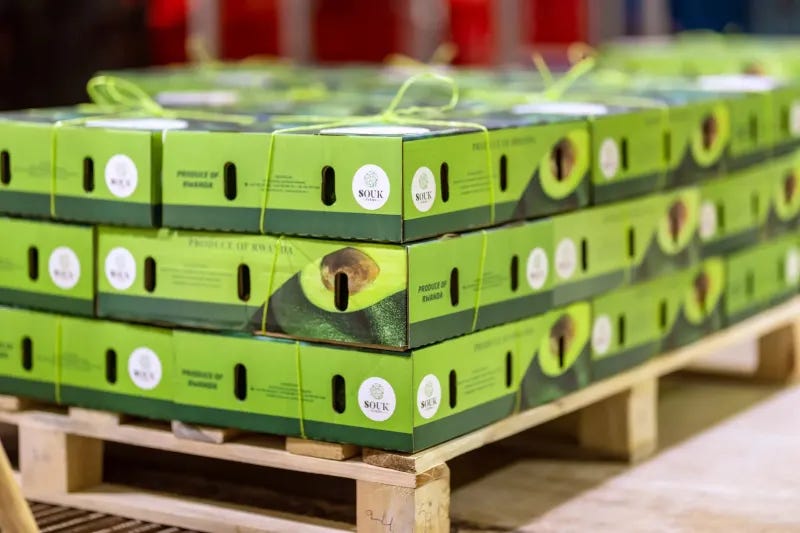
Entrepreneur Seun Rasheed is the founder of SOUK Farms, which supplies Rwandan-grown produce – including avocados, chillies and beans – to supermarkets in Europe and the Middle East. The company sources its produce both from its own farms and from about 2,000 smallholder farmers in Rwanda.
Of Rwanda’s 10 largest agricultural exporters when SOUK Farms was founded in 2019, only four are still operating, according to Rasheed – evidence of how difficult the industry can be.
Rasheed describes the business as highly cash-intensive, both in terms of infrastructure and working capital. Customers typically pay between 30 and 90 days after receiving their orders, but most of the company’s expenses must be settled much sooner.
“You can’t tell a smallholder farmer, ‘Wait for 30 days before you get paid,’” he says. Farmers generally expect payment the day after their produce is collected. Airlines typically require payment upfront or within seven days, while packaging suppliers are paid in advance and farm workers at the end of each week.
This leaves SOUK Farms carrying most of its costs well before the corresponding revenue arrives.
Wholesaling has relatively low barriers to entry. “You can start exporting to the Middle East today without any major certifications, as an example,” he says.
However, exporters often have limited power in the wholesale market. A buyer may reject a shipment on quality grounds and refuse payment, while sudden price declines can force suppliers to accept less than the agreed amount.
“When wholesale prices crash, your client will come back to you and say, ‘Sorry, I can’t pay the agreed price … I can only pay this much – take it or leave it,’” Rasheed explains. “That’s why you see a huge turnover of exporters because all it takes is to lose out on one big shipment and your business is bankrupt.”
Although SOUK Farms began by selling through wholesalers, the goal was always to supply retailers abroad directly. The vast majority of its sales now go to supermarket chains in Europe and the Middle East, including Morrisons and Co-op in the UK and Edeka in Germany.
Retailers offer better margins and are more predictable counterparties. Securing them as customers, however, takes considerably longer and comes with more demanding requirements. Rasheed puts the timeframe at “about two to three years between initial contact with the retailer to actually getting your product on the shelves”.
Part of the reason is that retailers conduct more extensive compliance checks and verification than wholesalers. Suppliers must also obtain numerous certifications, which are expensive to maintain. Rasheed says SOUK Farms spends more than $50,000 a year on certifications.
Watch/read our full in-depth interview with Seun Rasheed: Nigerian creates business exporting avocados and chillies from Rwanda to European supermarkets

