

One in every five new vehicles sold in South Africa in the first quarter of 2026 was Chinese.
It is a statistic that would have seemed fanciful a decade ago, when Chinese cars occupied a dusty corner of the market; within a few years, brands such as Chery and Geely would abandon the country altogether after failing to win over sceptical buyers.
But around five years ago, Chinese manufacturers returned with a vengeance – and a winning formula. For Greg Cress, automotive and e-mobility lead at Accenture in Africa, this is nothing less than the disruption the industry “has been waiting 100 years for”.
“Every sector goes through it. Telecoms went through it 20 years ago. But the automotive industry is seeing its iPhone moment right now,” he told TechCentral in an interview.
And it is no accident, he said. The numbers, in his view, are “not just a cyclical thing” that will return to normal. “What we’re actually seeing is a structural shift happening in the market.”
The hard data backs him up. Chinese manufacturers accounted for more than 19% of total new-vehicle sales in the first quarter of 2026, according to data from industry body Naamsa, with sales rising 75% year on year against growth of 12.7% in the passenger and light commercial segments.
From retreat to takeover
In the passenger car market, Chinese brands took a 16.8% share in 2025, up from 11.2% in 2024 and less than 9% in early 2023. Naamsa itself, in its 2026 Automotive Trade Manual, reaches the same conclusion as Cress: “This is not regarded as a short-term surge, but a structural reset, as for decades the market was shaped by badge and prestige, but it is now being redefined by price-driven consumer choices and tighter household budgets, with little brand affinity.”
Chery first entered South Africa in the late 2000s but withdrew in 2018 after struggling for traction. That first wave of Chinese entrants, Cress noted, had to retreat and rethink their approach. This time is different. “Now we’re seeing a very structured, planned, aggressive roll-out.”
Read: BYD sets its sights on Toyota’s crown
The scale of the second wave is remarkable. In 2024, eight Chinese brands were active in South Africa’s new-vehicle market. By the end of 2025 there were 18 marques from China present locally, with more confirmed for 2026. Chinese marques now make up nearly 40% of all light vehicle brands in local showrooms.
The playbook, Cress said, is a trifecta: “value dense” mid-segment SUV offerings at very aggressive price points, backed by longer warranties than the established legacy brands offer. “That kind of trifecta strategy is actually putting a lot of peace of mind into prospective buyers.” He rejects the idea that this is simply a price war.

The sales charts tell the story. Chery, relaunched in late 2021 with the Tiggo 4 Pro, sold 25 304 vehicles in 2025, up 26.7%, finishing eighth – while GWM grew 43.7% to finish sixth, reclaiming its title as the top-selling Chinese brand. Count the Chery stable together and it is knocking on second place overall: Chery, Omoda and Jaecoo, and Jetour combined overtook the Volkswagen Group in early 2026 and are closing on second-placed Suzuki.
The buying public did the rest. Amid interest rate cuts, record-low new light vehicle price inflation of 1.1% and “two-pot” retirement withdrawals, total industry sales jumped 15.7% to 597 338 units in 2025, the best year since 2015 – and 64.2% of light vehicles sold cost less than R500 000, exactly the territory the newcomers have flooded. The new entrants “have made huge gains in the entry and small vehicle segments”, Naamsa chief trade and research officer Norman Lamprecht told TechCentral.
The European retreat
The rise of the Chinese brands has coincided with – and accelerated – a collapse in sales of the German premium marques that once defined aspirational motoring in South Africa. Combined local sales of Audi, BMW and Mercedes-Benz fell from just over 74 000 units in 2014 to fewer than 24 000 in 2024, a decline of 68%, according to an analysis of Lightstone vehicle data. Mercedes-Benz has been hardest hit, its annual sales falling more than 80% over the decade – and out of the top 10 sellers altogether.
Cress is blunt about the legacy brands’ dilemma: the main German and Korean manufacturers “probably cannot afford to compete at the level that the Chinese are going to be selling their products at”. That leaves a retreat into the premium niche – but, he asked, “is there enough volume and margin in that segment in the South African economy to survive and to keep a plant running in the country?”
South Africa is not just a car market; it is a manufacturing base. The industry contributes 5.2% of GDP, and vehicle and component production made up 23.8% of the country’s manufacturing output in 2025. On paper it was a record year: vehicle exports hit an all-time high of 414 268 units, worth a record R229.8-billion, according to the Naamsa Trade Manual. But the record masks deep strain.
Exports to North America collapsed from 25 554 units in 2024 to just 6 530 in 2025 after Washington imposed a 25% “section 232” tariff, with surging shipments to Europe – and, tellingly, to the rest of Africa – keeping the total climbing. Industry employment slipped at both vehicle makers and component firms, and figures shared with TechCentral ahead of Naamsa’s second-quarter 2026 review show exports fell 5% year on year in the quarter, with Africa again the bright spot.
BMW has partly deflected the US blow, Cress noted, by redirecting X3 exports to Canada. Mercedes-Benz has been far more exposed. Its East London plant, which exports more than 90% of its C-Class output, retrenched about 700 workers in 2024 and paused production for over a month in mid-2025 – a scheduled, volume-related shutdown, the company said at the time; GWM has been in talks to share the factory, according to reports in March. The C-Class, Cress said, faces intense demand pressure. His verdict? “The whole industry is actually watching Mercedes-Benz’s next move around their plant.”
Supplied from abroad
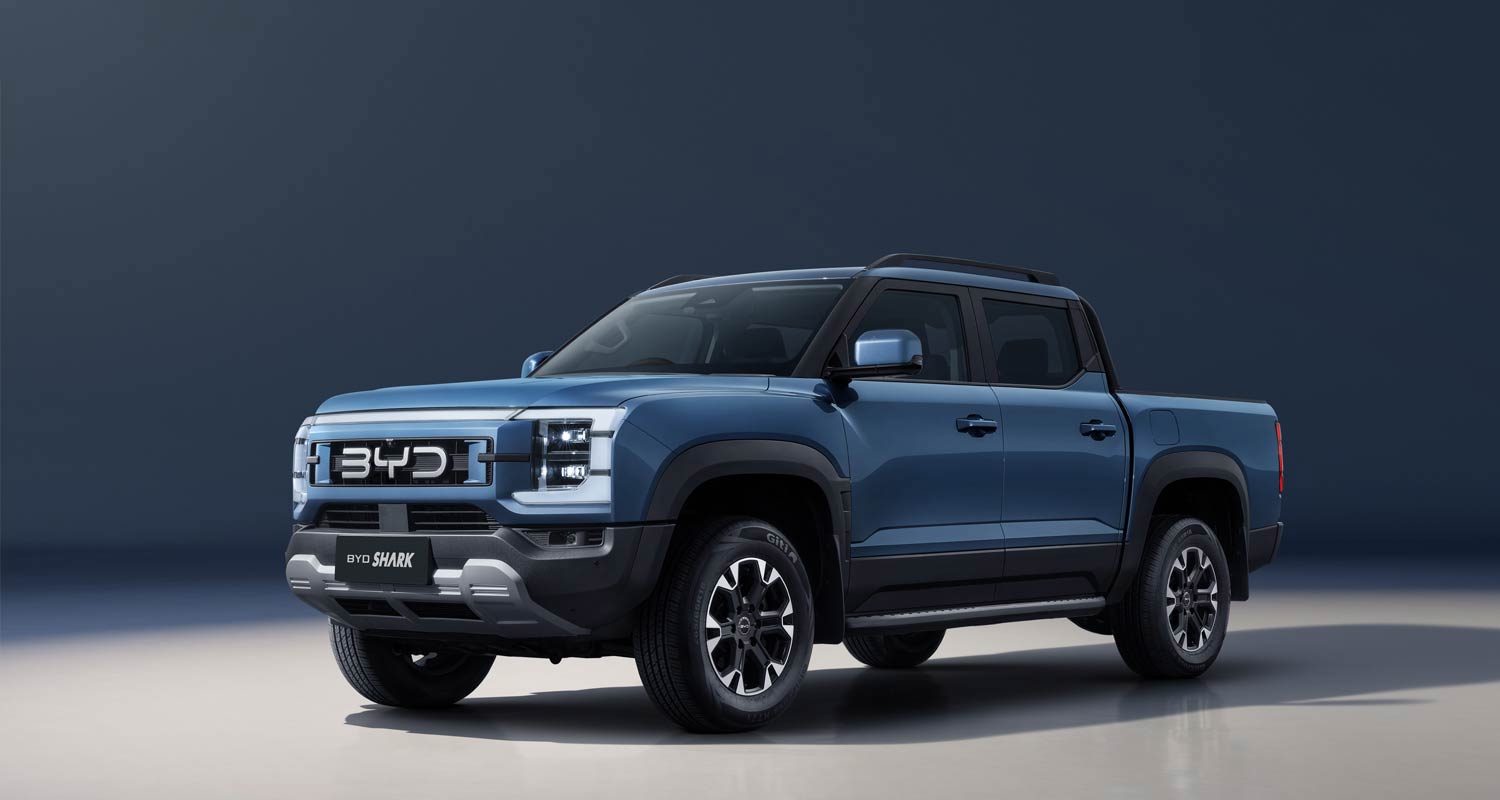
The bakkie makers look safer – for now. Toyota’s Hilux, built in Durban, was South Africa’s best-selling vehicle for the 13th straight year in 2025, with 36 525 units sold. But Cress warned that even this redoubt is under threat from new energy drivetrains, pointing to BYD’s plug-in hybrid Shark bakkie. Reports that Toyota is readying an all-electric Hilux suggest the incumbents are taking that threat seriously.
Meanwhile, the domestic market is increasingly supplied from abroad. Light vehicle imports surged 28.6% in 2025 to more than 391 000 units, with China alone shipping more than 91 000 vehicles to South Africa. The imports debate has opened a public rift in the industry: Mikel Mabasa, then Naamsa CEO, described the Chinese influx as “fantastic” – a wake-up call local assemblers should accept – drawing a sharp rebuke from trade union Numsa, which warned of plant closures and further job losses.
Read: Morocco overtakes South Africa as Africa’s top industrial power
Reports early this year that South Africa was weighing import tariffs of up to 50% on Chinese and Indian vehicles were wide of the mark, however. “The import duty was never a proposal but just a statement about the maximum bound rate for South African vehicle duties in terms of the World Trade Organisation,” Lamprecht said.
The pivotal test of whether the Chinese wave builds up South African industry rather than hollowing it out is unfolding at Rosslyn, outside Pretoria. Chery outbid GWM for Nissan’s mothballed plant in January and formally inaugurated the facility in July, with the first locally built Cherys expected from mid-2027. BAIC has begun kit assembly of its B30 SUV in Gqeberha, while GWM is exploring collaborative bakkie assembly.
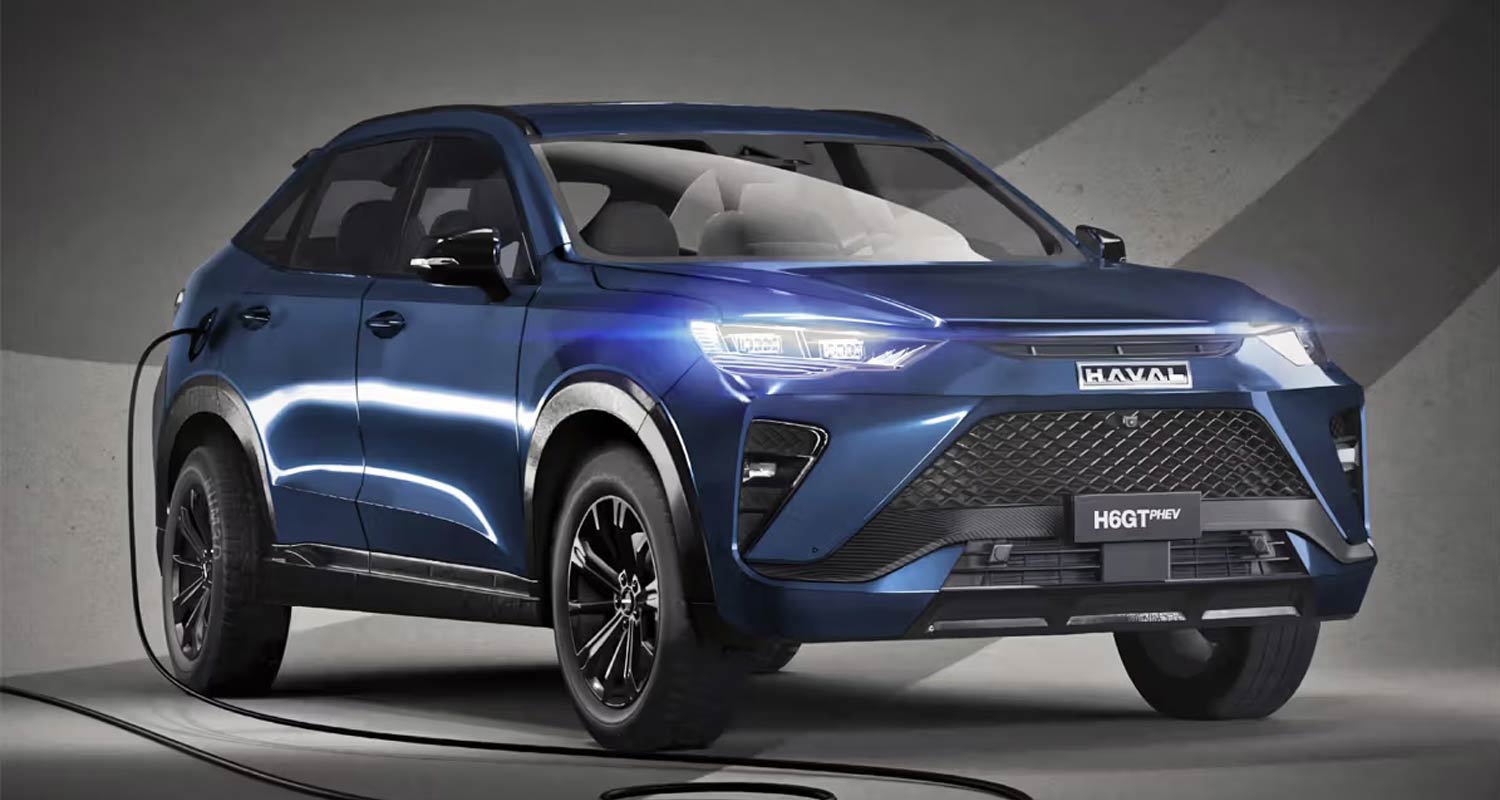
Cress sees Rosslyn as the start of what he calls a “new-energy vehicle reindustrialisation”. Chery’s deal, he said, has “basically secured” the jobs of the majority of the roughly 800 workers and contractors left stranded by Nissan’s exit, and the company is gearing up to build products considerably more advanced than the legacy vehicles currently made in the country. Because EVs built at the plant would attract no import duties, “now you’re going to get very, very competitive products coming from Chery in the next two to three years”.
But he is clear-eyed about the limits. Much of the automotive ecosystem’s employment sits in component suppliers making clutch plates, gearbox parts, exhausts and catalytic converters – “all of which are products that are no longer going to be required in a new-energy vehicle world”. A battery supply chain would have to be built almost from scratch, and policy will need to encourage it. Chery putting down manufacturing roots is “probably a necessary step, but is it sufficient, is the question”.
Read: Stellantis reworks Gqeberha plant plans as market shifts
Justin Barnes, executive chair of automotive advisory firm B&M Analysts, describes the same test in starker terms: “Key to the South African automotive industry is whether the Chinese OEMs take South Africa seriously as a production base or not,” he told TechCentral. “If they do then they will certainly fill any holes they create in the local production landscape, but if they don’t, then we can expect to see further declines through the South African automotive value chain and a continued increase in vehicle imports.” For now, he added, it is “too early to come to any conclusions and the signs so far are mixed”, though he calls Chery’s Rosslyn acquisition “a positive development”.
What is happening in South Africa is the spearhead of a continental strategy. Shut out of the US by 100% tariffs on Chinese-made electric vehicles and facing steep EU duties on the same, China’s car makers have pivoted to Africa – and Chery South Africa CEO Tony Liu has called the country the company’s “gateway to the African continent”.
Cress argues South Africa should treat this as opportunity rather than threat – Chinese investment brings skills in electronics and high-voltage engineering, and could anchor exports into a continent that is electrifying faster than many assume. Africa, he said, should not be “a dumping ground for internal combustion engine technology”: Ghana, Rwanda, Ethiopia and Kenya all have progressive e-mobility policies. But the competition for that role is fierce, and “Morocco can deliver to Europe much more efficiently than we can. We have to be even more competitive with our policies to not only retain the brands we have, but to attract more.”
The next front
New-energy vehicles are, “an accelerant” rather than the core of the story – for now, Cress said. NEV sales grew just 7.1% in 2025, to 2.8% of the market. Then the dam broke: figures shared ahead of Naamsa’s second-quarter 2026 review show NEV sales jumped 134.3% year on year to 8 611 units – 5.6% of total sales, breaching 5% for the first time – helped by new entrants such as BYD, which only began reporting sales in March 2026.
Independent demand data points the same way. EV leads on AutoTrader jumped 154.6% year on year in June 2026, according to OLX Group’s East Meets Electric report – the second-fastest growth of the five markets the classifieds group tracks. AutoTrader CEO George Mienie credits Chinese manufacturers with “offering vehicles that respond well to local priorities around affordability, technology and practicality”.
Read: New Chinese future for historic Rosslyn plant
Yet the same report underlines Cress’s caution: South Africa shows the highest consumer demand for Chinese brands of any market OLX tracks – 7.31% of leads, headed by Haval – but just 0.3% of that demand is electric, with buyers gravitating to petrol and hybrid SUVs instead.
“Based on our experience in China, once the market share of new-energy vehicles reaches almost 10%, then the demand will start to explode,” Liu has said. And if Chery builds a full EV at Rosslyn, Cress said, it will show the way for other OEMs.
“The question isn’t whether Chinese brands should be here in South Africa,” said Cress. “I think consumers have already answered that question. They are buying the products.” What remains, he added, is “whether the industrial policy will continue to support more Chinese brands to convert their market presence from just being importers to being genuine economic contributors from a manufacturing perspective – and that work is what needs to really happen now”. – © 2026 NewsCentral Media

