

By Bonface Orucho (Bird Story Agency)
Africa is building faster ways to move money across borders.
However, faster payment rails are exposing the question whether banks and payment providers have enough of the right currencies, at the right price, to settle those payments.
In February, the Pan-African Payment and Settlement System (PAPSS) and Kenya’s PesaLink said more than 80 PesaLink participants were connected to more than 160 banks on the PAPSS network, allowing 24/7 cross-border payments in local currencies.
Mobile money has already made digital payments part of everyday life for millions of Africans.
The GSMA says mobile money processed more than $2.1 trillion globally in 2025, with 2.3 billion registered accounts and 593 million active on a 30-day basis. Sub-Saharan Africa accounted for more than two-thirds of the growth in registered accounts, making the region central to the industry’s expansion.
Cross-border payments remain a harder problem.
The World Bank says remittance costs have fallen to around 6% globally, but Africa continues to record the highest regional average. Its latest research also finds that having a domestic fast-payment system can reduce the cost of sending $200 by 0.3 to 1 percentage point.
At the same time, stablecoins are becoming part of the conversation. Their global market capitalisation reached about $320 billion by the end of May 2026, although the Bank for International Settlements says their use in real-economy payments remains modest and their performance across borders can vary once fees, FX spreads and on- and off-ramp costs are included.
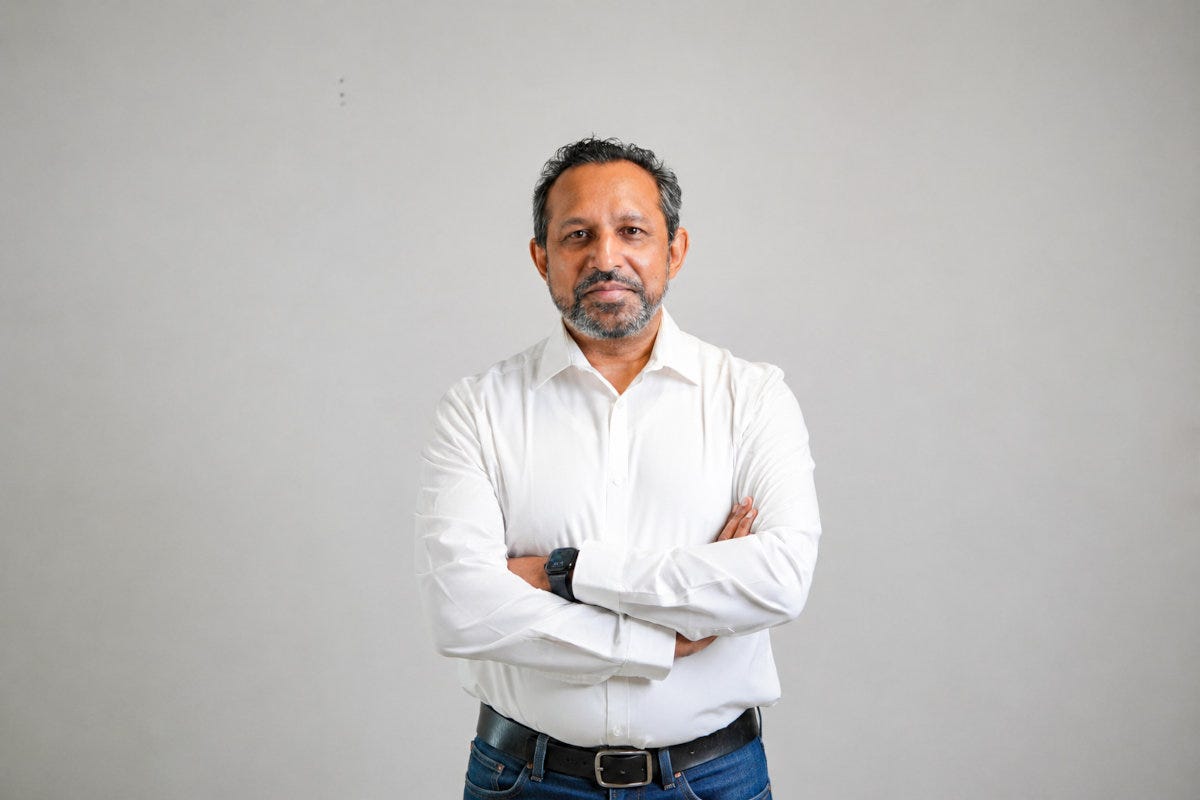
Raj Kamal sits close to this transition. As founder and CEO of TransFi, he runs a payments infrastructure business that says it covers more than 70 countries, 250 payment methods and 40 currencies, with stablecoins used alongside local payment rails. TransFi projects about $5 billion in transaction volume for FY2026.
In this conversation, Kamal discusses what Africa gets right in payments, where the system still breaks down, whether stablecoins can ease liquidity pressures, and what the next phase of cross-border payments could mean for African businesses.
This interview has been edited for length.
Tell us about your background and what led you to build TransFi.
My background is nearly 20 years in payments. I used to run payments for McKinsey as a partner, where I headed the business across Asia Pacific. I then moved into investing with a large group, doing investments in payments and fintech.
I have also been involved in crypto and blockchain for about 10 years. I was introduced to the space in 2015 and have followed it ever since. The intersection between blockchain and payments was always interesting to me. Stablecoins made that even more interesting.
I founded TransFi in 2022 with a focus on enabling cross-border payments using stablecoins as the rails. The ultimate objective is to make payments faster, more predictable, simpler and cheaper for businesses and individuals in emerging markets across Asia, Africa and Latin America.
Over the last four years, we have built a business that enables remittances, payroll processing, freelancer payments and B2B flows into and out of Asia, Africa and Latin America.
You have worked across Asia, Africa, Latin America and other emerging markets. When you compare Africa with those regions, where is the continent genuinely ahead in payments, and where does it still need to improve?
In terms of volumes and flows, especially remittances coming into Africa from Europe or the Middle East, those volumes are substantial. Outbound flows from Africa to other parts of the world, particularly China, are also substantial and growing very fast. The scale of the opportunity is tremendous.
There have also been some fantastic initiatives. The mobile money revolution, which started with M-Pesa and spread to other parts of Africa, was very unique to the continent and brought financial inclusion and payments together.
You could argue that airtime tokenisation, or using airtime as a way to make payments, was one of the first real-world assets put digitally out there. Airtime being used for payments was a precursor to what real-world assets, blockchain and stablecoin payments are about today. The technology is different, but the concept is similar.
Africa has always been innovative in payments. PAPSS has also been an innovative effort to drive better and faster payments and settlements across the continent.
I would not necessarily say Africa is lagging. I think liquidity needs to deepen across currencies to enable cross-border transfers to happen faster and cheaper. Financial inclusion also has to grow further. Those are two milestones that are still very much in progress.
What does TransFi’s reach in Africa look like today?
We cover a number of countries across sub-Saharan Africa, including Kenya, Ghana, Zambia, Uganda and Tanzania. We also operate in Nigeria, support [the Central and West African CFA francs], and operate in South Africa. Very recently, we switched on Angola.
Africa currently accounts for around 10% of our total volumes. We are newer to Africa compared with Asia, so it is a smaller share, but it is one of the fastest-growing parts of our business as we scale our presence and the opportunity here.
Were there any African markets or payment corridors that surprised you when you entered the continent?
I had always known that payments into Africa were big. I had mainly thought of those as remittances.
What I did not realise was how much technology talent existed for freelancer payments and cross-border payroll processing. Freelancer payments in particular were a surprise, because of the volume of technology talent and the services being provided to the rest of the world.
The scale of payments between Africa and Asia, especially B2B payments to China, is also quite large. I knew about these flows, but seeing the scale of the opportunity was bigger than I had imagined.
Where do cross-border payments in Africa usually slow down or become expensive, especially for payments between African countries and markets such as China?
Whether it is cross-border payments or even intra-African payments, I think technology is ahead of liquidity. That is just the reality.
The technology exists to make payments simpler and faster and, in principle, transactions can be settled in real time. That is true for intra-African payments and cross-border payments into and out of Africa.
The bottlenecks come on the liquidity side. Even within Africa, if you are settling between the Nigerian naira and the Kenyan shilling, there might be more liquidity available than with some other currency pairs. But the real question is how much liquidity is available and how freely money can move.
FX liquidity and FX spreads are where the real challenge lies when you are talking about intra-African transfers.
The same applies to payments into or out of Africa. At TransFi, because we use stablecoins for transfers, we look at conversion rates between stablecoins and African currencies. It is one thing to move $1 million through a corridor. It is very different to move tens of millions of dollars, and completely different again when you are moving $100 million.
At large volumes, the availability of liquidity in real time and the spread needed to keep costs down become major challenges.
When you say liquidity is becoming a major challenge, what does that actually mean for a bank, fintech or business trying to pay someone across the border?
Take a transaction between Nigeria and Tanzania. If somebody is sending money from Nigeria to Tanzania and wants that transaction to happen in real time through PAPSS, the technology exists.
The question is whether the banking partner in Nigeria, the central bank in Nigeria and their counterparts in Tanzania have enough liquidity available to provide Tanzanian shillings in real time for payouts.
When volumes become very large, the availability of Tanzanian shillings can become a challenge. Conversion rates can also differ significantly from the official exchange rate.
It is one thing to say that money can move. It is another thing to have naira actually put into the system and Tanzanian shillings made available for payout on the other side in real time.
The same applies when moving money from Kenya into another currency, whether it is the US dollar, euro or another currency. The question is how much liquidity you can manage, at what spread and how quickly.
Africa already has hundreds of millions of people using mobile money. Does that give the continent an advantage in adopting stablecoin-based payments, or are we overstating the similarity between mobile-money balances and blockchain-based assets?
The acceptance of technology and digital money has always been high in Africa. Stablecoins therefore lend themselves naturally to the next phase of evolution.
There is obviously a degree of correlation between one form of digital money and another. But there are also important differences. The technology stack is completely different.
Most popular stablecoins today are dollar-backed. In many African markets, they are also perceived as more stable stores of value compared with some local currencies. That creates use cases beyond payments.
There is clearly openness to digital assets. Many reports show that several countries in sub-Saharan and West Africa rank highly in blockchain and stablecoin adoption compared with other parts of the world.
A lot of the stablecoin discussion focuses on consumers. From what you are seeing, where is the real demand in Africa today? Is it business payments, remittances, treasury, trade or something else?
People talking about retail use cases for stablecoins are often referring to people using them to protect value against local currency movements or to on-ramp and off-ramp into crypto assets.
Our business is different. We facilitate remittances, freelancer payouts and other cross-border payments into Africa.
For example, an exchange house in the Middle East may have African expatriates who need to send money back home. We facilitate that movement using stablecoins because it can be faster, more predictable and potentially cheaper.
Freelancer payouts are another major opportunity, especially where there are large pools of technology talent and people providing digital services such as marketing, website development and technology solutions.
Those are the areas where we see the strongest traction because we focus on cross-border payments rather than individuals holding stablecoins to protect value or buying and selling crypto.
More recently, we are also seeing opportunities in cross-border B2B flows. That is where we are seeing our volumes grow, with much of the business being B2B or B2B-to-consumer rather than individuals using stablecoins to trade crypto.
Can stablecoins actually solve Africa’s liquidity problem, or do they mainly provide a faster way to move money?
In principle, stablecoins can help solve the liquidity problem, especially where liquidity is limited between two local currencies.
The depth of stablecoin markets is growing faster, liquidity is improving and bid-ask spreads are becoming thinner. So converting one local currency into a stablecoin and then converting that stablecoin into another currency could become both faster and more liquid, with thinner spreads.
That could help solve some liquidity problems where direct currency pairs do not have enough liquidity.
We could also see pan-African players issuing currencies backed by local African assets across multiple markets. Their reserves could be held across different currencies and on-chain money movement could happen almost instantaneously, without relying on other institutions or central banks to provide liquidity for every transaction.
That is something that could emerge as we move forward.
Africa already has strong local payment systems, from mobile money to bank transfers. Are companies like TransFi replacing those systems or connecting them together?
I don’t think we are replacing anything. Africa is growing so rapidly that we are providing better solutions and capturing some of the volumes as they grow.
Because we are trying to provide a better user experience and faster settlements, we are generally helping improve the quality of the payments experience for individuals and businesses.
I would position ourselves as playing an orchestrator role in improving the quality of payment infrastructure.
Looking ahead, what has to happen for cross-border payments in Africa to become faster, cheaper and easier for ordinary businesses? What is the biggest obstacle that could hold that vision back?
Number one is regulatory clarity across every market.
Some markets are already ahead of the game, but regulatory clarity across all the key markets is very important. That would drive institutional acceptance and allow serious volumes to move using stablecoins.
In my mind, that is the one big thing that could really drive adoption. The technology is there. The interest is there. The users are there.
Regulatory clarity, potentially combined with synchronisation across different parts of Africa and across all the key markets, is going to be the biggest factor.
Africa is not different from the rest of the world in that regard. Many people are also looking for greater regulatory clarity in other markets.
I believe regulatory clarity and enablement are the most important issues in the industry at this point because that could open up the institutional floodgates.
Finally, what do you think the next generation of cross-border payments in Africa should look like?
We are very excited about the opportunity in Africa. We want to be a player that makes payments more predictable and easier.
I have seen transactions where we have tried to move money from euros to naira and four days later we are told that a correspondent bank rejected the transaction. In many cases, we are told a transaction will be T+2 or T+3, but there is no clarity on what that actually means. Does it mean 9 a.m. or 3 p.m.?
We hope to be an institution that solves that problem using stablecoins, while also becoming part of this generation of payments and blockchain businesses that significantly improves the user experience.

