

When Grand Theft Auto VI finally arrives on 19 November, it will almost certainly become the biggest entertainment launch in history. The only real question is by how much.
The precedents are staggering. Its predecessor, GTA V, earned US$815.7-million in its first 24 hours in September 2013 and passed $1-billion in three days, making it the fastest entertainment property of any kind – game, film or album – to reach that milestone. It broke seven Guinness World Records at launch and has since sold more than 200 million copies.
GTA VI’s first trailer, released in December 2023, set three Guinness World Records within 24 hours, including most-viewed videogame trailer. Its second, released in May 2025, drew more than 475 million views across platforms in its first day – reported by The Hollywood Reporter as the biggest video launch of all time. Pre-orders opened on 25 June at $80, or R1 499 locally (R1 899 for the Ultimate Edition), and the forecasts are dizzying: DFC Intelligence predicts $1-billion in revenue on launch day and 40 million copies sold in the first year, while venture firm Konvoy has floated $7.6-billion in the first 60 days – albeit as a bullish outlier.
So, the records will fall. The more interesting question is whether GTA VI will actually move gaming forward, because commercial success and creative leaps are very different things – and the industry’s recent past offers a sobering reminder of what happens when hype outruns substance.
The Cyberpunk warning
Cast your mind back to December 2020. Cyberpunk 2077, from CD Projekt Red of Witcher fame, arrived on a tsunami of anticipation not unlike the one now carrying GTA VI. It sold 13.7 million copies in its first 21 days – a spectacular commercial result by any measure.
It was also, on consoles at least, barely playable. The PlayStation 4 and Xbox One versions were so riddled with bugs that Sony took the unprecedented step of pulling the game from the PlayStation Store for six months and offering refunds. Shareholders filed class-action lawsuits alleging they had been misled about the game’s state, and CD Projekt agreed to a US$1.85-million settlement, approved by a US judge in January 2023. The game has since been rehabilitated through years of patches, but the episode made the point that enormous sales measure marketing power and accumulated goodwill, not whether a game delivers – let alone whether it advances the medium.
None of this suggests GTA VI will launch broken. Rockstar’s record on polish is among the best in the business, and it delayed the game twice – first to May 2026, then to November – saying “these extra months will allow us to finish the game with the level of polish you have come to expect and deserve”. Still, record revenue tells us nothing about innovation. For that, we need a different yardstick.
The games that changed everything
Any list of gaming’s great leaps invites argument – ask 10 critics and you will get 10 lists. Former South African game developer Louis du Pisani, creator of the local hit Boet Fighter, made exactly that point when TechCentral asked for his picks.
“This is a big question. Minecraft changed what games could be, but so did Angry Birds,” he said, before waving the question away: “But you don’t need me to tell you what an influential game is. Pac-Man, Mario, Sonic, Double Dragon, Golden Axe, Street Fighter, Mortal Kombat, Doom, Half-Life, World of Warcraft, Starcraft… the list goes on and on.”
Nevertheless, some titles’ influence is simply not in dispute. The list below is not a ranking of the best games ever made; it is a selection of moments where the medium visibly changed direction, and stayed changed:
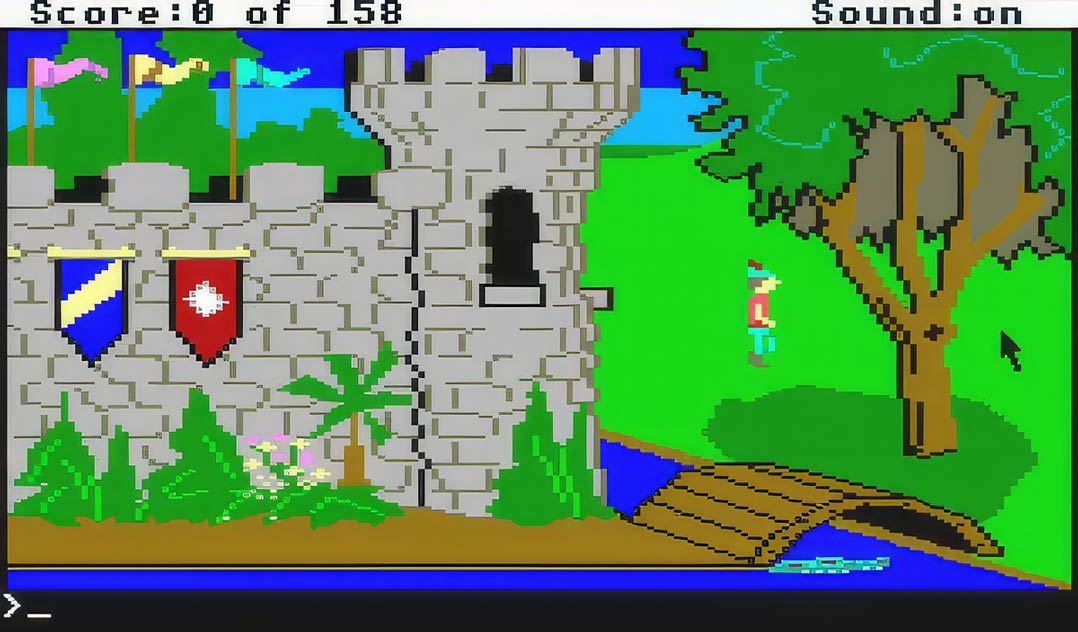
- King’s Quest (1984): Roberta Williams’ fairytale adventure was the first to put an animated character into a world the player could walk around, in front of and behind objects, rather than clicking through static screens. Built to show off IBM’s ill-fated PCjr, it established the animated graphic adventure, proved games could tell stories with characters and humour, and turned Sierra On-Line into a 1980s powerhouse. Williams became gaming’s first celebrity designer – and one of its first prominent women – decades before the industry noticed the gap.
- Super Mario Bros (1985): Nintendo’s side-scrolling masterpiece arrived with the American games industry in ruins after the 1983 crash, and effectively resurrected it. It defined the platformer, established the design language of levels, power-ups and secrets, and proved games could be built around characters audiences loved. Almost everything since stands on its shoulders.
- Doom (1993): id Software’s shooter is arguably the most influential game ever made. It popularised the first-person shooter, the genre that still dominates the industry; its “deathmatch” mode effectively invented competitive multiplayer; and by shipping with “moddable” level files it seeded the player-created-content culture that runs from Counter-Strike to Fortnite.
- Myst (1993): Released the same year as Doom, Cyan’s surreal puzzle adventure was its polar opposite: no violence, no death, no instructions – just a haunting island and the player’s curiosity. It proved games could be contemplative, literary and beautiful, sold more than six million copies to become the best-selling PC game of the 1990s, and drove adoption of the CD-ROM drive itself. Every atmospheric exploration game since, from The Witness to the “walking simulator” genre, owes it a debt.
- Super Mario 64 (1996): When gaming moved from two dimensions to three, Nintendo wrote the grammar. Super Mario 64 solved the problems every 3D game since has inherited – analogue movement, camera control, navigating open spaces – so assuredly that it became the template for the entire 3D era.
- Grand Theft Auto III (2001): The irony in GTA VI’s in-tray is that Rockstar has already made one of gaming’s undisputed leaps. GTA III took the series from top-down curiosity to living, 3D city, creating the modern open-world blueprint that everything from Assassin’s Creed to Watch Dogs has followed. Every GTA since, including the record-obliterating GTA V, has refined that formula rather than reinvented it.
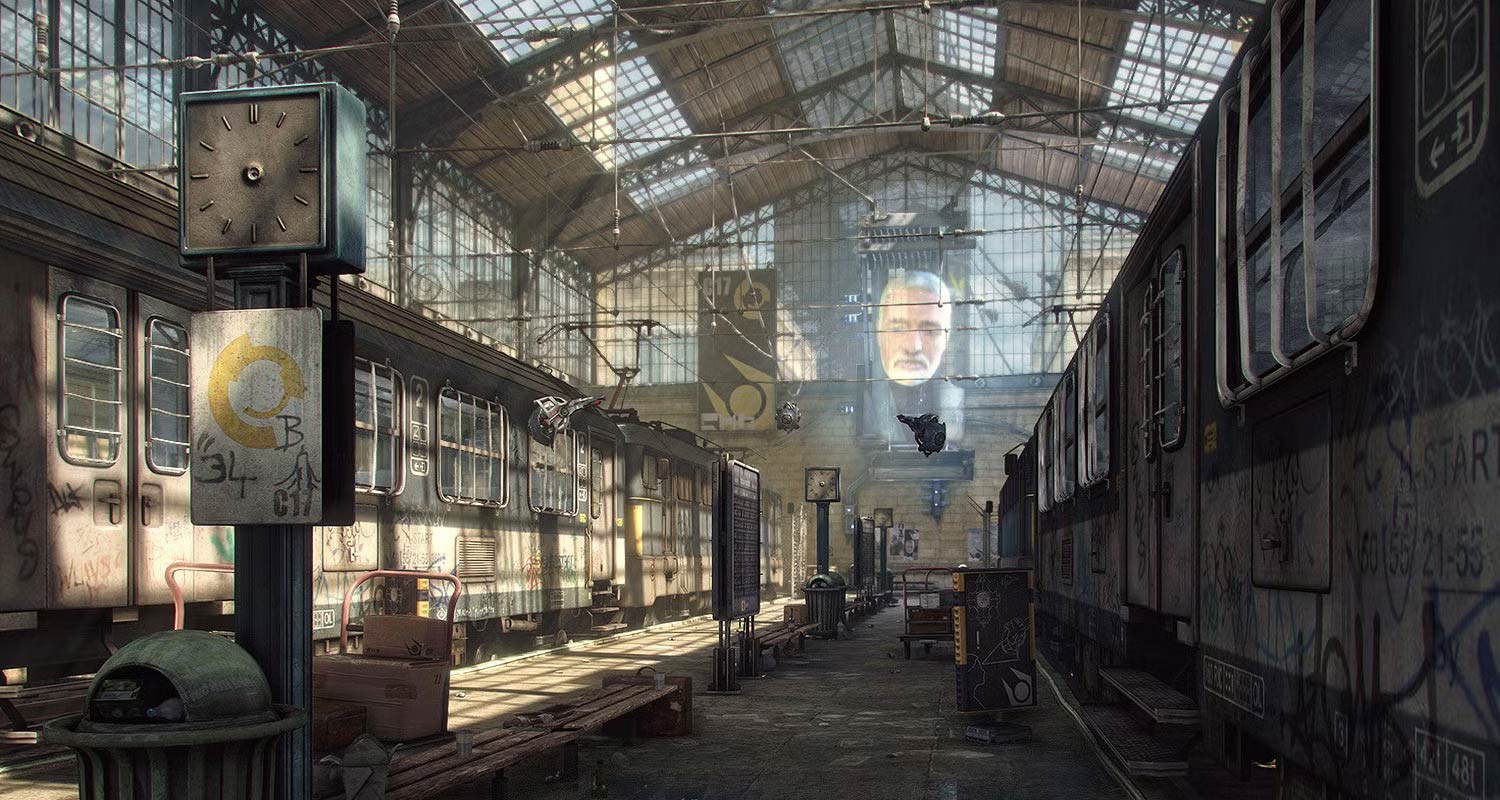
- Half-Life 2 (2004): Valve’s sequel made physics a gameplay mechanic rather than a graphical flourish: the gravity gun turned the environment itself into a weapon. Just as consequentially, Valve required buyers to activate the game on its fledgling Steam platform – resented at the time, but the decision that bootstrapped the digital distribution model on which PC gaming now runs.
- Minecraft (2011): Markus Persson’s blocky sandbox had no plot and graphics a decade out of date, and became the best-selling game of all time, passing 350 million copies in 2025. Its leap was conceptual: the game is a set of tools, and the players are the designers. A generation learnt to build, share and even code inside it.
Honourable mentions could fill another article: Pong and Space Invaders built the industry; Tetris conquered every device on Earth; World of Warcraft defined the persistent online world; Wii Sports dragged gaming into the living room; Zelda: Breath of the Wild rewrote open-world design as recently as 2017. The games that changed everything were not always the ones that sold most on day one.
So, what leaps might GTA VI make?
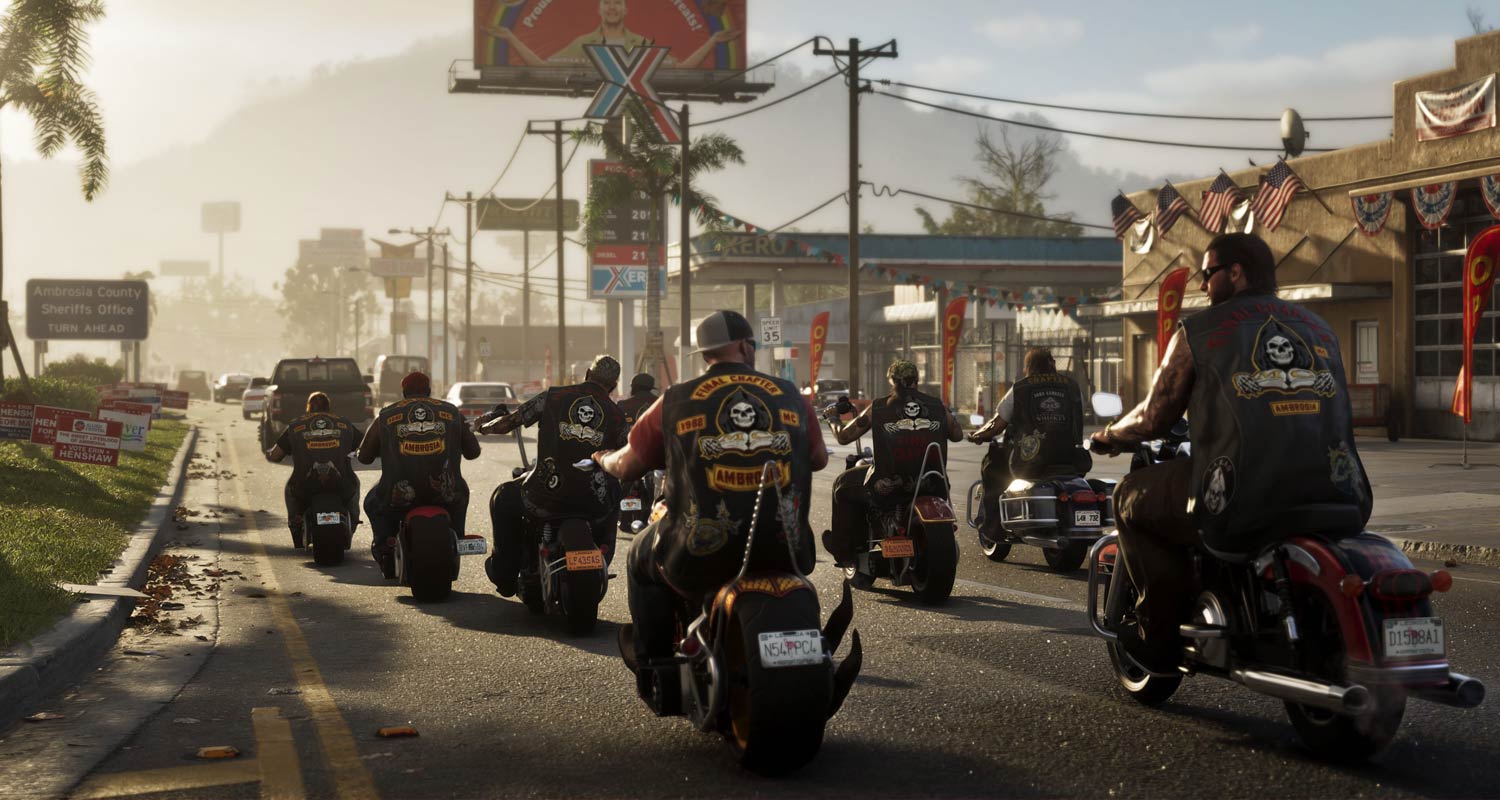
To be fair to Rockstar, there are signs GTA VI is attempting more than a bigger map. Technical analyses of the trailers, and reporting on the upgraded Rage engine, point to real-time water simulation of unprecedented fidelity, procedural character animation that blends stance, weapon and momentum on the fly, and dynamic weather – including hurricanes – that materially changes how the world behaves.
For du Pisani, the headline leap is simply scale. “It doesn’t even feel like a game anymore. More like what the metaverse wished it could’ve been, if the metaverse was all about stealing cars and doing unspeakable things,” he told TechCentral. “The scope of the NPCs’ (non-player characters’) artificial intelligence and the procedural generation of the world is mind-numbing.”
The most intriguing frontier is AI. A Take-Two patent filed in 2019 and granted in 2023, credited to Rockstar engineers Simon Parr and David Hynd, described non-player characters (NPCs) that use trained neural networks to navigate the world contextually – rerouting around congestion or avoiding rain-slicked roads – rather than following fixed scripts. If it ships in GTA VI, which is not officially confirmed, crowds and traffic could react and adapt in ways no open world has managed.
Asked how he expects Rockstar to use AI, du Pisani is drily succinct: “What Google says. NPC behaviour and a generative world.”
Generative AI is another matter. Take-Two CEO Strauss Zelnick has mused that it could one day make NPCs “really interesting and fun”, with dialogue too varied to write by hand, but he is also gaming’s most quotable AI sceptic: “Hits are created by genius. And data sets plus compute plus large language models does not equal genius.” Rockstar has confirmed none of this, and until reviewers get their hands on the game, it all remains promise.
The game will also feature the series’ first female protagonist in its modern era, Lucia, alongside partner Jason, in a Bonnie-and-Clyde tale set in the Miami-inspired state of Leonida – a storytelling shift for the franchise, if not the medium.
And the hype? Du Pisani admits he is not the ideal barometer – “I’ll be honest, I personally have AAA game fatigue. I’m more interested in what cool things the small indies can come up with” – yet even he has no doubts about November: “It will live up to the hype. People will be applying for a lot of sick leave in November.”
GTA VI does not need to reinvent gaming to be a good game; a polished GTA V successor would delight tens of millions. But when the headlines in November proclaim the biggest launch in entertainment history, remember what those numbers measure: anticipation. Whether GTA VI joins Doom and Minecraft in the medium’s history books will only become clear long after the sales records – like the game’s Vice City sunsets – have faded. – © 2026 NewsCentral Media

