

Companies, including South African firms, are pouring money into customer service chatbots, but their customers are increasingly going elsewhere for help.
New research from Gartner has found that customers are about three times more likely to turn to third-party generative AI tools than to a company’s own chatbot when trying to resolve a service issue.
The finding comes from a Gartner survey of 3 566 business and consumer customers conducted in February and March 2026. It points to a widening gap between where organisations are spending their AI budgets and how their customers actually behave.
“Customers are embracing generative AI in both life and work, but so far, that has not translated into growth in the use of company-provided customer service chatbots,” said Eric Keller, senior director analyst in the Gartner customer service and support practice. “Instead, generative AI is shifting some service interactions outside of company-owned channels.”
According to Gartner, use of third-party generative AI tools during service and support interactions has nearly doubled in the past year. Use of company-provided chatbots, by contrast, has remained statistically unchanged since 2022.
‘Disappointing impact’
The research firm said this may help explain why so few customer service organisations are seeing a payoff from their AI spending. A separate Gartner survey of 1 303 senior leaders across various industries, conducted between January and April 2026, found that service and support leaders put a median of 12% of their 2025 budgets into AI – the highest of the 10 business functions assessed. Yet only 24% of those leaders demonstrated positive financial returns across their AI use cases.
“The disappointing impact of customer-facing gen AI investments has less to do with technology limitations and more to do with misalignment with customer expectations,” Keller said. “Rather than investing primarily in standalone chatbots, organisations should focus on AI-enabled service journeys that help customers resolve issues across digital and voice channels.”
Read: The AI hype is ending – now it might actually become useful
The survey identified three shifts in customer behaviour:
- Customers favour third-party generative AI tools over company chatbots;
- They use AI to complete tasks and take action, not only to get answers; and
- They expect the option of reaching a human agent when companies use AI in customer service.
The task-completion trend is pronounced. Among customers who use generative AI, 58% said they have used it to complete a task on their behalf, rising to 74% in business-to-business environments.
“Many company-provided chatbots are still designed primarily to answer questions, but customers increasingly expect AI to help them take action, such as booking an appointment, submitting documents or updating their account,” said Keller. “Service and support leaders should redesign digital support around conversational, action-orientated experiences, rather than treating gen AI as a standalone chatbot.”
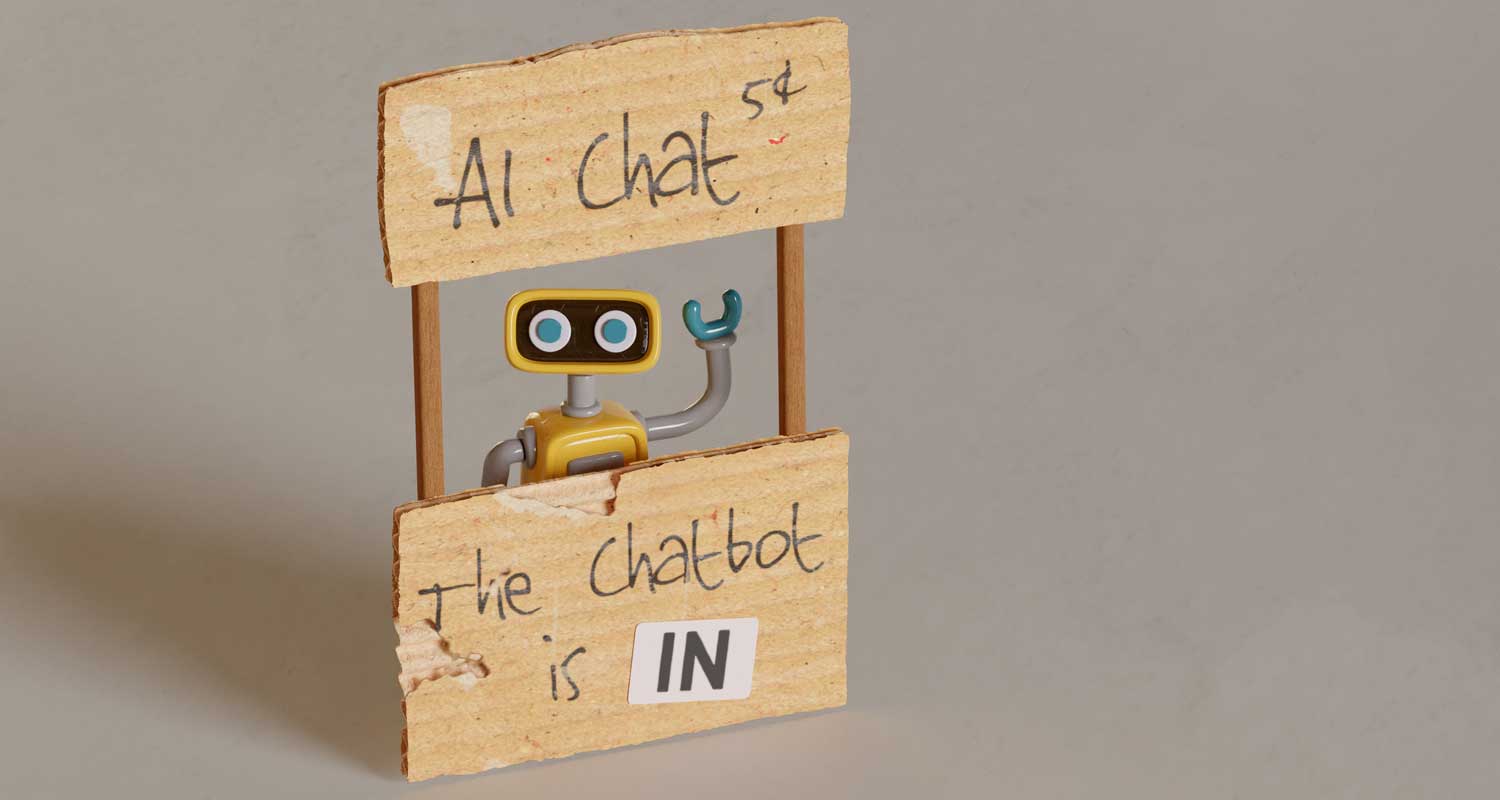
The findings build on earlier Gartner research: a survey published in July 2025 found that more than half of customer service journeys now start on third-party platforms.
The research is pertinent to South Africa, where major organisations are betting heavily on AI channels of their own.
Read: ChatGPT smashes through a billion monthly users
The South African Revenue Service, for example, has deployed its Ask Lwazi chatbot, with an ambition for AI agents to handle the bulk of taxpayer interactions – as commissioner Johnstone Makhubu noted, China’s tax authority already uses AI to field 80% of incoming call queries.
Gartner’s data suggests the harder task lies ahead: building AI channels that customers actually choose over the third-party tools already in their pockets. — (c) 2026 NewsCentral Media

