

Uber is cutting about 3 300 jobs, roughly a tenth of its global headcount, in a restructuring designed to flatten its management hierarchy and concentrate resources on three things: ride-hailing, delivery and autonomous vehicles. The number of managers is being slashed by 20%.
On the same day it announced the cuts, the company closed its operations in Nigeria and Uganda, ending a 12-year presence in Africa’s most populous country and a decade in Uganda.
CEO Dara Khosrowshahi told staff that years of growth had introduced “more layers, more coordination, more fragmented ownership, and in some cases structures that made sense when businesses were smaller but no longer serve us well at our current scale”.
The savings, he said, would be reinvested in growth and innovation. The restructuring roughly halves the number of one- and two-person micro-teams, cuts by a fifth the share of staff sitting more than seven levels from the CEO, folds the separate restaurant, retail and white-label delivery units into a single global, regional and local structure, and caps remote work at about 1% of the workforce. Headcount falls to just under 30 000, roughly where it stood in 2021.
“After a thorough review of our business, we have made the tough decision to wind down our operations in Nigeria, effective 2 September 2026,” the company told users. Ugandan customers received an almost identical notice.
The two closures leave Uber in six African markets – South Africa, Kenya, Ghana, Morocco, Mauritius and Egypt. It withdrew from Côte d’Ivoire in 2025 and from Tanzania in February, making these the third and fourth exits on the continent inside two years.
Cutting from strength
The company was at pains to say the retreat stops there. “This decision is limited strictly to these two markets and does not impact our operations across the rest of the continent,” a spokesman said. “Uber remains deeply committed to sub-Saharan Africa, where we continue to see robust growth and long-term opportunity.”
What makes this round different from Uber’s pandemic-era retrenchments is that the core business is growing. Gross bookings reached US$58-billion in the quarter to 30 June, up 24% year on year, on revenue of $14.2-billion. These are not cuts forced by a shrinking top line. Rather, they are a decision about where the company wants to spend.
The three areas Uber is concentrating on explain the African decisions better than local market conditions do. The company has pivoted hard towards autonomous robo-taxis and has committed more than $10-billion to autonomous vehicle partnerships, with capital directed into Avride, Lucid, Nuro and Rivian.
This is a capital-intensive bet that pays off only in dense, high-value markets with the regulatory clearance to run driverless fleets. On delivery, it moved on Delivery Hero in July in a deal that handed Prosus a R40-billion exit. Neither strategy has much use for a market of price-sensitive riders and thin margins.

Uber does not break out country-level results for its African markets, so the revenue effect of the two exits is not disclosed. Competition in Nigeria has intensified, with operators facing rising fuel costs, inflation and currency volatility. In Uganda, local rivals including SafeBoda and Faras have taken ground in Kampala. Uber said the Nigerian decision was not connected to a recent Federal Airports Authority directive on e-hailing pickups at airports.
The San Francisco-based company entered West Africa’s largest economy with a Lagos launch in 2014 and reached Kampala in 2016. Its Nigerian help centre remains available until 23 September for outstanding account issues. It did not say how many drivers or riders are affected.
Where this leaves South Africa
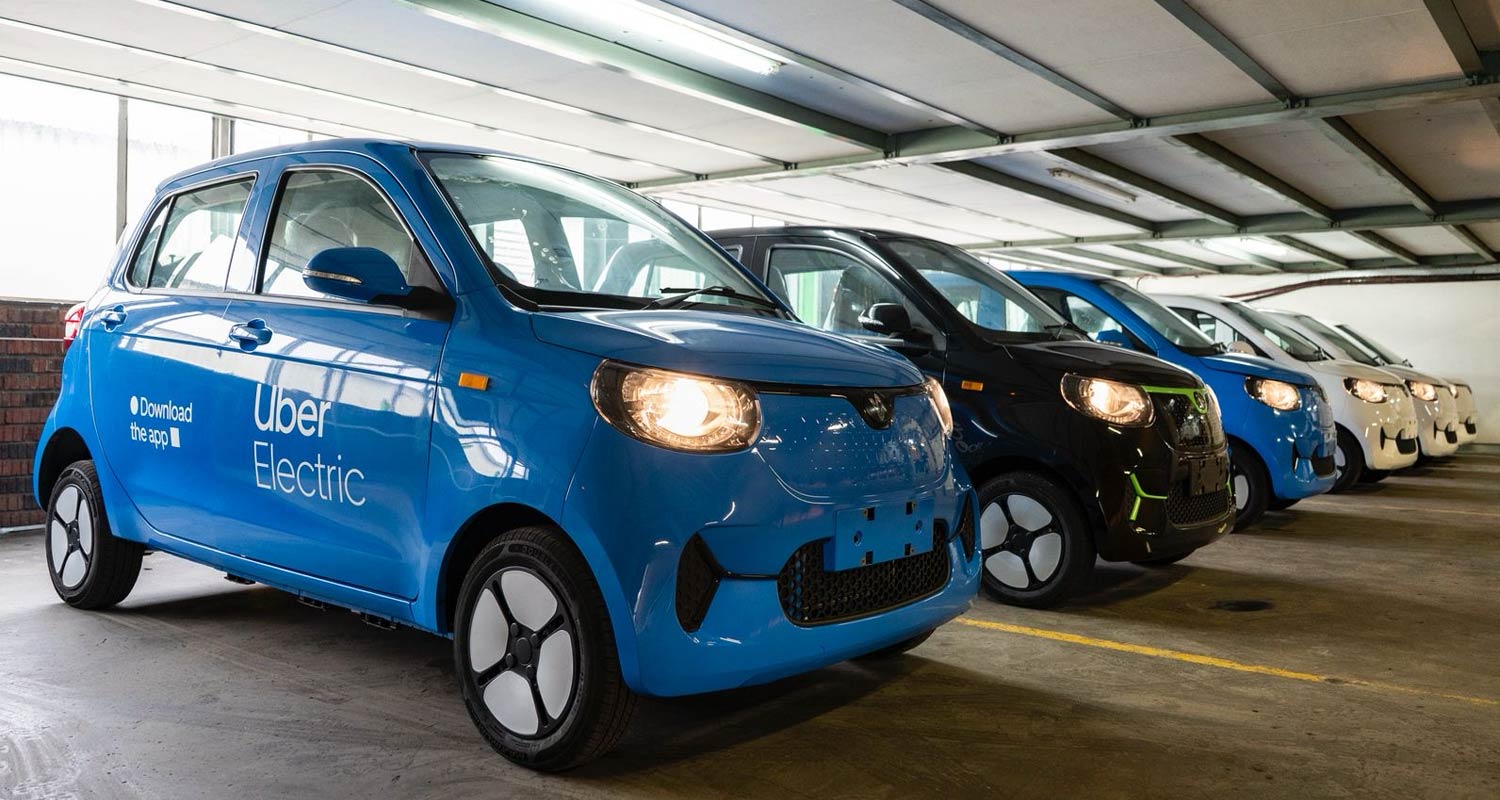
South Africa is one of the six markets Uber is keeping, and it remains the largest e-hailing platform here. The company also made its biggest South African commitment to date just five months ago, pledging R5-billion in investment over three years at the South African Investment Conference – covering electric vehicle fleet expansion, charging infrastructure, merchant hardware and new earnings opportunities on the platform.
Sub-Saharan Africa GM Deepesh Thomas told TechCentral at the time that the figure was a mix of new money and spending already in the pipeline, and made no secret of the fact that the announcement was meant to strengthen the company’s hand with regulators.
“We’re asking for further support and engagement with the regulators and the national transport ministry to work towards collaborative regulations,” he said. He described Uber as “very bullish” about South Africa and sub-Saharan Africa.
However, Uber’s regulatory standing in South Africa has been unsettled since March. The National Land Transport Amendment Act was gazetted in September 2025, requiring platforms to register with the National Public Transport Regulator and giving them 180 days to do it. Bolt applied in November 2025 and had its certificate by 27 February. Uber missed the 11 March deadline and has yet to confirm formally that it holds a certificate. – © 2026 NewsCentral Media, with additional reporting from Reuters

