

One in every 17 new vehicles sold in South Africa is now electrified, according to automotive industry body Naamsa. But only one in 123 is fully electric.
Naamsa reported 3 045 new-energy vehicle sales in June, a 104.2% increase on the same month a year earlier and a 6% share of the light vehicle market. Battery-electric vehicles accounted for 419 of those units — or just 0.81% of the market.
The figures come with a timing quirk worth spelling out: Naamsa’s monthly release, published on Monday, carries July sales data but a June electrification breakdown, because it reports the NEV split a month in arrears; the release covering May sales carried April figures. Passenger and light commercial sales for June come to 51 508 units, precisely the base behind the 6%.
July’s headline numbers were strong. Aggregate domestic sales reached 57 708 units, up 11.9% year on year, with 40 912 passenger cars sold, which Naamsa says is the segment’s best month since September 2014. Year to date the market has moved 372 770 vehicles, up 12.7%.
Naamsa’s new-energy vehicle category is led by traditional hybrids, at 1 488 units or 48.9% of the June total. A traditional hybrid draws no external energy. It runs on petrol and recovers a portion of it through regenerative braking. Including it is what produces the 6%.
Plug-in hybrids contributed 990 units and battery electrics 419. Vehicles that can actually draw power from the grid came to 1 409 units — 2.7% of the light vehicle market, on TechCentral’s calculation.
A BYD story
Across the first half, the picture is thinner still. Light vehicle sales through to June totalled 298 910 units, against which the 13 193 electrified vehicles sold year to date represent 4.4%, and the 1 903 battery electrics 0.64% — roughly one in every 157 vehicles sold, again on TechCentral’s calculation.
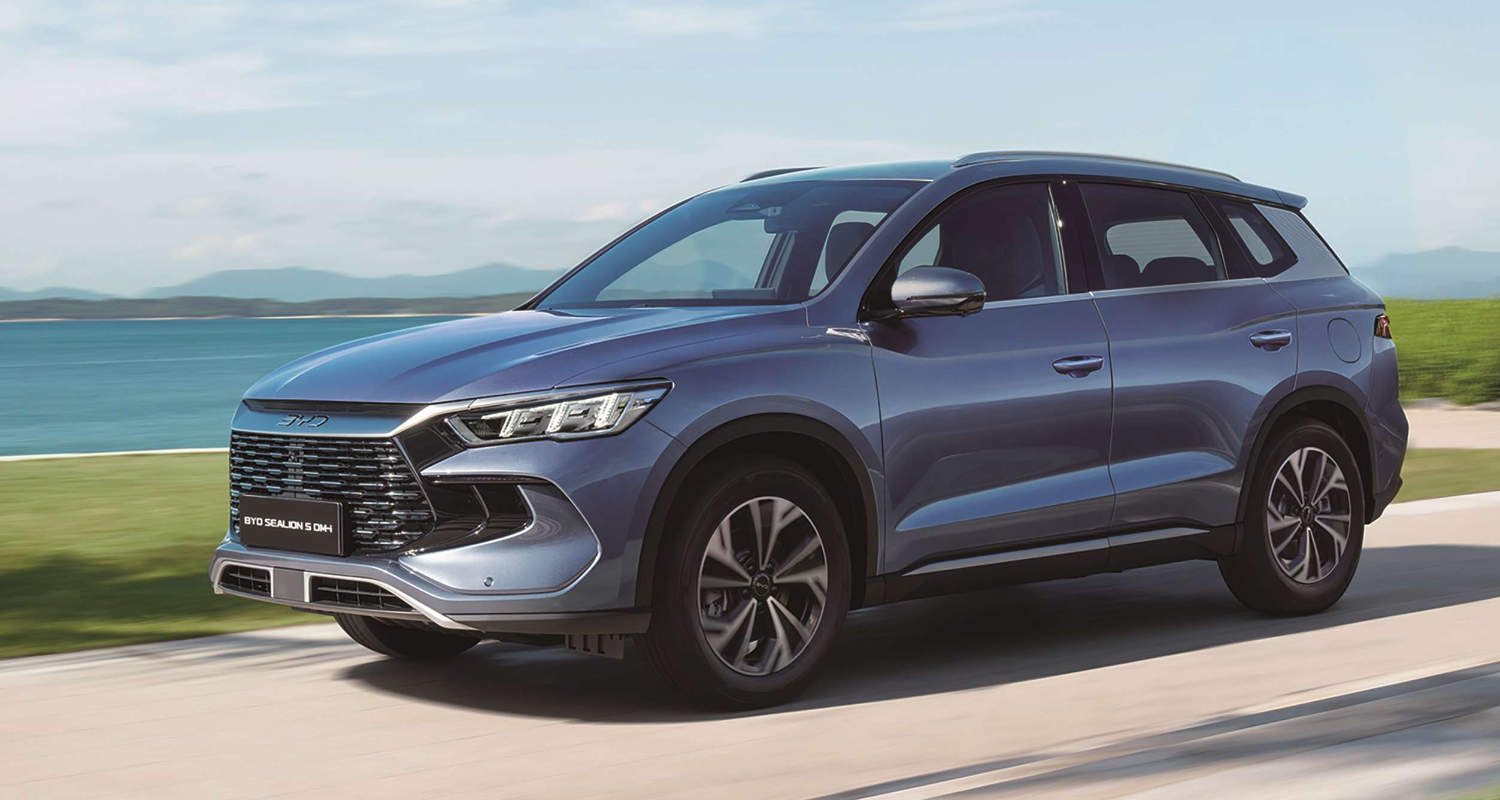
BYD sold 860 vehicles in July and 800 in June, when it entered Naamsa’s top 15 for the first time. BYD sells only electrified vehicles, which put a single Chinese entrant at roughly a quarter of the entire NEV market in June.
Read: How Chinese cars took over South African showrooms
Since battery-electrics across every brand came to just 419 units, at least 381 of BYD’s 800 June sales — nearly half — must have been plug-in hybrids. The 32.5% PHEV share is therefore substantially a BYD story rather than a broad market shift. Absa figures put BYD at 2 011 NEV sales over the first five months of the year, the second-largest NEV brand locally.
BYD entered South Africa in 2023 and has avoided launch discounting, with MD Steve Chang pursuing price parity against petrol and diesel equivalents instead.
Policy support is aimed at production rather than purchase. The 150% investment allowance that took effect on 1 March and which runs until at least 2036 covers local manufacturing of battery-electric and hydrogen vehicles — not the hybrid technologies behind more than 80% of NEV sales. Government’s 2023 electric vehicle white paper also sequenced production for export ahead of local market development.
Price is the binding constraint. The cheapest battery-electric vehicle on TechCentral’s ranking was the BYD Dolphin Surf at R339 900 when the list was last updated in February. Plug-in hybrids start just under R500 000 and run to well past R1-million. Fuel price volatility has begun shifting the arithmetic for fleet operators, but not yet for most households. — © 2026 NewsCentral Media

