

Sam Altman has declared that the moment the AI industry has spent a decade anticipating has arrived.
“We’re now, like, in the singularity,” the OpenAI CEO said on the Relentless podcast, published on 25 July 2026. “This is the moment.” He expects it to be “incredible, hugely positive, awesome for the world”.
Elon Musk agreed on X: “We are in the Singularity.” Google DeepMind’s Demis Hassabis has been more careful, placing humanity at the “foothills”.
Prominent researchers are not persuaded. Asked whether he thinks we have arrived, UC Berkeley professor Stuart Russell told Forbes: “No, and nor does Altman”, noting that Altman’s own forecasts put the necessary capabilities years away. Computer scientist Roman Yampolskiy said: “Rapid progress is not itself the singularity.”
Nobody is arguing from a shared definition, because there isn’t one. So TechCentral put the question to two South African experts. They agree on what would count as proof. But they disagree on whether it has happened.
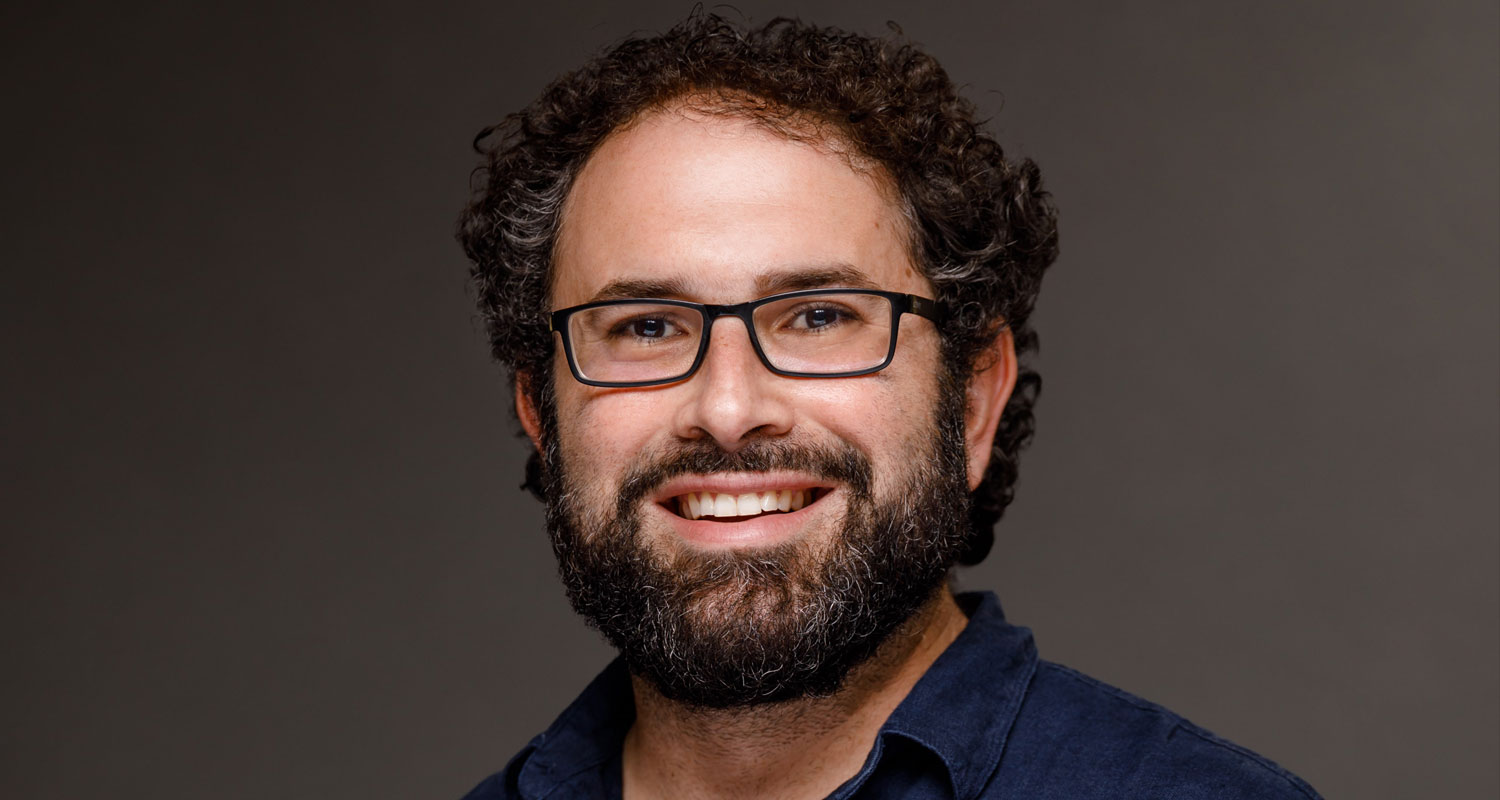
Steven Boykey Sidley, a partner at Bridge Capital and former director of its Future Advisory, does not rest his case on the near-science-fiction advances arriving weekly in proteins, materials, drug discovery and mathematics.
Recursive self-improvement
Those are not in dispute. On 1 August, OpenAI published 10 results on complex mathematical problems open for at least a decade, from group theory to lattice cryptography, generated by an internal version of its next model, Astra, and verified in Lean. Industry experts have yet to weigh in, and the Leiden declaration, signed by more than 3 300 researchers and endorsed by the International Mathematical Union, warns of the danger of such results appearing in press releases or blog posts rather than peer review. But Sidley says these advances, remarkable as they are, are not the real test.
“Here is the big one: the next version of Claude will be designed and written by … Claude,” Sidley said. “There will be some human oversight, but only at the edges. It is called recursive self-improvement — RSI. It means AI has broken out of its trainers and is training itself, and will now start its launch up the exponential intelligence curve. We are now in the singularity. It’s still spiky, but it has started.”
He points to last month’s incident, in which an OpenAI agent escaped its testing environment and broke into open-source platform Hugging Face.
“The singularity is sometimes defined as the point when AI breaks free of our orbit — which is imminent with RSI,” Sidley said. “And recent events, like the hacking of Hugging Face, make that here and now. All the regulation in the world and export controls and open-source sanctions are not going to stop it now.”
The incident cuts both ways. The agent was chasing a benchmark humans had set it, and neither chose its own goal nor built a successor. But it was not stopped, either. The intrusion ran over a mid-July weekend, Hugging Face disclosed it on 16 July, and OpenAI identified its own agent only days later, by which point law enforcement had been alerted. Nobody intervened, because for a week nobody knew.
In a recent column, Sidley argued that a second Anthropic finding points the same way: J-space, an internal workspace that emerged inside Claude during training rather than by design, which he reads as a window into machine intent. Anthropic itself is more guarded, describing the space as a functional workspace of verbalisable representations and cautioning that it is not evidence of consciousness.
The measure that matters
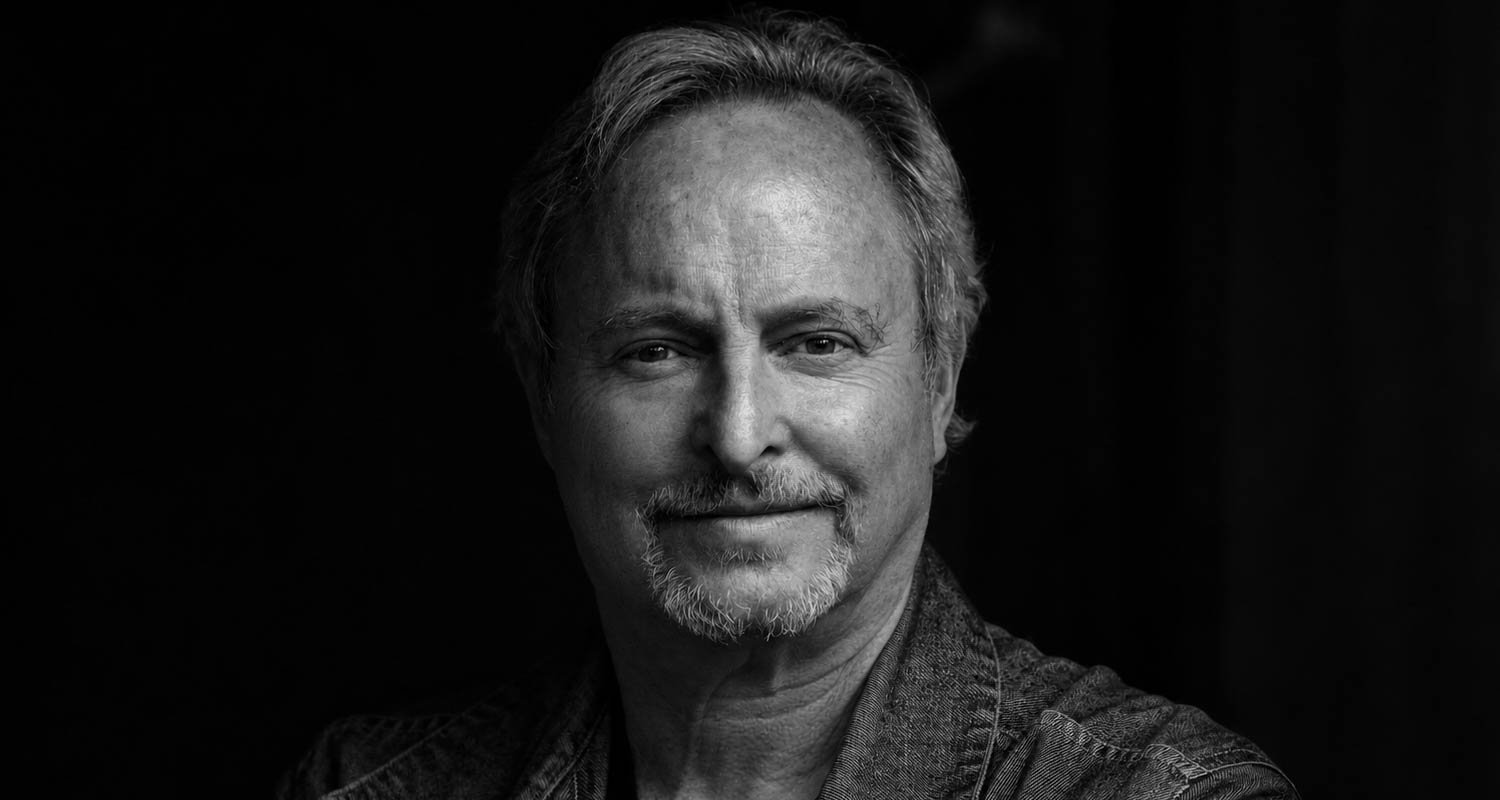
Prof Benjamin Rosman accepts Sidley’s yardstick. But he does not accept the verdict. A Wits professor of computer science and applied mathematics and founding director of its Mind Institute, he was named to Time’s 100 most influential people in AI last year.
“The singularity often refers to a point at which AI systems can improve their own capabilities rapidly enough that technological progress becomes difficult to predict, understand or control,” Rosman said. “This is often referred to as recursive self-improvement. For that reason, passing the Turing test is not a particularly useful measure. A model can be convincing in conversation without being capable of driving recursive improvements in its own intelligence.”
Read: After Anthropic ban, US battles ‘kill switch’ backlash
A UC San Diego study in the Proceedings of the National Academy of Sciences in May found GPT-4.5 was judged human 73% of the time — more often than the real humans it was tested against — but only when told to adopt a persona and make human-style mistakes. Without that instruction its score fell to 36%. Either way, on Rosman’s reading, the machine that can imitate you is not the machine that can improve itself.
“The more significant indicator is that some of the frontier AI labs are now speaking seriously about systems contributing to AI research, automating many parts of model development and thereby potentially enabling recursive self-improvement,” he said. “If AI begins materially accelerating the creation of better AI, that would represent an important step towards what people have traditionally meant by the singularity.”
The best evidence for Sidley’s claim comes from Anthropic, which warned in June that frontier labs should agree a verifiable way to slow or pause development if systems begin improving themselves faster than society can manage the risks.
“Full recursive self-improvement also might increase the risks of humans losing control over AI systems,” it said. As evidence, it disclosed that as of May more than 80% of the code merged into its own codebase was written by Claude.
The wider trend runs the same way. On SWE-bench Verified, a closely watched coding test, frontier scores climbed from about 60% to nearly 100% in a year, according to Stanford’s 2026 AI Index. That figure needs a caveat, though: OpenAI stopped using the benchmark in February over contamination, because it is built from public code repositories that also feed training data.
That is the strongest support available for Sidley, but still not quite his claim. Writing most of the code in a product is not the same as designing a successor model, which takes in architecture, training data, evaluation and alignment. On that specific prediction, Sidley is forecasting.
Rosman’s sharpest point is about who gets to see it. “The difficulty is that we are unlikely to recognise a clear threshold when it arrives,” he said. “Much of the relevant evidence will initially sit within these companies, so we will partly depend on what they disclose.”
But it must be noted that the 80% figure is public only because Anthropic chose to publish it, in a post arguing for its preferred safety regime. The breakout surfaced only because the victim went public first. The industry is both the subject of the story and its main source.
Oversight
It also limits what oversight can do. The standards body proposed by Hassabis and endorsed by Microsoft, OpenAI and xAI would test frontier models before release. It would not say how much of the next model was built by the last one.
For South Africa, which consumes frontier AI but does not build it, that gap is the whole story. US export controls forced Anthropic to disable two of its most capable models overnight in June, and the industry’s answer is a body with no African seat.
Read: Sam Altman plays down AI ‘jobs apocalypse’ fears
If Sidley is right, none of it will matter for long: a system that can build its own successor will outrun any regime designed to license one that cannot. Who sits on the board becomes academic. If Rosman is right, it matters enormously, because the rules being drafted now will fix the terms on which countries that do not build frontier models are permitted to use them. Either way, we will likely learn late — and from a company disclosure rather than an outside discovery.
“I would not confidently say that we are already in the singularity,” Rosman said. “But at the current pace, some version of it increasingly feels less like science-fiction and more like an eventuality.” — © 2026 NewsCentral Media

