

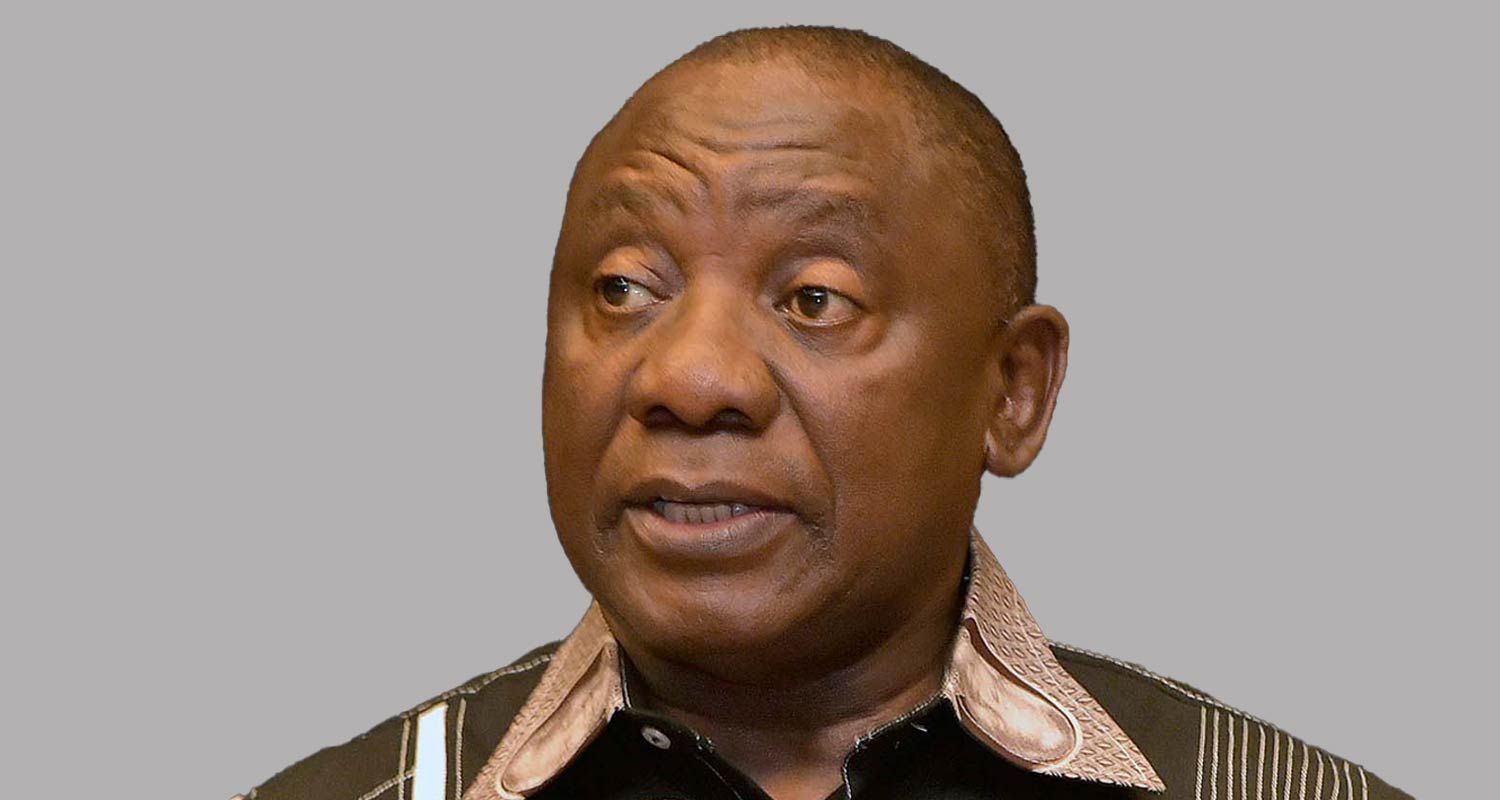
President Cyril Ramaphosa has endorsed a report by the Eskom restructuring task team setting out how to establish a fully independent, state-owned transmission system operator (TSO) that will own and control South Africa’s transmission assets and run the electricity market.
“The TSO is a key enabler of a successful competitive wholesale electricity market that is expected to deliver reliable and cost-effective electricity,” the presidency said on Friday. The task team found the restructuring feasible, in line with international best practice, and achievable without compromising Eskom’s financial sustainability.
The clock is not open ended. The Electricity Regulation Act, as amended, requires the TSO to be established by no later than 31 December 2029. Until then its functions are carried out by the National Transmission Company South Africa (NTCSA), the ring-fenced Eskom subsidiary set up in July 2024. The NTCSA is what exists now; the TSO is the independent entity it is meant to become.
Eskom board directors will not be appointed to the NTCSA board, and no one will sit on both. Appointing the NTCSA’s chief executive and senior management becomes the sole responsibility of its own board. Decisions on access to the transmission network move to the NTCSA and eventually to the TSO.
The move was contested as recently as last December. On 9 December, energy minister Kgosientsho Ramokgopa approved a revised Eskom unbundling strategy under which the NTCSA would have remained a wholly owned Eskom Holdings subsidiary and kept ownership of the transmission assets, with the new TSO standing up outside Eskom as system and market operator, central purchasing agency and provider of ancillary services. The grid would have stayed in the family.
Full separation
Ramaphosa’s February state of the nation address reversed that, announcing the task team and reaffirming support for a TSO that owns the assets outright. Business read the December plan as a retreat from the agreed Operation Vulindlela position, and Friday’s endorsement settles the question in favour of full separation. The task team’s terms of reference are explicit that ownership of the transmission network is separated from Eskom.
The task team was established at the beginning of March, chaired by national treasury director-general Duncan Pieterse, with the presidency, treasury, the department of energy, Eskom and the NTCSA represented.
Read: Memo to Eskom: Telkom already lost this fight
It was given three months, to the end of May, to produce a high-level report. Ramaphosa extended that to the end of June. The report was delivered on 30 July and endorsed the following day — two months past the original deadline and a month past the extended one.
Phase 2, developing the detailed transaction structure and implementation plan, is scheduled to run for a further three months: the same window phase 1 was given, and overshot.
The delay had not gone unnoticed. Business Leadership South Africa’s reform tracker fell quarter on quarter for the first time in its history in the April to June quarter, with the electricity score down 2.2%. BLSA called the transmission operator delays “concerning”, warning that without it “a competitive market becomes impossible”.
Two conditions in the terms of reference will decide whether this is deliverable:
- The first is that Eskom must be no worse off than its current financial position after the restructuring, while the TSO is itself financially sustainable. That principle has drawn scrutiny, given Eskom trades with the support of a government debt-relief package and ratings agencies have flagged risks in the unbundling. Stripping a utility of its transmission assets without leaving it weaker, or loading the cost onto tariffs or the fiscus, is the whole difficulty.
- The second is municipal debt. The task team flagged the growth in municipal arrears to Eskom, which has breached R114-billion, as a threat to the utility and the wider sector, naming stronger credit control, the smart meter roll-out and distribution agency agreements among the measures to be scaled up.
The reform has a live cost while it waits. Eskom is holding 6.97GW in cold reserve because of excess capacity, roughly a quarter of the 28.72GW instantaneous peak it recorded in the week to 23 July. That abundance ended load shedding, but it has been accompanied by aggressive curtailment of renewable independent power producers, leaving a R2-billion backlog in compensation payments and some producers facing revenue shortfalls of around 9%. The competitive market the TSO is meant to enable is exactly the mechanism that would give that power somewhere to go.
Read: Trading rules near as Eskom tools up to compete
Ramaphosa said the report showed “how government can ensure that the architecture of the electricity sector can change as the sector continues to evolve”, adding that “it is welcomed that all the key stakeholders are aligned on this objective”.
That follows a month in which Eskom’s chairman and BLSA were publicly at odds over grid reform. — © 2026 NewsCentral Media, reporting with SANews

