

Communications minister Solly Malatsi’s declaration on Friday that his patience with sector regulator Icasa has run out is a small bureaucratic event dressed up as a much larger political one.
The written statement issued by his spokesman was carefully phrased – Malatsi “expects to be provided with reasons for the lack of sufficient detail” in Icasa’s response to his December policy direction – but the real meaning is impossible to miss. The regulator has been sitting on the direction for more than four months. The minister, a senior DA figure in a GNU, has decided to force the issue.
What looks on paper like a row over regulatory implementation is in fact a proxy war that has very little to do with telecoms regulation and nearly everything to do with the politics of South Africa’s governing coalition. Icasa, an independent statutory regulator with a narrow technical mandate, is being dragged into the middle of it. Some of its councillors may have already picked a side. But that is not what Icasa is for.
Let’s start with some quick context.
Malatsi’s December policy direction requires Icasa to align its licensing rules with the broader B-BBEE framework by recognising equity equivalent investment programmes, or EEIPs, as an alternative route to compliance. Multinationals that cannot or will not cede 30% of local equity to historically disadvantaged groups would instead invest an equivalent amount in skills development, enterprise support, local infrastructure or research.
The mechanism already exists in South African law and is already used by Microsoft, IBM, Amazon Web Services and a long list of other global technology firms. It is administered by the department of trade, industry & competition. It is not new, not radical and not tailored to a single company, whatever critics of the direction have falsely claimed.
The reform is needed
The reform is also, on its merits, defensible. The 30% local ownership rule has been applied to telecoms licensees for two decades. It has not, on any honest reading, produced broad-based transformation. And there is a serious argument that the current rule has deterred the very foreign direct investment South Africa insists it wants. There is no serious argument that replacing equity with measurable, enforceable investment commitments would make the country’s telecoms sector less transformed.
All of this should make this an easy conversation. It is not, and for one main reason: Elon Musk.
Read: ICT sector BEE code under the microscope as Starlink circles
Musk’s Starlink, owned by his rocket company, SpaceX, is the most prominent of the multinationals waiting on this reform. Other operators are waiting in the wings, too, but he has inserted himself into the middle of the story.
Musk’s politics are ugly. In December 2024, he endorsed Germany’s far-right Alternative für Deutschland with the declaration that “only the AfD can save Germany”. He has since boosted Reform UK and the British far-right activist Tommy Robinson, and was widely accused — fairly or not — of amplifying the 2024 anti-immigration riots on the platform he owns.

He has described South African ownership laws as “racist”, carried the “white genocide” narrative to hundreds of millions of followers and seen that written into a Trump executive order that halted US aid to South Africa and welcomed white Afrikaners to America as refugees.
Every post Musk fires at this country from across the ocean raises the political price of defending a reform his companies would benefit from. The president knows this. And so does his party.
The result is that a reform that would have been uncontroversial if its most visible beneficiary had been Microsoft is now politically radioactive because it is visibly friendly to him. Musk is arguably the worst possible ambassador for a sensible idea. He is also, clearly, exactly where he wants to be – the visible third party in a fight he has helped to inflame, and from which he stands to gain either licensing access or a usable grievance, depending on which way the thing tips.
This is the backdrop against which President Cyril Ramaphosa finds himself boxed in. When Malatsi gazetted his draft policy direction in May last year, the president endorsed EEIPs in parliament the following month as an innovative alternative to equity ownership. The presidency publicly defended the final direction in December.
Then, in February, Ramaphosa used his reply to the state of the nation debate to declare that “now is not the time to abandon BEE”. At the ANC’s Limpopo elective conference on 29 March, he went further, telling delegates that critics of BEE and affirmative action “are dreaming”.
And so it sits
This is not cynicism on the president’s part, or not just cynicism. He personally backed a narrow, technical alignment of Icasa’s rules with existing national policy. What he cannot afford, with local government elections coming and MK and the EFF campaigning on the claim that the ANC has sold the country to Musk and Trump, is to be seen doing so. So, the reform sits.
The Electronic Communications Act obliges Icasa to consider policy directions within a reasonable time while retaining regulatory independence over how it gives them effect; what the act does not contemplate is a regulator that has quietly become a referee in a fight between coalition partners.
Read: Musk hurls expletives at senior SA diplomat in Starlink row
Icasa, understandably, drags its feet. It does not want to be blamed for what happens next. The policy direction stands uncontested but also unimplemented. And Malatsi, whose party cannot afford to walk away from the GNU over a regulatory delay, is reduced to issuing written statements expressing his impatience.
The conclusion could be that that this is an internal ANC problem, or a GNU problem or a Musk problem. The fact is, it’s all of those things. It is also, more fundamentally, a Ramaphosa problem.
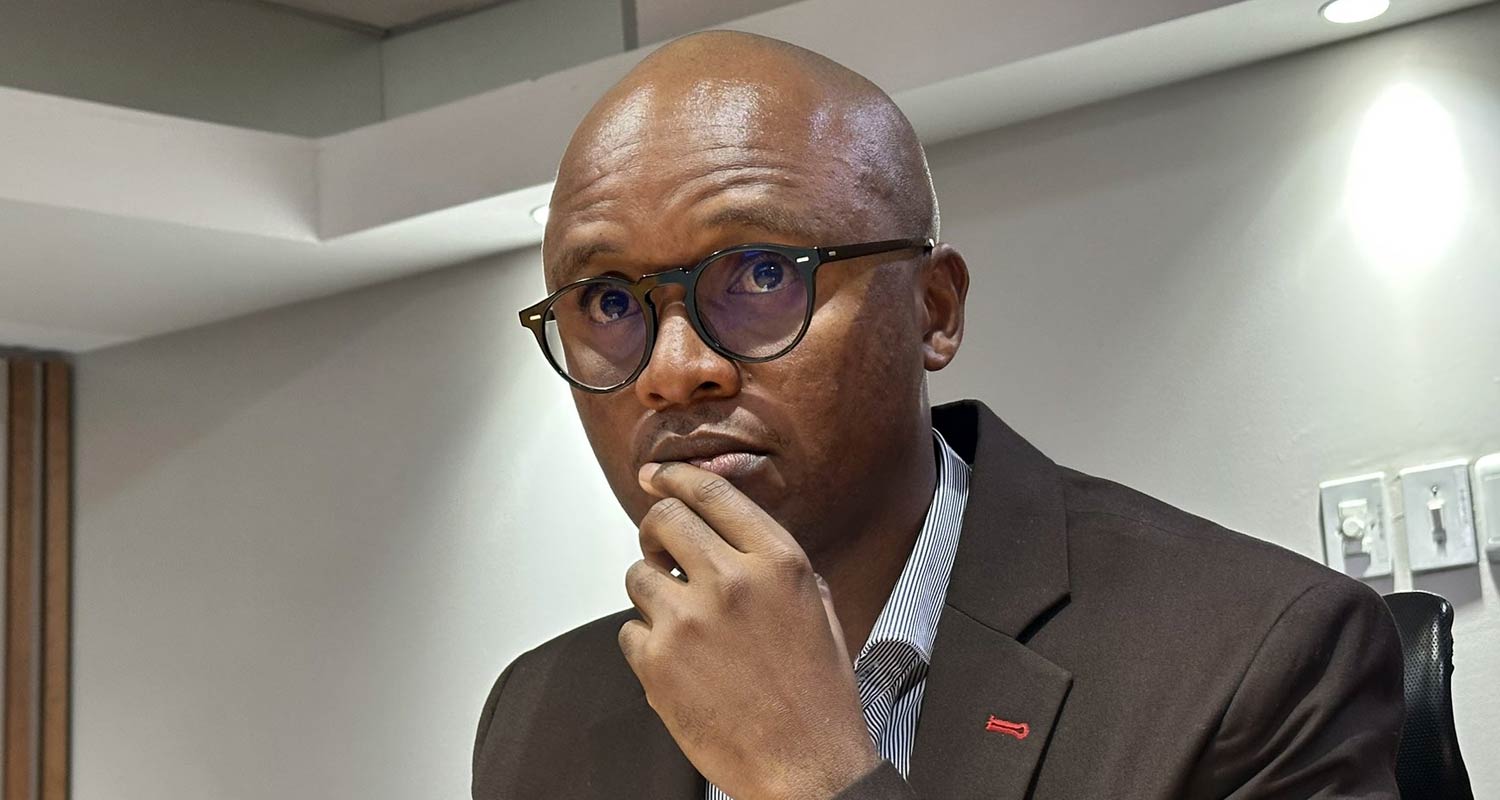
The president personally endorsed the reform. But he finds himself trapped not by his coalition partners but by the gap between the technocratic case for a sensible regulatory alignment and the political discipline his own party demands of him on BEE.
Until he finds a way to reconcile the two – or decides which of them he is willing to sacrifice – Icasa will sit on the policy direction, Malatsi will keep issuing statements, and a billionaire who has made a point of amplifying every grievance he has with this country will keep on stirring the pot. – (c) 2026 NewsCentral Media
- The author, Duncan McLeod, is editor of TechCentral

