

National Biosafety Authority (NBA) Chairman David Wamatsi (far right), accompanied by Acting Chief Executive Officer Dr Ann Karimi, meets African Agricultural Technology Foundation (AATF) Chairman Prof. Aggrey Ambali (second from right) on the sidelines of the 17th Conference of the Parties to the Convention on Biological Diversity (COP17), held in Yerevan, Armenia, from 19 to 30 October 2026. PHOTO/NBA.
By PATRICK MAYOYO
Kenya’s National Biosafety Authority (NBA) has pledged to strengthen science-based regulation and international cooperation to protect biodiversity, safeguard public health and promote responsible scientific innovation across Africa.
NBA chairman David Wamatsi made the commitment during the opening session of the 17th Conference of the Parties to the Convention on Biological Diversity (CBD COP17), taking place in Yerevan, Armenia, from 19 to 30 October 2026.
Mr Wamatsi said Kenya must play an active role in shaping international decisions on biodiversity and biosafety, arguing that African countries should have a stronger voice in global environmental policymaking.
“As Kenya and Africa continue to strengthen their regulatory institutions, our presence at these international forums is essential in ensuring that our priorities, scientific perspectives and development aspirations are represented,” he told delegates.
He added: “Kenya’s voice is Africa’s voice. Africa must not only participate in global conversations, but must help shape the decisions that define our future.”
The NBA is Kenya’s national competent authority for implementing the Cartagena Protocol on Biosafety, an international agreement governing the safe handling, transport and use of living modified organisms resulting from modern biotechnology.
Its mandate includes overseeing the transfer, handling and use of genetically modified organisms (GMOs) to protect human and animal health and the environment.
Mr Wamatsi said the authority would continue working with stakeholders to support food security and nutrition while ensuring that scientific advances are managed responsibly.
The conference brings together governments, scientists, policymakers and environmental organisations to address biodiversity loss and accelerate implementation of international conservation commitments.
A key focus is the Kunming-Montreal Global Biodiversity Framework, adopted in 2022, which sets targets for halting and reversing nature loss by 2030.
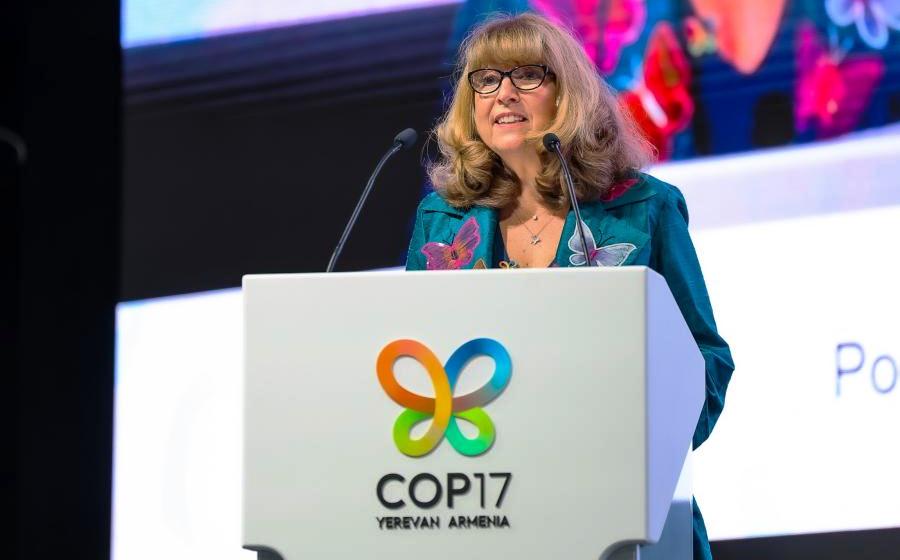
CBD Executive Secretary Astrid Schomaker. PHOTO/ PHOTO/ IISD/ENB – Mike Muzurakis.
Among its central ambitions are conserving at least 30 per cent of the world’s land and marine areas, restoring 30 per cent of degraded ecosystems, reducing pollution and protecting threatened species.
Armenian Prime Minister Nikol Pashinyan addressed the opening ceremony, while Environment Minister Hambardzum Matevosyan was elected president of COP17 for a two-year term.
United Nations Secretary-General António Guterres also participated in high-level events ahead of the conference, including the Leaders for Nature Summit held in Yerevan on 16 October.
African priorities featured prominently in the opening discussions, with Ousseynou Kassé, chair of the African Group of Negotiators, describing the summit as a critical opportunity to mobilise collective action against biodiversity loss.
Financing remains a major challenge as countries seek the resources needed to protect ecosystems, restore degraded landscapes and implement agreed conservation targets.
For Kenya, the discussions have implications beyond environmental protection. Effective biosafety regulation is increasingly important as countries weigh the potential benefits of biotechnology against concerns about ecological risks, food systems and public health.
The NBA’s participation reflects Kenya’s stated commitment to evidence-based decision-making and international collaboration. However, the broader test will be translating commitments made at international forums into effective national regulation, stronger enforcement and measurable environmental outcomes.
As negotiations continue in Yerevan, African countries are seeking to ensure that global biodiversity commitments are matched by adequate financing, scientific capacity and support for implementation.
