

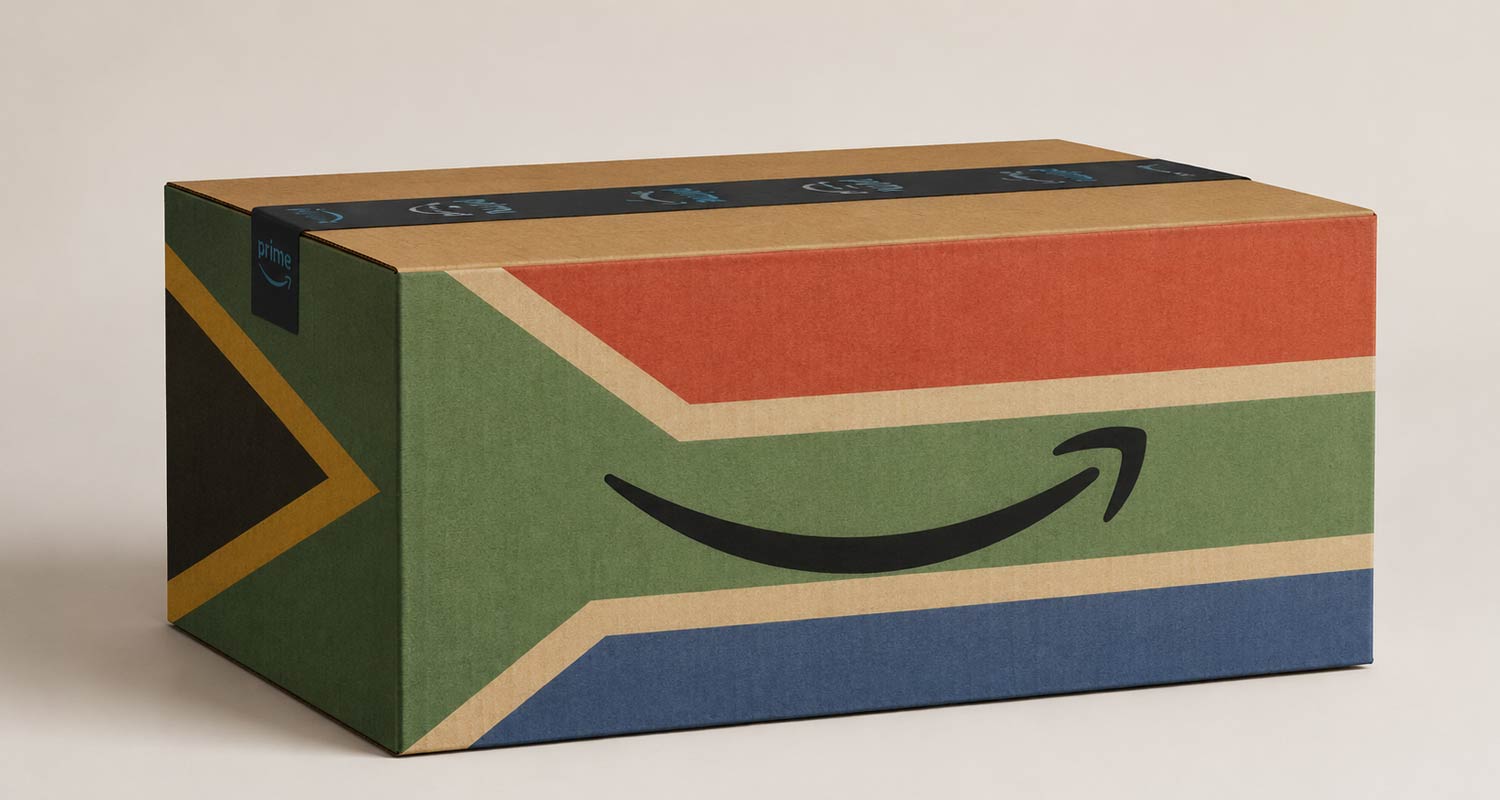
So, Amazon has finally launched Prime in South Africa. For R59/month, or R399/year, shoppers get free delivery, video and gaming. It’s aggressive pricing. But what stands out more is how long it took to get here.
Amazon has been selling to South Africans for two years – and serving them, through other businesses, for far longer – yet it has only now deployed the loyalty engine that underpins its dominance almost everywhere else.
The delay is deliberate, and it says something about how Amazon operates.
This is not a newcomer feeling its way into an unfamiliar market. Through Amazon Web Services, it has been one of the country’s most significant foreign technology investors for years. AWS put R15.6-billion into its Cape Town region between 2018 and 2022 and says it will have spent R46-billion by 2029. One of its foundational services, EC2, was built by engineers in Cape Town as far back as 2006. Amazon knows this market well. It simply chose to enter retail at its own pace.
And that pace has been glacial. When amazon.co.za went live in May 2024, it did so without Prime, without much stock and to a distinctly muted reception. A year on, TechCentral reported that the store was still finding its footing in a market where online buying has, until recently, accounted for a small fraction of total retail spend.
Aggressive pricing
Amazon added a local seller marketplace, Shop Mzansi, and moved into groceries, but it did so methodically, building selection and logistics before dangling the Prime carrot. It is a familiar approach: arrive quietly, lose money patiently and tighten the screws later.
Takealot saw it coming. Two days after Amazon opened its store, the Naspers-owned market leader launched TakealotMore, an unmistakably Prime-like subscription at R39/month and R99/month, with free delivery and other perks.
Read: Amazon brings image-based shopping to South Africa
The most aggressive part of this week’s Amazon Prime launch is the pricing. South Africans have been able to buy Amazon’s Prime Video on its own for some time, at R79/month. The full Prime bundle – same-day and next-day delivery, Prime Day access, Luna cloud gaming, a Twitch subscription and that same Prime Video – costs R59/month (or just R33.25/month when paid upfront for a year).
Amazon is charging less for everything than it was for the video alone. That is the move of a company willing to subsidise the bundle to buy market share, and it changes the dynamics of a video entertainment sector already in flux as Canal+ winds down Showmax and Netflix defends its local base.
It also shows how crowded and combative South African e-commerce is becoming. The main event is now a three-way fight between Amazon, Takealot and Shoprite’s Sixty60 – and on current form, Sixty60 is the one to beat. It grew sales by 47.7% to R18.9-billion in the year to end-June 2025, and now reaches around 875 stores. Online retail as a whole is on track to reach about R130-billion in 2025, or 9-10% of national retail sales, growing roughly 35% a year, according to World Wide Worx.
Then there is Walmart, which owns Game and Makro parent Massmart, and which has been almost comically slow to turn its global e-commerce muscle into local results. It underinvested in online for years while Sixty60 ran away with the convenience market.
Well, Walmart is finally stirring, rolling out a standalone shopping app in late 2025 and, in November, launching a 60-minute grocery delivery service aimed squarely at Sixty60, with its first dedicated store at Clearwater Mall.
For the world’s largest retailer, that is a remarkably tardy start, and a reminder that scale abroad guarantees nothing at home. Still, add Temu and Shein nibbling at the low end, along with Pick n Pay asap! and Woolies Dash, and the e-commerce space in South Africa is getting seriously competitive.
The conspicuous absentees are the pharmacy chains, and that is harder to explain. Clicks and Dis-Chem have the assets that succeed in e-commerce: dense store footprints (Clicks has more than 1 000 stores, around 740 of them pharmacies, and Dis-Chem more than 330), trusted brands, high-margin health and beauty ranges, and customers who buy often and predictably.
Squeeze
Dis-Chem even launched a 60-minute delivery service, DeliverD, in 2021, promising thousands of items within the hour. But neither Dis-Chem nor Clicks has chased on-demand with anything like Shoprite’s aggression, and neither has built the kind of subscription moat over which Takealot and Amazon are now trading blows.
If the past two years have taught us anything, it is that the patient, well-capitalised outsider eventually arrives – and when it does, it competes on price in ways that squeeze everyone’s margins.
Read: Takealot sees off competitive threats to deliver revenue surge
The question is no longer whether Amazon will disrupt local retail, but whether the incumbents best placed to resist will bother to play before someone decides their shelf space is worth taking. – © 2026 NewsCentral Media

