

Angola Cables will upgrade the two subsea cables that link Africa with Brazil and the US, using equipment from US networking group Ciena, the companies said on Tuesday. The work on the Monet and Sacs systems is aimed at carrying more traffic for cloud and AI companies.
Neither company disclosed the value of the contract or when the work will be completed.
Angola Cables owns one of the cables outright and co-owns the other. Together, they form a direct path from Africa to North America.
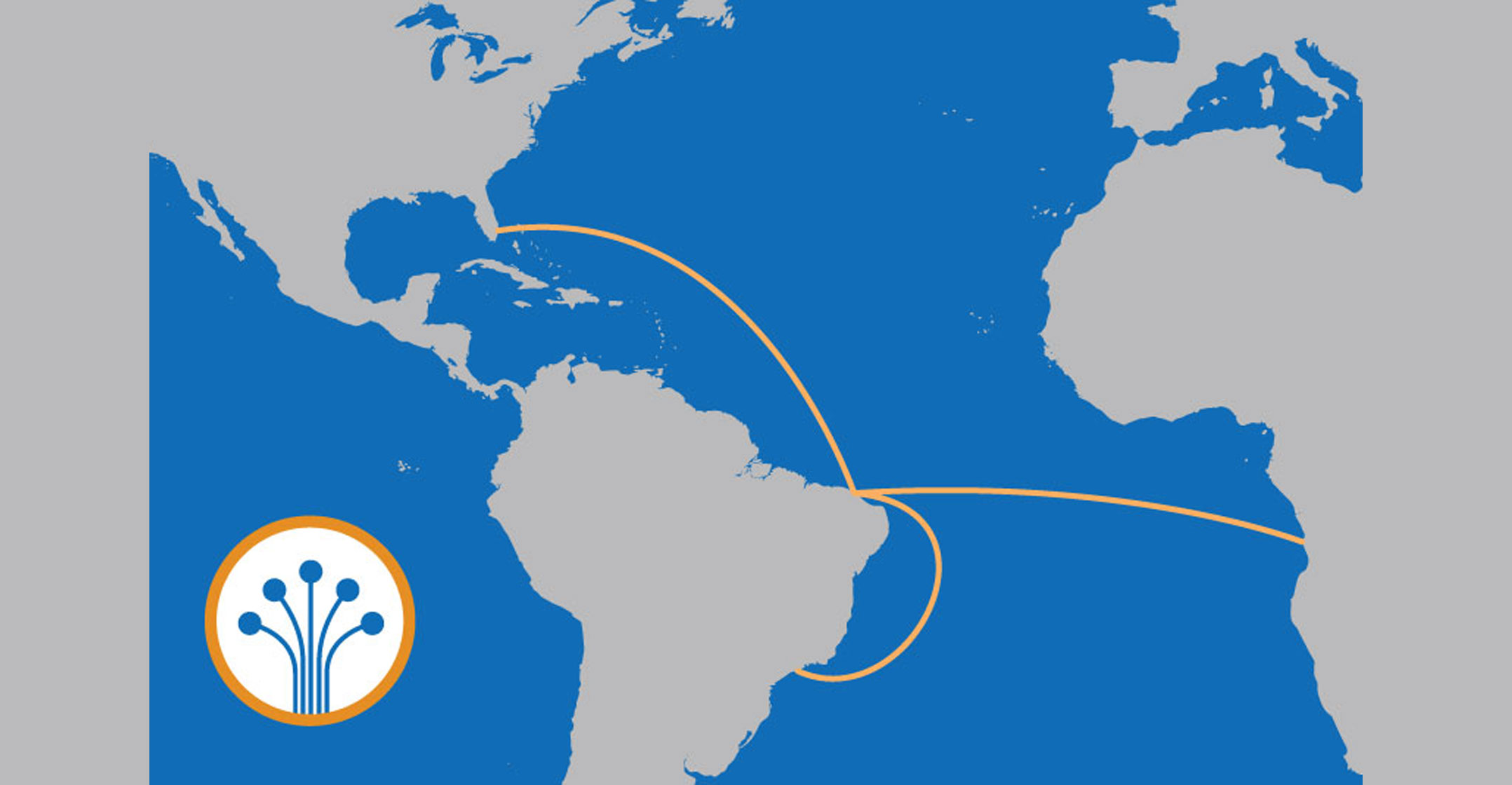
The South Atlantic Cable System (Sacs) is wholly owned by Angola Cables. It runs 6 165km from Sangano on the Angolan coast to Fortaleza in north-eastern Brazil and went live in September 2018. It is the first transatlantic cable system crossing the southern hemisphere.
Monet, a 10 556km system, links Boca Raton in Florida to Fortaleza and to Praia Grande, near Santos in São Paulo state. Angola Cables co-owns it with Google, Brazil’s Algar Telecom and Uruguay’s Antel, and it has been in service since late 2017.
The two cables meet in Fortaleza. Combined, they carry data from Angola to the US and back in about 130ms, according to the companies.
No new cable will be laid. Angola Cables will instead install Ciena equipment, including Waveserver hardware running its WaveLogic 6 Extreme optical technology, at the ends of its existing fibre, letting the same glass on the seabed carry more data.
‘Critical digital bridge’
The biggest change is on Monet, which will support 800Gbit/s client connections – the individual links sold to customers. The companies said the upgrade will also make capacity on both cables more flexible, but the 800Gbit/s connections are specific to Monet. Ciena said customers will be able to buy anything from a single 100Gbit/s link up to an entire fibre pair.
“Our submarine cable systems are a critical digital bridge connecting Africa with the Americas, offering a diverse and secure route between these continents, while demand from hyperscalers and cloud providers continues to accelerate,” said Angola Cables CTO Adriano Caldevilla in a statement.
“Demand for AI, cloud services and digital applications is accelerating the need for higher-capacity, more intelligent networks,” said Fernando Capella, Ciena’s regional director.
The relationship goes back to 2017, when Angola Cables selected Ciena as a technology supplier for Monet. In 2021, Angola Cables added 2.2Tbit/s of capacity to Monet segments connecting Miami, Fortaleza and São Paulo using Ciena’s WaveLogic Ai technology.
Angola Cables is also a landing party on the West Africa Cable System (Wacs), which comes ashore at Yzerfontein on South Africa’s West Coast. That gives South African traffic a path to the Americas via Angola and Brazil rather than via Europe. That traffic crosses the Atlantic on Sacs, so it gains from the extra, more flexible capacity rather than the 800Gbit/s links, which are confined to Monet, the Brazil-US leg.
When Sacs launched, TechCentral reported Angola Cables’ projection that the route would cut latency between Cape Town and Miami from 338ms to 163ms.
The route has already proved its worth in a crisis. In March 2024, breaks off Côte d’Ivoire knocked out Wacs and other west coast cables, disrupting internet services across South Africa. The cuts were blamed on a suspected subsea seismic event, and TechCentral later reported that much of the traffic was quickly rerouted along other cables, including Google’s Equiano system and Sacs. — © 2026 NewsCentral Media

