


Interview with Eka Obaigbena
FOUNDER, TOASTIES
Lives in: Lagos, Nigeria
Eka Obaigbena noticed a gap in Nigeria’s restaurant market for fast-casual chains – such as Chipotle, Shake Shack, and Pret a Manger – she had grown accustomed to while living abroad. To fill it, she launched Toasties, which offers sandwiches, salads and other items that blend local ingredients with international flavour profiles. How we made it in Africa editor-in-chief Jaco Maritz spoke to her about leaving Michelin-starred kitchens overseas to build the business in Lagos.
Topics discussed during the interview include:
- The differences between operating a restaurant in Nigeria and the West
- Stepping into the spotlight as an introverted founder
- Navigating loneliness in the early days
- How Lagos’ dining culture has evolved
- What she would do differently if starting the business again
Watch the full interview below: (only available on www.howwemadeitinafrica.com)
Nigerian entrepreneur Eka Obaigbena trained at the French Culinary Institute in New York, before working in fine-dining and Michelin-starred restaurants in the US and Europe.
During visits home, she noticed an absence of the fast-casual dining chains – such as Chipotle, Shake Shack, and Pret a Manger – that she had grown accustomed to overseas.
“I just wanted to see a change and improvement in the industry, especially because it’s an industry that I’m passionate about,” she says.
Obaigbena relocated back to Nigeria in 2015, where she refined her business idea before officially launching Toasties the following year. The fast-casual concept centres on gourmet sandwiches and salads made with African flavours.
Learning on the job
Toasties launched from an 8m² space at the back of a boutique mall in Lagos’ Ikoyi neighbourhood. Functioning essentially as a stationary food truck, the site consisted of a rear kitchen and an open serving window, with no seating. Obaigbena started the operation with just two staff members.
“There was a lot of learning on the job,” Obaigbena says. In the beginning, she took on multiple roles. “I became the procurement officer, the accountant, the driver, […] the cleaner, the cook, the cashier – you have to do it all, you have to wear many hats.”
Initial sales were slow. For the first few days, the landlord was Toasties’ only customer, before word of mouth gradually brought in more foot traffic.
Those early days were very lonely. “I didn’t have any partners or […] anyone to bounce ideas off,” Obaigbena says.
“There were times when I wondered whether I made the right choice,” she recalls. It was especially difficult to face a challenging economy alone. Shortly after she started the business, Nigeria went through a period of economic challenges, and a sliding local currency made things like ingredients much more expensive.
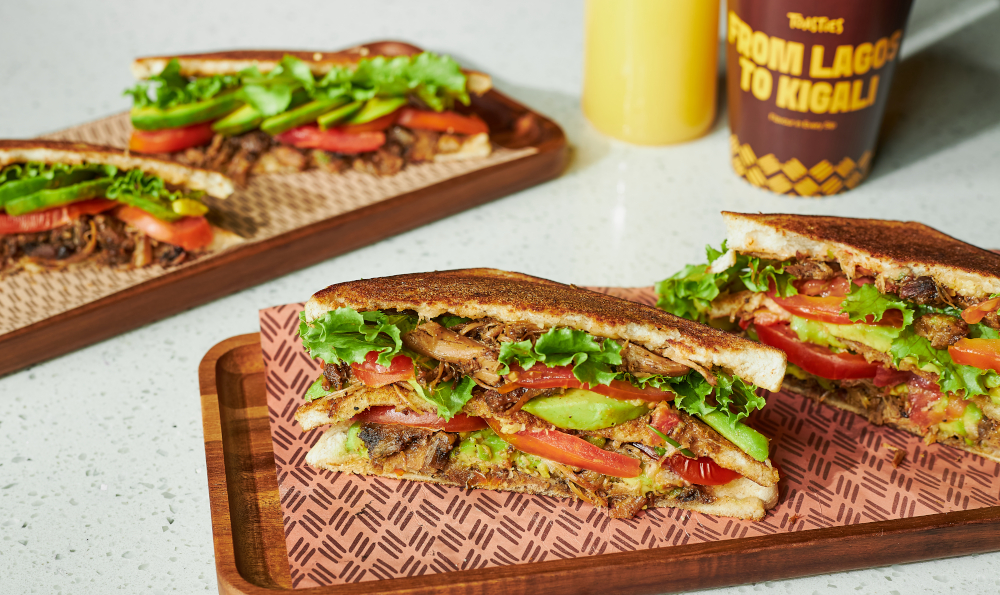
Toasties offers sandwiches, salads and other items that blend local ingredients with international flavour profiles.
Scaling the business
Toasties eventually expanded beyond its original site. A major milestone was securing a location at the domestic terminal of Lagos’ airport, which Obaigbena says had always been a goal.
By 2023, the chain had grown to five outlets. However, some closures – including one site that had to make way for a government highway project – reduced the company’s footprint to three locations.
Backed by a 2025 investment from private equity firm Aruwa Capital Management, Obaigbena plans to resume expansion in 2026. The business is currently preparing to open a new site at the airport’s international terminal.
Deliveries have also become a significant revenue stream. In the beginning, Obaigbena resisted offering delivery because she wanted customers to experience the food fresh off the grill. Today, delivery orders account for about 45% of the business.
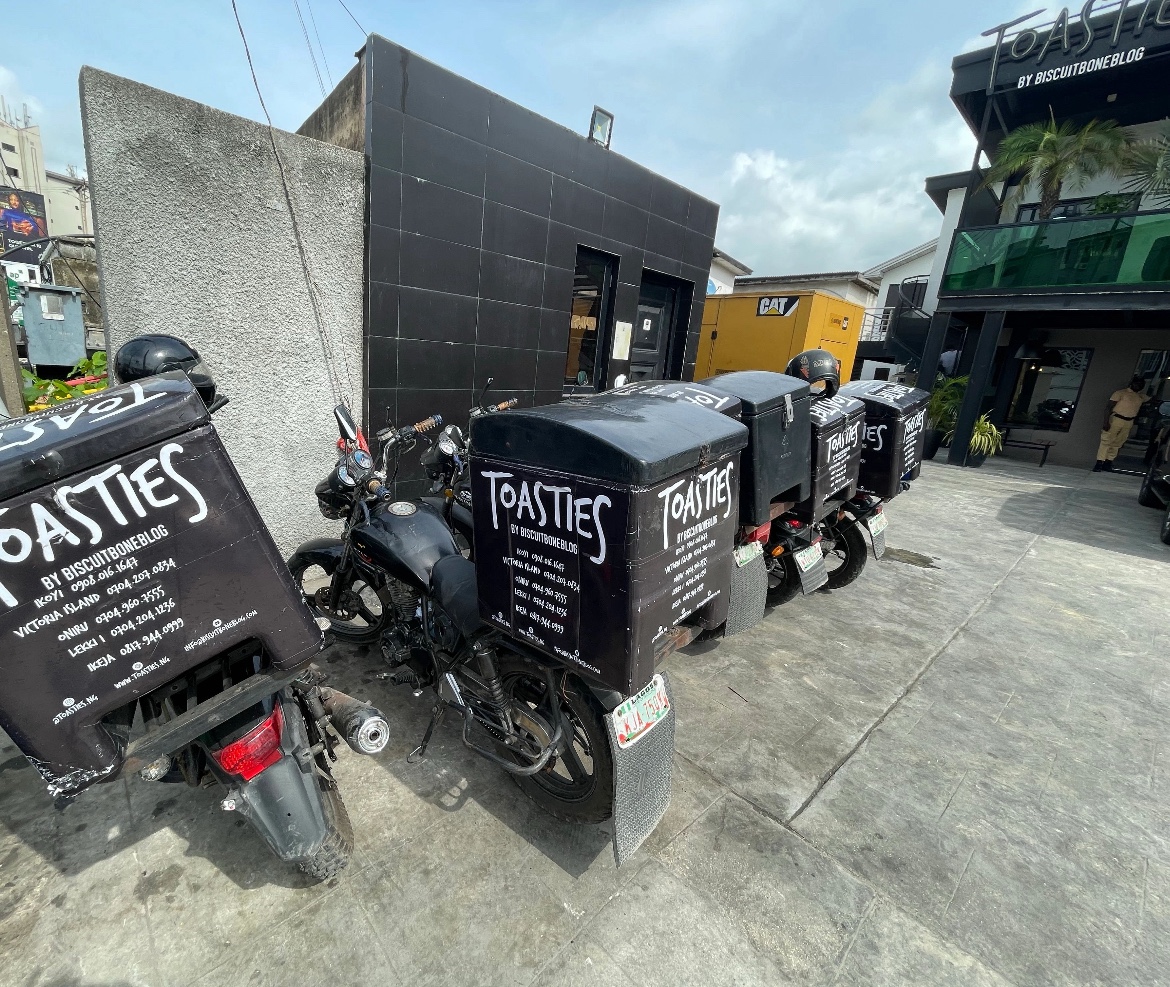
Deliveries have become a sizeable part of Toasties’ business.
‘People want to hear a story’
A self-described introvert, Obaigbena initially shied away from being the public face of Toasties, but later on realised the importance of putting herself out there to connect with consumers.
“People want to hear a story. They want to understand who they are supporting, who they’re putting their … hard-earned income behind,” she explains. “Nobody’s really going to tell the story the way that I’m going to tell the story.”
During the late 2010s, the company relied heavily on Instagram advertising to drive growth. While social media marketing remains effective for the business today, Obaigbena notes that ad costs have risen significantly since those early campaigns.
The company only recently hired a marketing team; before that, Obaigbena handled it all herself. “I was the one doing the marketing, answering all the social media messages and all of that on behalf of the company,” she says.
With dedicated marketing staff now in place, Toasties has been able to understand its customers better. “We conducted a few surveys, which helped us understand who we’re targeting instead of casting your net wide,” Obaigbena explains.
A new venture during the pandemic
Toasties’ walk-in business slowed significantly during the Covid-19 pandemic, though deliveries continued. Finding herself with more time on her hands, Obaigbena launched a second business called Board. The venture supplies charcuterie-style grazing boards and boxes for events ranging from private birthdays and weddings to corporate functions.
Navigating Nigeria’s operating environment
Obaigbena realised that the everyday realities of running a Western fast-casual brand do not translate directly to Nigeria.
The local food service industry is still developing, meaning there is a smaller pool of workers with prior restaurant experience. “In the US … let’s say I want to start a coffee shop, there are so many people who are already trained baristas – I don’t have to go through the process of training from scratch,” she explains.
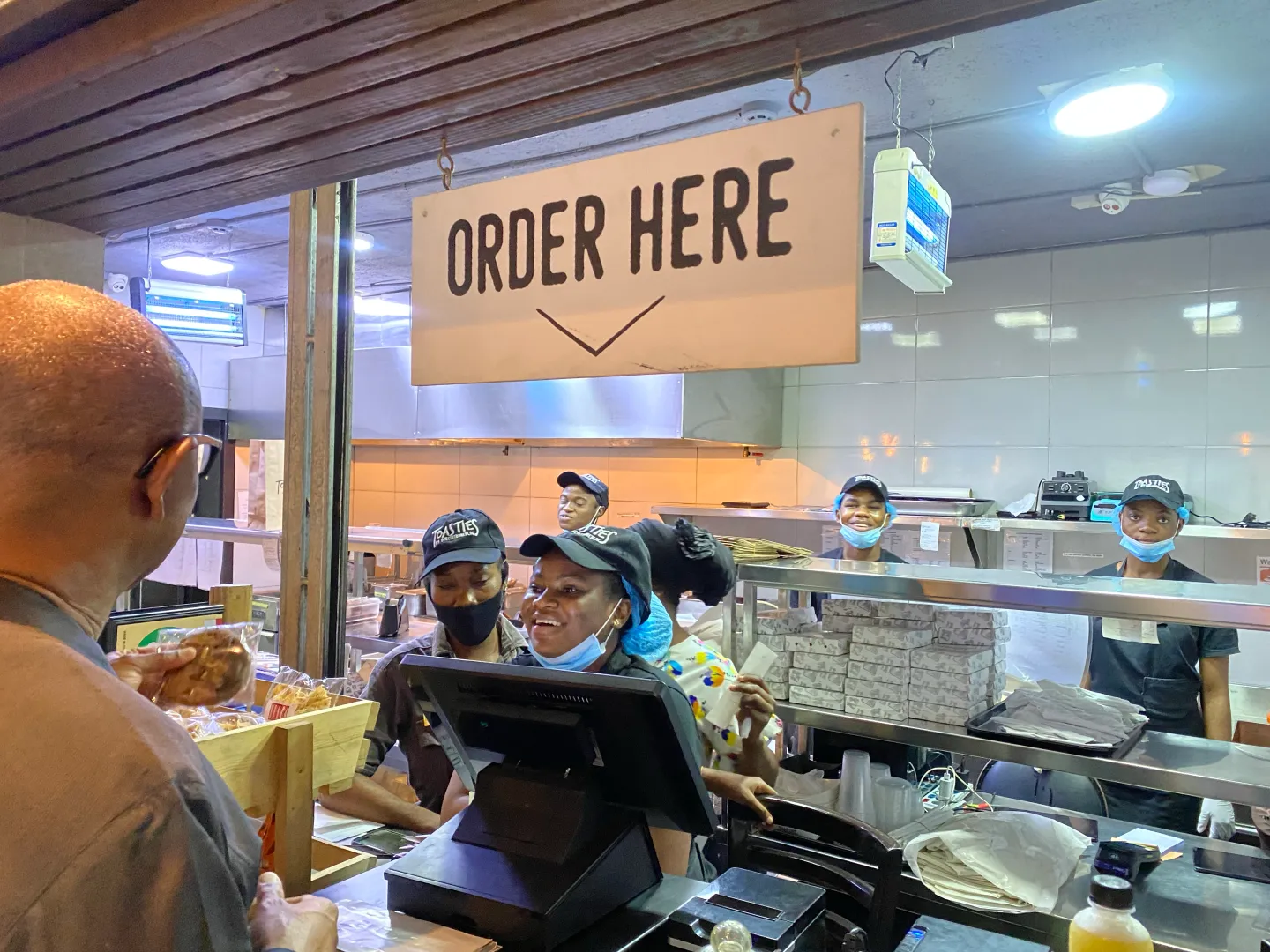
Staff at a Toasties outlet.
This need for training often extends to sanitation, as many Nigerians do not have piped water in their homes. “So the concept of washing your hands regularly after preparing a meal […] is not something that comes naturally,” she says. “So you have to go through the process of constantly trying to educate and train. But you might take something like that for granted when you hire a chef in the US.”
Another problem Western restaurateurs typically don’t have to deal with is Nigeria’s frequent electricity outages. Disruption in power supply causes kitchen appliances to wear down faster, and a lack of electricity impacts the environment she wants to create in her shops. Backup generators and solar panels are solutions, but they add to overall costs.
“So there’s just different nuances that aren’t applicable in other parts of the world that will be specifically applicable here,” Obaigbena says. “That’s why you can’t take something that’s done in another country and then just apply it and expect that it’s going to work the same way. It’s just a completely different environment with different beasts that we have to tackle every day.”

