

Off-grid EV charging infrastructure company Charge (formerly Zero Carbon Charge) is planning a public investment offering in the coming months, bypassing the JSE in favour of a token-based exchange called Mesh.
Joubert Roux, the company’s founder, revealed the plans in an interview with TechCentral on Wednesday and said Charge is currently in the market with a private raise on the Mesh platform ahead of a broader public offering that would be open to any South African investor. The public offering is planned for some time in June.
“We are always in the market. We are currently in the market with a private raise with Mesh. Straight after that we are going into another private raise, simply because raising institutional money is notoriously difficult in South Africa. We have the seventh biggest pension scheme in the world but that money is extremely conservative,” said Roux.
Mesh is a South African-founded decentralised financial markets platform that uses blockchain technology to tokenise real-world assets. It removes traditional intermediaries such brokers and clearing houses, thereby speeding up transactions and removing costs. The platform also allows for fractional ownership by breaking high-value assets down into smaller, more affordable tokens, making them accessible to retail investors.
“Private raises have certain minimum qualification hurdles, and a lot of investors approached us saying they can’t participate because they can’t come up with the R1-million minimum. So, we want to offer all South Africans a chance to invest,” said Roux.
Roll-out
Despite Roux’s reservations regarding the difficulty of raising institutional financing locally, Charge has already raised R100-million through the Development Bank of South Africa.
Charge built its first off-grid EV charging station near Wolmaransstad, which went live in December 2024.
Since then, the company has used the DBSA funding to break ground on two new facilities along the N3. The sites are expected to go live in June and a 50% offtake agreement with transport aggregator service provider Zimi will help drive up usage and revenue as consumer demand gradually ramps up.
Watch | Mesh.trade’s Connie Bloem on the future of finance
By Roux’s own admission, Charge’s business model is “enormously capital intensive upfront”. The private funding rounds – the one to follow and the public offering to come after – are needed to drive the company’s vision of putting an off-grid, high-capacity EV charging station at 150km intervals along all of South Africa’s national highways.
The unit economics are compelling. Roux said the company needs seven vehicles a day at each of its charging stations to break even on an Ebitda (earnings before interest, tax, depreciation and amortisation) basis.
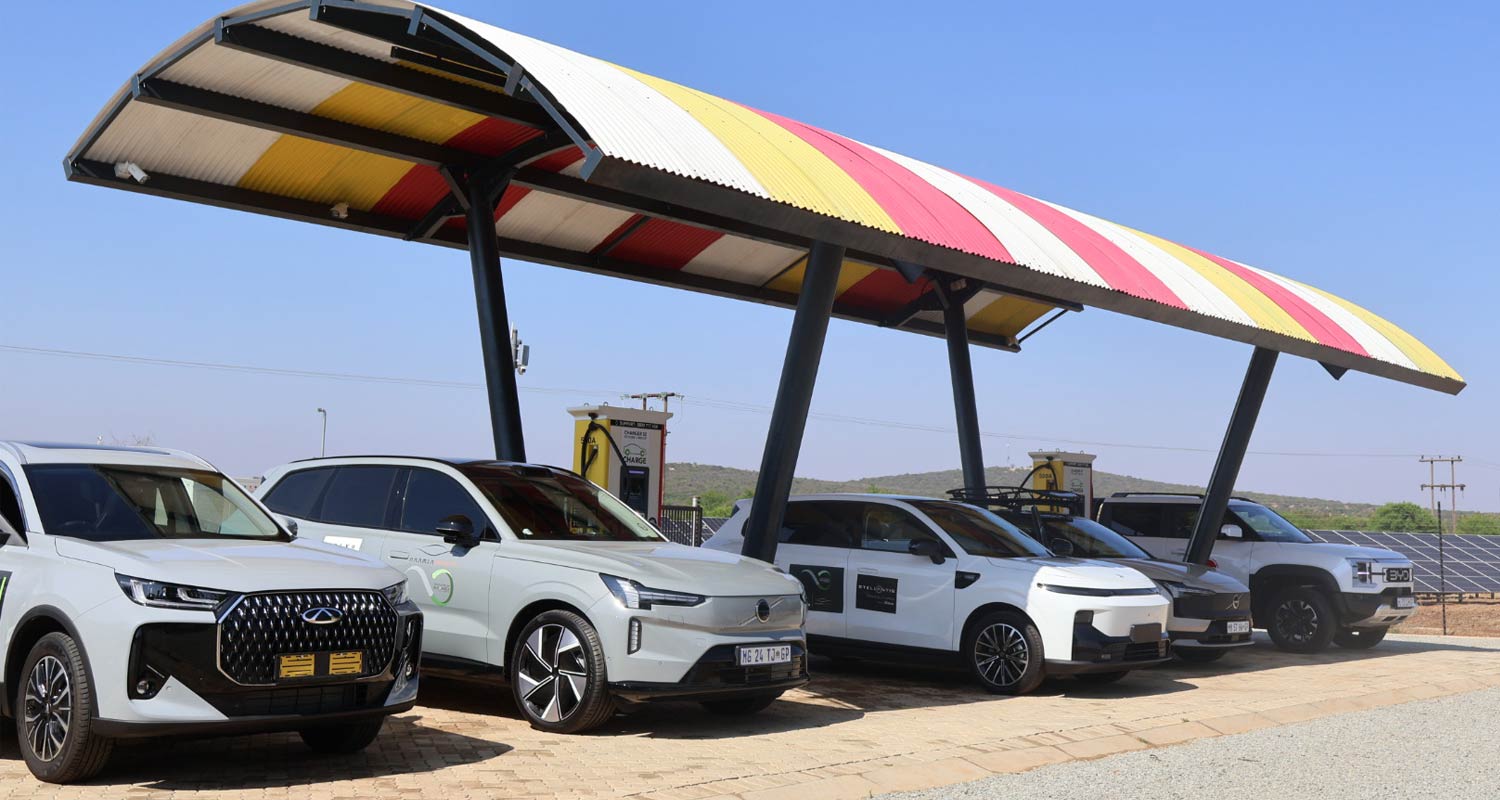
Roux acknowledged that Charge does face a timing risk in that it may be too early to market and that EV vehicle sales may be slow to ramp up, keeping demand for its services lower for longer. However, “this is a timing risk, but not a business risk”, he insisted.
Asked why the public offering will not be channelled through an established equities bourse lik the JSE, Roux said the listing requirements make an early-stage offering of this kind effectively impossible: the process takes approximately 18 months and is expensive enough that it would delay capital deployment at precisely the moment Charge is trying to accelerate its network build.
Roux flagged government bureaucracy as another risk to the speed at which Charge can roll out its charging stations. This includes “reining in” permitting authorities like roads agency Sanral. Charge has formally objected to Sanral’s proposed amendments to its new “rest and service facilities” policy, published in February. The policy seeks to give Sanral powers over businesses within 60m of a national road or within 500m of an interchange.
Read: BYD to blanket SA with megawatt-scale EV charging network
Charge accused Sanral of overstepping its legal mandate, which could stifle private investment in electric vehicle charging infrastructure in an attempt to “cash in” on roadside businesses. Charge is also lobbying municipalities for easier, more standardised permitting procedures. – © 2026 NewsCentral Media
Get breaking news from TechCentral on WhatsApp. Sign up here.

