

Thyspunt in the Eastern Cape and Bantamsklip in the Overberg are proposed sites for which Eskom has initiated an environmental impact assessment process to approve a site for a third nuclear power station for South Africa.
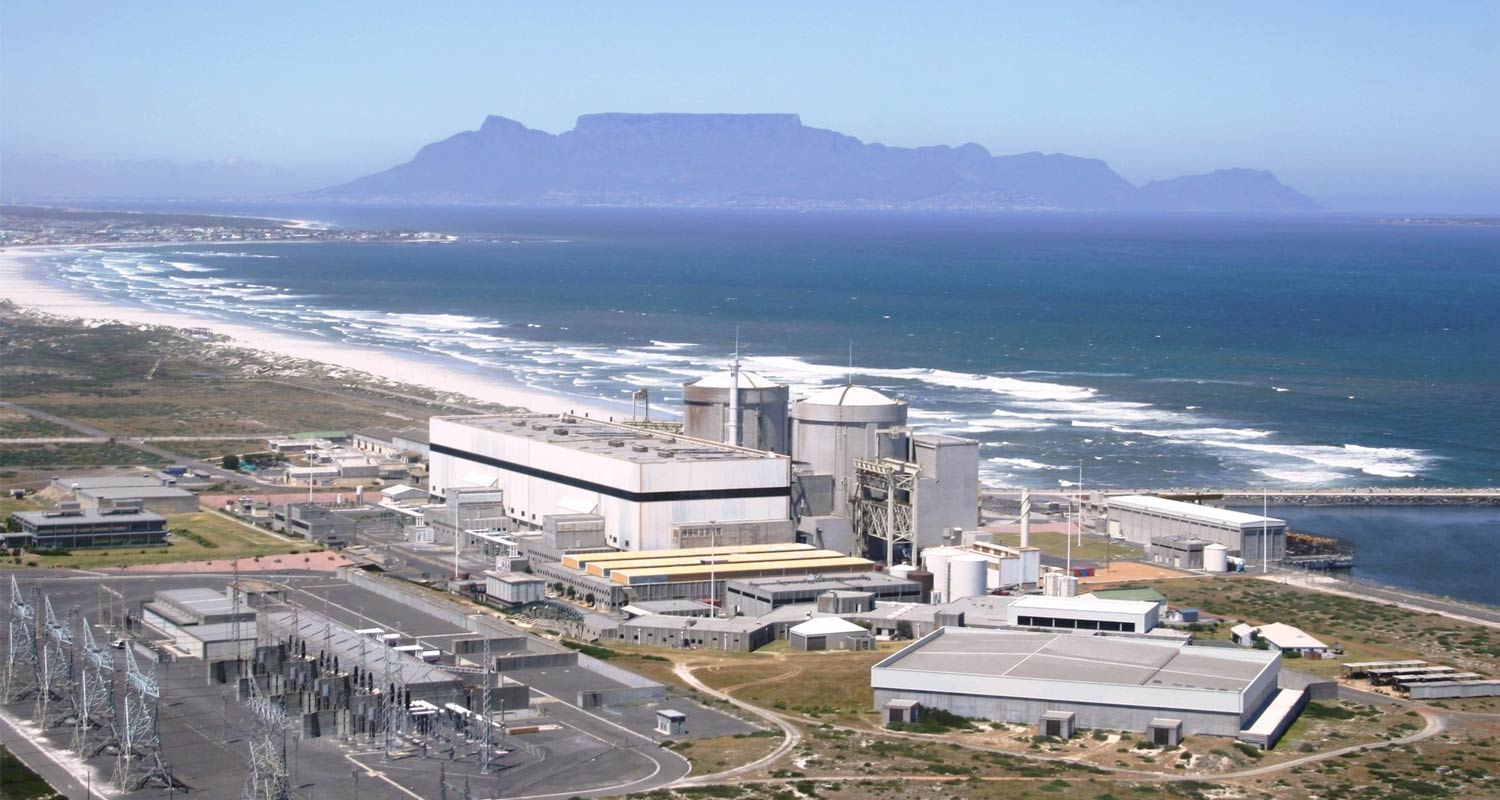
Four months ago, final environmental authorisation was given for the construction of a second nuclear power plant for South Africa at Duynefontein, which already hosts the current 1.94GW Koeberg nuclear facility.
Eskom proposes to build the third nuclear power station of 5.2GW at either Thyspunt, on the Eastern Cape coast between Cape St Francis and Oyster Bay, or at Bantamsklip, between Pearly Beach and Kleinbaai on the Overberg coast adjacent to Dyer Island.
Both were also previously earmarked as possible sites for the 4GW second nuclear plant, but Duynefontein was finally selected in 2017. In earlier Eskom impact assessments, there was strong opposition to the use of the sites on environmental, social and heritage grounds.
The Thyspunt site is in the Kouga municipality and Bantamsklip falls under the Overstrand municipality.
Government’s recently adopted integrated resource plan 2025 calls for the addition of more than 105GW of new generation capacity by 2039. It includes government’s nuclear industrial plan, which “aims to resuscitate and localise nuclear energy expertise that has gradually been eroded”.
Tight timeframe
The first stage of obtaining environmental authorisation for a new site started this week with a virtual public meeting on Monday to formally announce and provide basic information about the project, conducted online by Midrand consulting company WSP Group Africa (Pty) Ltd. The group was appointed by Eskom in April this year as the independent environmental assessment practitioner for the project. A second meeting will be on Tuesday evening.
At Monday’s meeting, attended by about 120 people, WSP project manager Ashlea Strong emphasised that it is a “pre-application” meeting and that the formal environmental impact assessment (EIA) process has not yet started.
She explained that the statutory timeframe for approval was “strictly legislated” and “exceptionally tight”. They were working towards environmental authorisation being granted by the national department of forestry, fisheries and the environment by February 2027, and for any appeals to be resolved by May 2028. If the project was declared a strategic infrastructure project, the department will have an even shorter period to make a decision.
Several attendees at the meeting expressed scepticism, pointing out that lengthy legal challenges to the project are a strong possibility.
“The timetable does not provide for any legal challenges which are almost guaranteed to happen,” one participant wrote in the comments section.
Eskom also needs to obtain heritage approval, submit a water use licence application and obtain a coastal waters discharge permit.
Eskom must also obtain a nuclear installation site, and construction and operating licence from the national nuclear regulator. Although running concurrently with the site EIA, this is a stand-alone process with its own public participation requirements.
Cost unknown
Monday’s presentation revealed that Eskom has not yet decided on the specific reactor technology for the new plant. There are three options or a combination, which will be assessed during the EIA process.
Attendees questioned how specialist impact studies can be conducted without knowing which technology is to be used. Strong replied that a “technology envelope” of options had been sent recently to specialists conducting the impact assessments and that most of the specialists’ current work involved updating baseline information that did not require knowledge of the specific generation technology.
The “host” of specialist studies will include impact assessments of seismic risk, geological hazards, hydrology, the transport and management of radioactive waste, climate change, the 1-in-100 year flood line, air quality, flora, freshwater ecology, marine biology, vertebrate and invertebrate fauna, and heritage and palaeontology, among other potential impacts.
Attendees wanted to know what the estimated costs of the project were, how reliable such estimates were, where Eskom would be sourcing funding for the project and whether South Africa would retain overall ownership of the new facility.
“Historically, Eskom has a poor record delivering working projects in time and within the estimated cost frame. What will the taxpayer pay towards [this] and where will the money come from? Who will own our debt for this project?” an attendee asked.
Strong said financial information about the project was not yet available. “We don’t have an answer. [Eskom] has not yet gone to the [financial] markets so we’re not sure. It’s a complex calculation and we are busy with the information gathering phase.”
Public participation
Responding to a question about whether the impact of associated pylons and power lines would be included in the current EIA process for both potential sites, Strong said this would be dealt with under a separate EIA application brought by the National Transmission Company South Africa – the new company established to manage the transmission network that was legally transferred from Eskom in 2021.
Attendees questioned why there had not been any public participation process when Eskom had identified Bantamsklip and Thyspunt as the only suitable sites.
“A lot of things have changed at both Bantamsklip (Pearly Beach) and Thyspunt (Oyster Bay, Cape St Francis and St Francis Bay), since these initial assessments were done decades ago. Both sites have developed into major tourism attractions. They are no longer backwater locations. We are being bulldozed into only two sites to choose from,” one attendee wrote.
The new application will face strenuous opposition from environmentalists, including the Dyer Island Conservation Trust founded by well-known marine conservationist Wilfred Chivell.
Dyer Island is a 20-hectare nature reserve off 10km from Bantamsklip.
During the earlier impact assessment that eventually concluded with Duynefontein being selected, the Trust emphasised the unique nature of the area and called for significantly more research before approving any development at Bantamsklip:
“Here we strive to protect the largest surviving colonies of the [critically endangered] African penguin, the globally important breeding and calving grounds of the endangered southern right whale, and one of the world’s largest populations of the mysterious Great White shark.
“The proposed nuclear site is situated within a habitat that is unique not only to this continent but to the whole world’s ecosystems… The majority of our area’s incredible biodiversity is dependent on this system of constant change which create an upwelling of nutrients which is the driving force of this extensive and complex marine ecosystem.”
On Monday, Chivell said that these concerns were still valid.
“Our main concern still is that Dyer Island is a Ramsar site, critically important for many marine species. I’m definitely not against nuclear, but not in this sensitive landscape,” he said.
‘Lazarus moment’
In the Eastern Cape, the Thyspunt Alliance environmental group established to oppose construction of a nuclear facility is regrouping.
Referring to the group’s “forced Lazarus moment”, spokeswoman Trudi Malan-Aucamp said: “I’m sure that we will resurrect the alliance. Aluta continua.”
Get breaking news from TechCentral on WhatsApp.Sign up here.

