

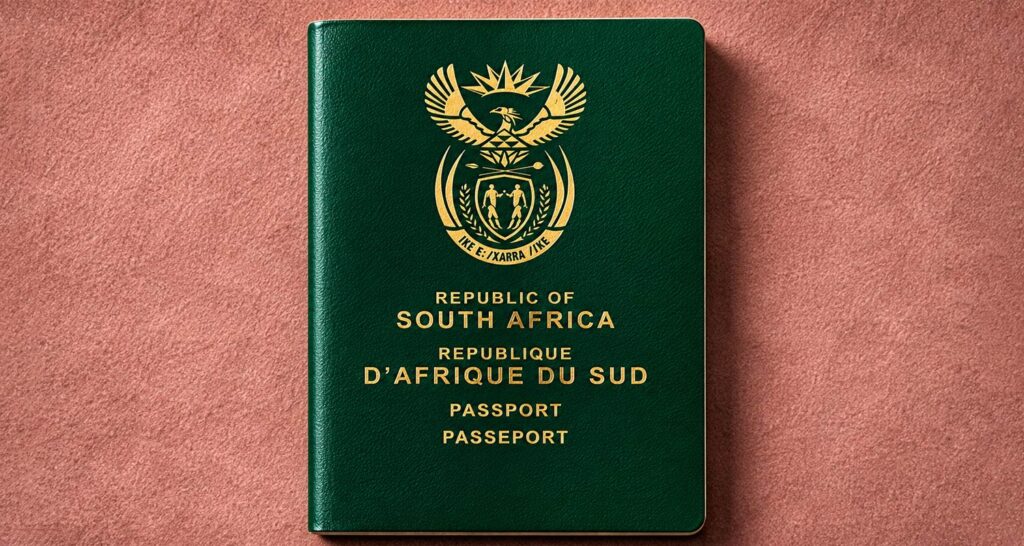
South Africans over 18 can now apply for passports at 480 Absa and Capitec branches, which home affairs minister Leon Schreiber said more than triples the number of places offering the service.
Schreiber announced the roll-out at the V&A Waterfront in Cape Town on Wednesday, calling it “the beginning of the end of standing in a queue to get a passport”.
Capitec is contributing 412 branches and Absa 68, he said. Passport applications were previously available at only 228 home affairs offices, according to Schreiber, so the footprint grows to 708. His figure excludes a few dozen bank branches that already offered passports by appointment under the department’s older eHomeAffairs model; in June, the department said that model covered 32 bank branches.
As with smart ID replacements at banks, passport applications need no booking or paperwork and take five minutes, Schreiber said. Participating branches are listed on the department’s MyHomeAffairsOnline portal.
People who hold only a green ID book and apply for a passport at one of the 480 branches will automatically apply for a smart ID card at the same time.
Home affairs minister Leon Schreiber
Passports were always meant to follow smart IDs into banks. When the partnership went live on 9 March, the department said they would be added later, and Schreiber repeated the promise in October.
The smart ID service passed its 750-branch target last week, more than four months ahead of its 31 March 2027 deadline. Schreiber said on Wednesday that 833 branches now offer smart ID replacements, and that 1.16 million smart ID applications had been processed at bank service points in eight months.
Green ID book holders
People who hold only a green ID book and apply for a passport at one of the 480 branches will automatically apply for a smart ID card at the same time, Schreiber said.
He has described the book as one of the most defrauded documents on the continent. Production stops on 31 March 2027, and it ceases to be valid identification on 31 March 2028. About 14.7 million people relied on it as of October.
The bank passport process is fully automated and built on biometrics, Schreiber said. “If the photo of the applicant does not match the record we have on the population register, the passport will not be manufactured,” he said, adding that this “completely eliminates the scope for fraud and photo-swopping”.

Schreiber said the bank roll-out was part of preparatory work to introduce a biometric e-passport “in the new year”, which would position South Africa “to negotiate for greater visa-free access to the rest of the world”. In October, he said home affairs would take a proposal to cabinet for the e-passport once the application process was fully automated. His speech did not say whether cabinet had approved it.
What comes next
First-time smart ID applications and passports for minors will be added at bank branches “shortly”, along with home delivery of documents applied for at banks. Home affairs began couriering passports to South Africans abroad in November 2025, saying then that it planned to offer the service at home if the trial worked.
“All of this work will be complete in a few months,” Schreiber said.
Moving routine applications to banks would free officials for complex cases, he said, including South Africans whose births were never registered. Home affairs plans a national campaign in the 2028/2029 financial year to document every undocumented citizen. – (c) 2026 NewsCentral Media

