

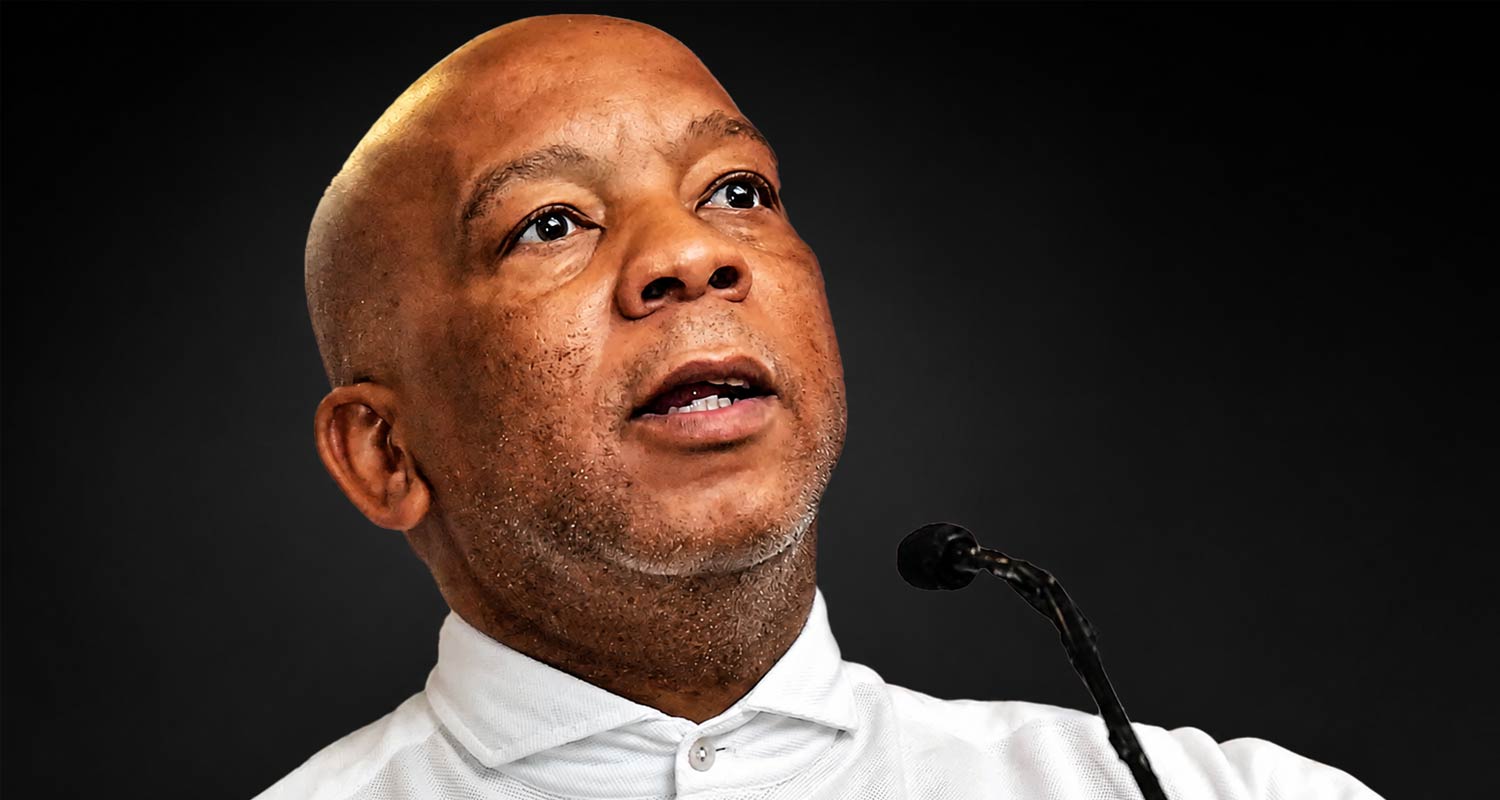
Mteto Nyati will continue as chairman of Eskom’s board, energy minister Kgosientsho Ramokgopa said on Friday, settling a question that had hung over the utility since it reported its annual results last month.
Nyati’s three-year term as chairman was due to end in October.
Nyati, a former CEO of MTN South Africa and Altron, joined the Eskom board when it was reconstituted in October 2022, after load shedding had reached record levels that year. He became chairman a year later when Mpho Makwana stepped down.
“I thank Dr Nyati for his leadership during a demanding period for Eskom. The improvement in the utility’s performance reflects the work of its board, management and employees. His continued service will help carry that work into Eskom’s next phase, where the measure of success will be sustained energy security, a financially sound utility and better service to South Africans,” Ramokgopa said in a statement on Friday.
The minister used the announcement to set out the shareholder’s expectations for what he called “Eskom 2.0” – the utility’s next phase now that the generation recovery plan has lifted the performance of its existing power station fleet.
The board must develop a single road map for Eskom over the next three, five and 10 years, defining its public obligations, future generation mix, commercial position and the investment needed to sustain them.
No more bailouts
Specifically, the statement noted that Eskom must be able to fulfil its mandate “without relying on repeated fiscal support or sustained double-digit tariff increases as its business model”.
Nyati struck a similar note at last month’s results presentation, saying “tariff increases alone are not the strategy”. Eskom more than doubled its net profit after tax to R30.3-billion in the year to 31 March 2026, its second consecutive annual profit after eight years of losses. Net debt fell by R45.3-billion to R313.3-billion.
In line with the Integrated Resource Plan 2025 – government’s long-term plan for new electricity generation – Eskom must do the technical and financial work needed for board decisions on the future of its fleet. That includes cutting emissions at existing coal stations, assessing coal abatement technologies, repurposing and repowering power station sites, and establishing Eskom’s role in gas and nuclear.
Eskom Green, the utility’s renewable energy business, must turn its approved strategy into “a credible pipeline of projects”. Its planned engagement with potential partners for about 2GW of renewable capacity is, the minister said, an early step.
Eskom and the National Transmission Company South Africa, its transmission subsidiary, are expected to advance a “deliverable grid programme”, including through the independent transmission projects programme, under which private companies finance and build transmission lines. The minister wants that spending to support South African manufacturers, suppliers and skills development.
Eskom’s growth strategy must also extend into Southern Africa, with cross-border interconnectors and electricity trade developed alongside regional partners and funders such as the Development Bank of Southern Africa, the Industrial Development Corporation and the African Development Bank.
Data centres and municipal debt
Ramokgopa called for a stronger commercial and customer strategy. Mining and industry remain important sources of demand, but data centres require “a deliberate approach to reliable supply, suitable locations, network capacity and long-term contracts”, he said.
Municipal debt continues to put supply and network investment under pressure. The department will work with national treasury, the department of cooperative governance & traditional affairs and the South African Local Government Association on payment discipline. Eskom’s gross municipal arrear debt rose 17.9% to R111.6-billion in its last financial year. Smart metering, the statement said, can improve service while strengthening revenue collection.
The board is also expected to reduce system losses and revenue leakage, get better value from procurement, maintenance and project delivery, and keep strengthening financial controls. The target is an unqualified audit opinion with no material findings; Deloitte issued a qualified opinion on Eskom’s latest annual financial statements after finding the utility had not fully recorded irregular expenditure. Eskom must also expand its use of artificial intelligence, starting with technical losses, forecasting and grid management.
The statement did not say when the board must deliver its road map. — © 2026 NewsCentral Media

