

Energy minister Kgosientsho Ramokgopa told a Unisa audience recently that South Africa would keep coal in its mix as the backbone of its cheap energy assets, and that scientists are working on technology that will solve the environmental concerns around coal.
“Because we have a duty and a responsibility to the environment, we’re saying that we are going to apply clean coal technology,” he said at the Graduate School of Business Leadership’s Distinction Dialogue on 13 August, naming the developers as Eskom and the Council for Geoscience. “Science will help us to resolve some of the questions that are confronting us… We’ll test that technology; it will work. Coal is going nowhere.”
The technology is real. However, the picture the CSIR paints of it appears to be more cautious than the minister’s one-line promise.
In a written response to TechCentral, the CSIR set out the status of the High Efficiency Low Emission Circulating Fluidised Bed (HELE-CFB) programme it runs with Eskom, the South African National Energy Development Institute (Sanedi) and the Coaltech Research Association. The partners launched the localisation programme on 1 April 2026 in support of the Integrated Resource Plan 2025, after feasibility work across 2025 and 2026.
Phase 1, the feasibility study, ran from July 2025 to 30 June 2026 at a cost of R7.15-million, co-funded by the four partners. Phase 2 – detailed engineering, procurement, construction and commissioning of a 500kW test facility – is planned for August 2026 to 31 July 2028, “subject to the required phase 2 capital funding being secured”. Phase 3, the demonstration phase, will run test campaigns to about mid-2029.
Only the detailed engineering portion of phase 2 is funded. “A funding gap remains for the construction and demonstration phases, and fundraising efforts are currently under way,” said Setobane Mangena, the CSIR’s executive cluster manager for future production, chemicals. The pilot is expected to cost “tens of millions of rands”, which the CSIR declined to pin down because the work still has to go to tender.
Rosherville facility
Even when built, the plant will not feed the grid. The 500kW facility, to be hosted at Eskom’s Rosherville site, which already runs a 1MW coal-characterisation test rig, is “a research, testing and validation facility to generate data for future decision-making”. A decision on any commercial-scale unit “falls beyond the current scope of this programme”. Its purpose is to inform South Africa’s post-2030 clean coal policy, as contemplated in the IRP 2025.
The Council for Geoscience (CGS), which Ramokgopa named, is not a partner in the HELE-CFB programme. It works with Eskom on the Leandra pilot in Mpumalanga, which tests whether carbon dioxide can be stored permanently underground – a clean coal technology, but a different one, addressing what happens to the carbon rather than how the coal is burned.
Read: Why the AI gold rush may be smaller than Eskom hopes
“The HELE-CFB programme focuses on how coal is combusted in order to reduce emissions at source,” the CSIR said. “The Council for Geoscience’s Leandra project, by contrast, focuses on geological storage.”
Leandra is advancing on its own track. Geological characterisation is complete, with “highly promising” results, the engineering design phase is being finished, and pilot well construction and carbon dioxide injection are expected to begin within the next year, said CGS communication and stakeholder relations manager Mahlatse Mononela. The project is government funded, with Eskom among its partners.
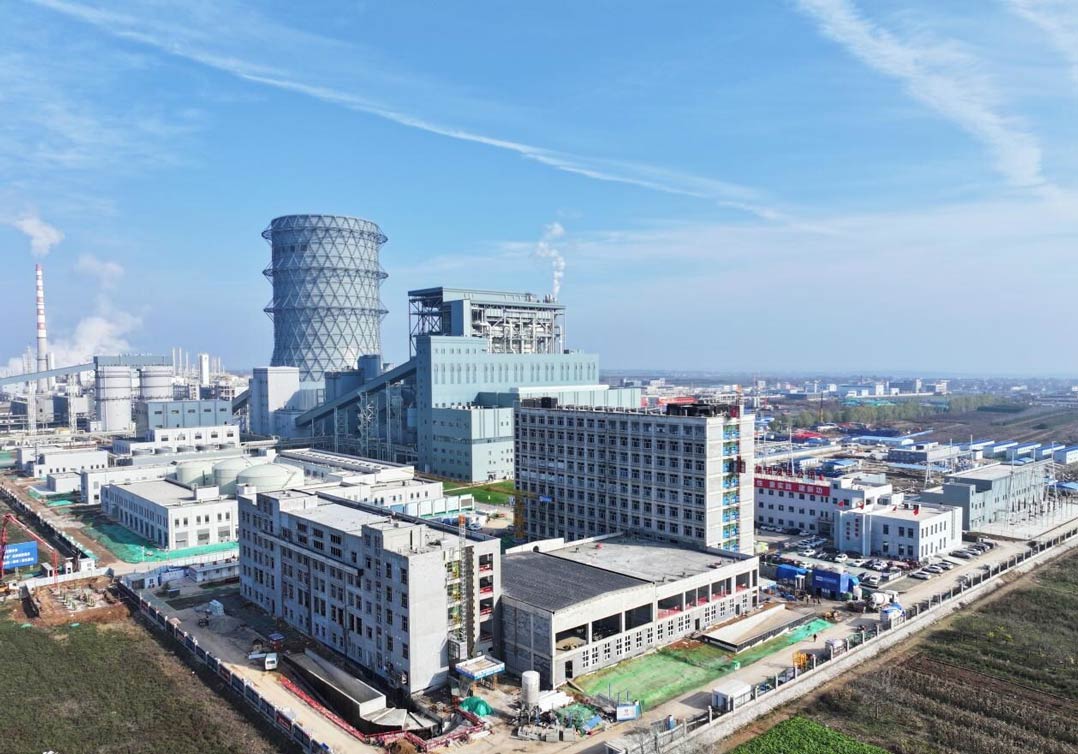
The CSIR said the test facility’s design “makes provision for carbon capture to be added at a later stage”. For now, co-firing with biomass and oxy-fuel combustion are its two main levers for cutting carbon dioxide. Whether captured carbon can then be stored is the question Leandra is trying to answer.
How it burns
Circulating fluidised bed combustion is “a different way of burning coal”, Mangena said. Instead of pulverising coal into a fine powder and burning it at about 1 300°C, as Eskom’s existing fleet does, a CFB unit burns coal in a circulating bed of hot sand mixed with limestone at 800°C to 900°C. Mangena said it captures more than 95% of sulphur dioxide and sharply cuts nitrogen oxides inside the combustor, without the expensive downstream scrubbers a conventional plant needs. The lower burning temperature stops nitrogen oxides forming and lets the limestone soak up the sulphur.
The unit can also “run at higher steam pressures and temperatures”. That is not a contradiction: the heat belongs to the steam the boiler raises to drive the turbine, not to the burning coal, and hotter, more pressurised steam yields more electricity per ton. CFB can burn a far wider range of fuels, including biomass and the estimated 1.5 billion tons of coal discards lying unused in South Africa.
The benchmark is the 660MW Binchang ultra-supercritical CFB boiler in China, commissioned in 2024, which reports sulphur dioxide, nitrogen oxide and particulate emissions well inside South African limits at 46.3% thermal efficiency. Mangena fenced those figures off as “indicative of the technology’s potential, based on international experience, and not as CSIR projections for any specific South African plant”. Locally validated figures will only be formalised once phase 3 data arrives.
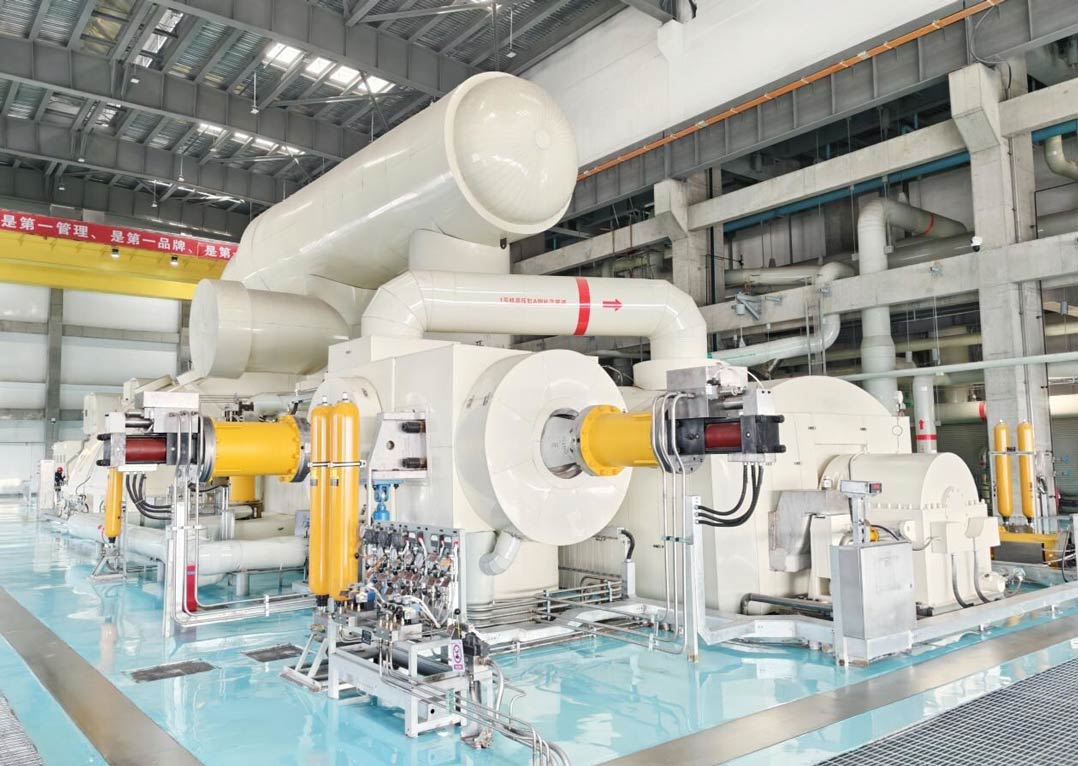
The Chinese plants are tuned to their own coal. A South African unit would burn local coal and the low-grade discards it is meant to use, which behave differently in a furnace. Settling whether it works on that fuel, and at what cost, is what the pilot is for.
What Eskom wants from it
The programme aims to generate the data to assess whether CFB units could be “retrofitted into, or used to repower, parts of the existing fleet”, Mangena said, extending the life of existing assets while reusing their land, grid connections and water supply, and preserving jobs “in line with a just energy transition approach”.
On cost, the CSIR declined to be drawn. Asked how clean coal would compare per kilowatt-hour with new wind, solar and storage, given Eskom’s 2021 estimate to parliament that meeting minimum emission standards would cost up to R300-billion and add 7-10% to tariffs, Mangena said the CSIR “is not in a position to confirm, dispute or update Eskom’s figures”. The project, he stressed, “is not a power-generating or revenue-producing plant”.
Read: Eskom to decide fate of older coal stations by September
None of this makes the minister wrong that coal will stay in the mix, or that clean coal has promise. Cabinet has classified coal as a critical mineral, and the IRP 2025 keeps it in the picture well into the next decade even as wind, solar and gas take the lead. But “it will work” describes a plant that does not yet exist, is not fully funded, and on the CSIR’s own timeline will not deliver locally validated results before 2029. – © 2026 NewsCentral Media

