

Management consulting, as we have known it for half a century, is finished. The great slide-making, hype-selling, invoice-by-the-kilogram machine is being dismantled by the very technology its own practitioners are busy overhyping, and it could not happen to a more deserving industry. I have earned the right to be blunt about this, having spent nearly 40 years on the receiving end of it.
In 2010, I ran the company that built one of South Africa’s first commercial WiMax networks. The technology was genuinely ahead of its time and in the field it outran the mobile networks of the day by a wide margin. It should have been an easy, honest story to tell. Instead, I watched a parade of consultants inflate its capabilities past anything the physics allowed, selling the peak speed and the maximum range as though both arrived at once. I knew how it would end. The gap between the brochure and the experience landed on real customers as disappointment. The technology did not fail them; the hype did.
That script has run for most of my career, and I can tell you who writes it.
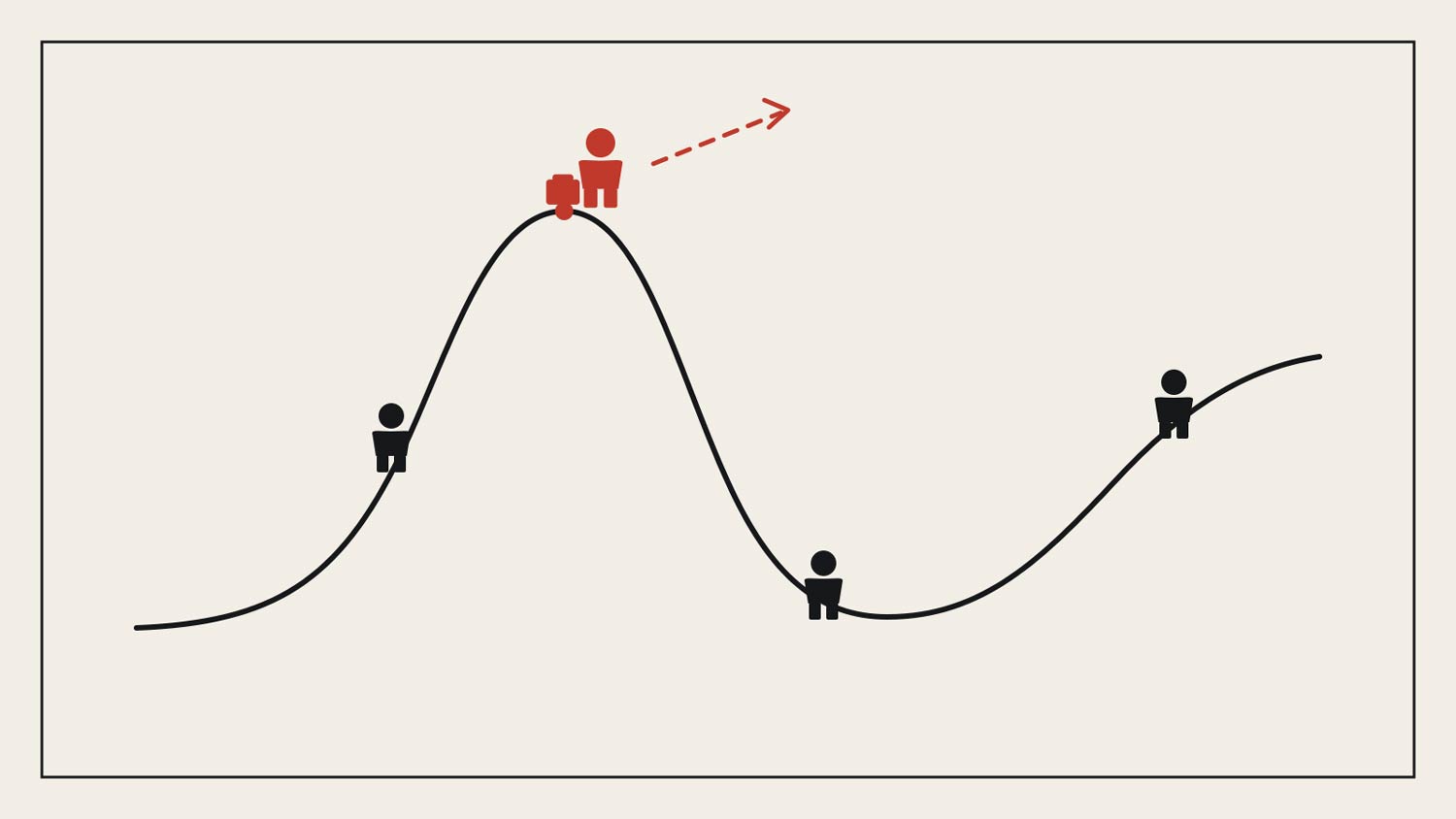
Every executive has seen the Gartner Hype Cycle: the “peak of inflated expectations”, the “trough of disillusionment”, the long climb to a “plateau of productivity”. Beneath it sits an honest observation, usually credited to the futurist Roy Amara – we overestimate a technology in the short run and underestimate it in the long run. Amara was right.
But look at who is standing on the peak with the megaphone. It is almost always the big advisory firms, and the peak does not simply happen to a technology. Someone inflates it, with a forecast in the trillions and a date far enough away that nobody will check, then sells the readiness work the panic creates. When reality cannot match the number and the thing slides into the trough, the consultants have already re-badged onto the next wave.
A fortune-teller on a retainer
When the venture investor Michael Mullany went back through 20 years of Gartner’s emerging-technology cycles, he found that most technologies never followed the curve at all; dozens appeared once and vanished. One of them was WiMax, the very technology I was building while the slideware promised the impossible. Gartner even keeps a category, “obsolete before plateau”, for the ones that die on the way up.
Read honestly, the curve does not forecast anything. It is a story supple enough to be right whatever happens: a boom confirms the peak, a crash confirms the trough, a quiet death was “obsolete before plateau”, a late recovery proves the plateau. An adviser who cannot be wrong is a fortune-teller on a retainer.
In 2022, McKinsey valued the metaverse at up to US$5-trillion by 2030 and called it “too big to ignore”. Citi went to $8-trillion to $13-trillion. Gartner predicted that by 2026 a quarter of us would spend at least an hour a day in the metaverse. It is 2026, and we do not. Meta – the company so sure of this future that it renamed itself after it – has since absorbed something north of $60-billion in losses at its Reality Labs division and quietly redirected the language, and the capital, to artificial intelligence.
I have seen that conviction up close. A few years ago I was given the tour of a consultancy’s innovation hub in Europe, an entire floor of it surrendered to the metaverse: the headsets, the virtual showrooms, the earnest young evangelists. When I ventured that I could not see the business value beyond a handful of niches, I was all but shown the lift. That floor still exists. Only now every desk on it “does AI”. The sign on the door was changed and nothing was learned.
These things were not all worthless. Big data is real. AI, unlike the NFT circus, is plainly consequential – I watch it do useful work in industrial settings every day, and it helped me write this article. What matters is that the firms were exactly as confident about the duds as they were about the real shifts. Their certainty about the metaverse was indistinguishable from their certainty about the cloud. Like any gambler, they guess.
The confidence carries no information because, as a rule, the firm that sold “deep industry experience” does not have it for your business. The large-firm model is a pyramid of bright graduates on an “up or out” clock, and deep domain knowledge is the one thing such a model cannot keep.
So consultants do the thing that reliably works. They interview your own people – the engineers and operators who flagged the problem years ago – and repackage what they hear into a confident narrative and a beautiful deck.
Mariana Mazzucato, in her study of the industry, puts it bluntly: the big firms often have “no expertise in the areas they’re advising in”. Clayton Christensen noted years ago that consulting had resisted scrutiny precisely because its work happens in “the black box of the team room”, where the client cannot see what it is paying for.
The model borrows its name from cloud computing: lift and shift. Lift the knowledge out of the client’s own staff, shift it onto a slide. The value added is polish, and a logo expensive enough to make a pre-known decision safe to sign. What the client buys is cover – accountability rented by the hour.
The machine writes the slides now
There are exceptions, and the most instructive is the man I have just quoted. Christensen began his career as a consultant at Boston Consulting Group and became the rare one who got it right, the thinker who foresaw earlier and more clearly than anyone that even consulting would one day be disrupted from below. I was fortunate to spend time with him. The Innovator’s Dilemma remains required reading, the one business book Steve Jobs said had genuinely shaped his thinking. Christensen’s authority came from a theory that kept proving right, not from the confidence with which it was delivered. Salesmanship the machine can fake. That, it cannot.
Synthesise a pile of documents and interviews and turn them into a confident, well-structured story: that is the single task generative AI does best. The firms know it, because they have built the tools themselves. McKinsey’s internal assistant, Lilli, will draft a presentation from a prompt and match the house tone. BCG has a tool, Deckster, that produces and polishes slides on command. By some estimates, these already do up to 80% of a junior analyst’s work, in seconds rather than weeks.

The pyramid is thinning from the bottom, because packaging is the part the machine learned first. This is not the end of all advice. When effort becomes cheap, judgment becomes the scarce and valuable thing, and the advisers genuinely worth their fee – the ones with real, scarred, industry-deep experience, who have built the thing and not merely presented it – will become rarer and more valuable.
Accountability cannot be delegated to a model either; a human still has to answer for the decision. It is the clever generalist whose only edge was a nicer font for whom the arithmetic no longer works. Such advisers will enjoy a brief surge as they wield the tools themselves, right up until their clients notice the same tools sitting on their own desks, and that the knowledge in the deck was theirs to begin with.
The bill industry chose to pay
None of this was done to us. It was done with us. For decades, industry invited the firms in, feted them and paid the fare, frequently to rediscover what its own people already knew and occasionally at a cost far higher than money.
South Africa knows the extreme version: prestige firms were found by our own commissions of inquiry to have helped hollow out the institutions that hired them. The cost is the one Mazzucato names best – every time an organisation rents its thinking, it forgets a little more how to think for itself.
There is a test I would hand any executive facing the next inevitable revolution. Ask the person pitching it to define the central idea without the buzzword or the trillion-dollar number. Ask what they were certain of three years ago, and how it aged. Then ask for skin in the game: tie the fee to the outcome, and watch the certainty drain from the room.
The buzzword will change again in about two years; it always does. What is different this time is that the machine can do the packaging, which leaves the uncomfortable truth that the only thing the client ever really needed was to listen to its own people. Management consulting as we have known it is over, killed by the last wave it tried to sell. Having watched it sell disappointment for 40 years, I can only say: not a moment too soon.
- Jannie van Zyl is an electronics engineer and ICT veteran of four decades. He founded several technology companies, was instrumental in launching 3G, 4G and 5G in South Africa, was group CEO of the company that built one of the country’s first commercial WiMax networks, and led Vodacom’s innovation function for more than a decade. He writes in his personal capacity
- Read more articles by Van Zyl on TechCentral
- Subscribe to TechCentral’s daily newsletter
- Get breaking news alerts on WhatsApp

