

By any sensible measure, this was a race Starlink could not lose.
Elon Musk’s satellite broadband service has more than 10 000 satellites in orbit and millions of customers across dozens of countries. It is live almost everywhere in Southern Africa – Mozambique, Malawi, Madagascar, Botswana, Zimbabwe, Zambia, Eswatini and Lesotho. Amazon’s rival constellation, Amazon Leo, has 390 satellites in orbit and not a single commercial customer anywhere on Earth.
Yet it is Leo, not Starlink, that this week secured a route into South Africa. Herotel, the Maziv-owned internet service provider and fibre/wireless operator, will distribute Leo’s satellite broadband under a new brand, Evry, with commercial launch expected in 2027. The tortoise, improbably, has lapped the hare.
How did that happen? Not through superior technology, deeper pockets or regulatory favouritism. It happened because Amazon treated South Africa’s licensing regime as an engineering problem to be solved, while Starlink has been waiting – loudly – for the rules to change.
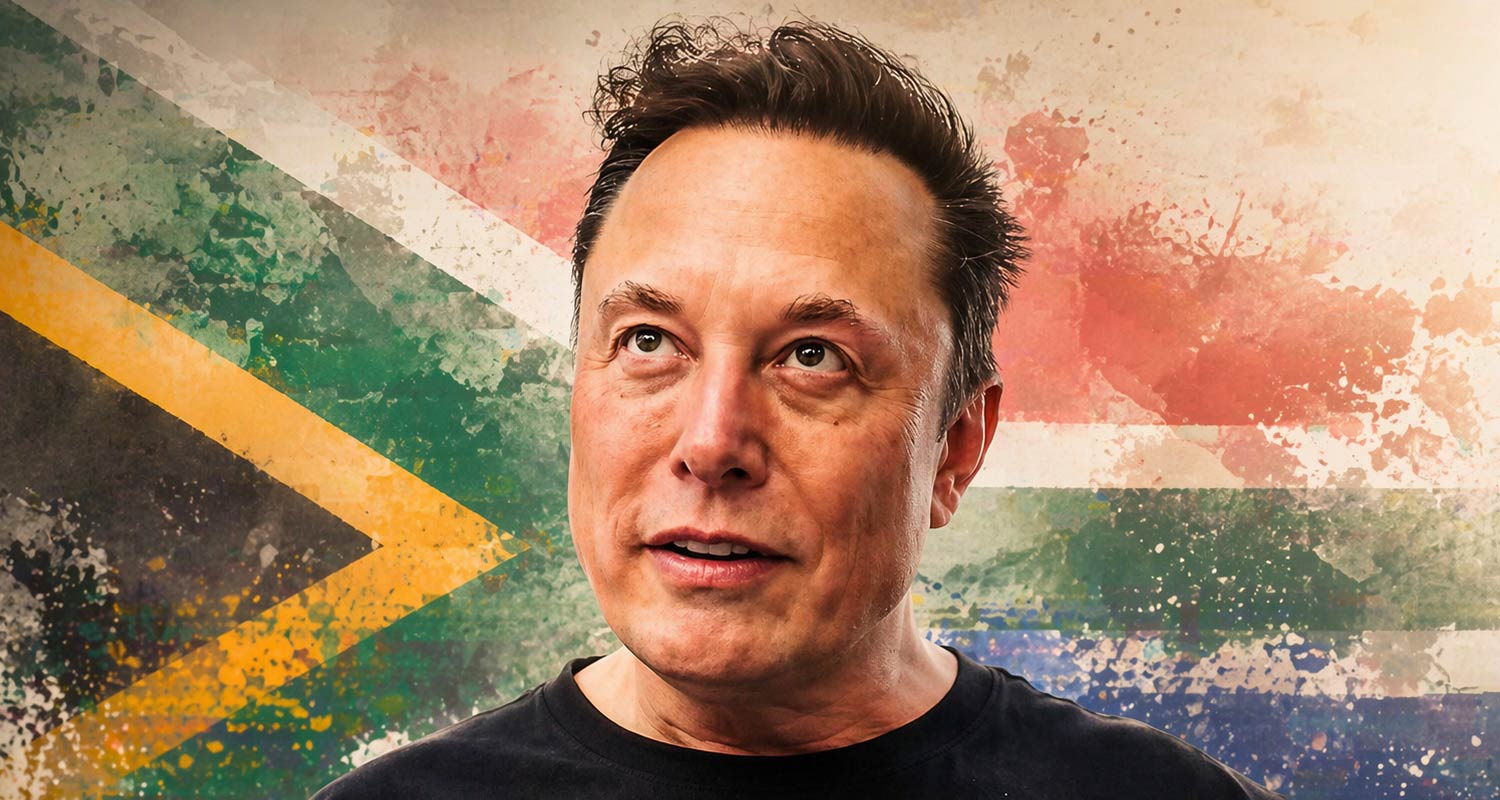
The rules confronting both companies are identical. To hold a network licence in South Africa, an operator must be 30% owned by historically disadvantaged groups. SpaceX has refused to cede equity in its local operation, and Musk has spent years litigating the point in public, describing the requirement as racially discriminatory – he has claimed he cannot launch Starlink here “because I’m not black” – and elevating a licensing question into a diplomatic and political spectacle. The result: Starlink remains dark in Africa’s most developed broadband market while flourishing in nearly every country surrounding it.
What each approach has bought
Amazon read the same rulebook and reached a different conclusion. Icasa said in a notice just last month that satellite operators cannot currently obtain the necessary network licences at all, and that the realistic route to market runs through an existing licence holder. Amazon did precisely that.
Herotel will hold the licences; Amazon will hold none. No equity standoff, no political theatrics, no posts on X. Boring, it turns out, is a strategy. And it is entirely consistent with how Amazon has approached South Africa from the start – the AWS region in Cape Town, the measured marketplace launch, years of quiet groundwork. Amazon treats regulatory friction as a cost of doing business. Musk treats it as an ideological cause.
Read: Amazon Leo all set for South African launch
Consider what each approach has bought. Musk’s crusade has delivered years of headlines, a starring role in South Africa-US tensions and zero revenue from a market where demand for his product is enormous – so enormous that Icasa has had to crack down on grey-market imports of Starlink terminals smuggled in via neighbouring countries.
Amazon’s compliance has delivered first-mover advantage: a rough launch date (2027), a distribution partner with deep reach into the small towns and rural areas that satellite broadband serves best, and a registration page that is live today.
To be fair, being first to announce is not being first to serve: Leo has launched commercially nowhere, its 2027 South African debut leaves ample room for slippage and satellite timelines have a way of stretching. Starlink’s product is proven; Leo’s is a promise. And nothing in principle stops SpaceX from striking a similar wholesale arrangement tomorrow – indeed, the company told Ispa’s AGM last year that it intends to work with local ISPs and resellers as part of its go-to-market strategy.
But before anyone in Pretoria takes a bow, they shouldn’t. A licensing regime that the global market leader will not touch, and that the world’s biggest e-commerce company chose to route around, is not a triumph of transformation policy. The empowerment rules did not extract 30% equity from Amazon; they extracted nothing, because Amazon (apparently) simply does not need a licence. If the measure of success is broad-based ownership of the digital economy, channelling foreign operators through distribution structures achieves it only on paper.
Which is why it would still be crazy for government not to finalise the equity-equivalent option. Communications minister Solly Malatsi’s December 2025 policy direction – allowing multinationals to meet empowerment obligations through equity-equivalent investment programmes (EEIPs) rather than ownership stakes – has been mired in political controversy since it was published, and regulatory experts warn it could take years to implement.
Starlink has already put a proposal on the table reportedly worth R500-million to connect 5 000 schools, plus R2-billion in local infrastructure. Not every multinational can or will follow Amazon’s partner-led model; some want to operate directly, hold their own licences and invest accordingly. South Africa, with its stagnant economy and dire unemployment, is in no position to chase away companies actively trying to invest here because it insists on one narrow form of compliance. The point of the rules is transformation, not turnstile-guarding.
Read: Icasa caught in the political crossfire over Starlink
The bigger lesson of this week, though, is about corporate temperament. In regulated markets, the scarce resource is not satellites or capital – it is the willingness to find a path through local rules you may not like. Amazon, apparently, found one. Musk, with a six-year head-start and a product South Africans literally smuggle across borders, has not. — (c) 2026 NewsCentral Media

