
Private rail in South Africa: ‘A once-in-a-generation opportunity’

Private rail in South Africa: ‘A once-in-a-generation opportunity’


Youssef Elgonaid

Interview with Youssef Elgonaid
CO-FOUNDER and CEO, AFRICAN RAIL COMPANY


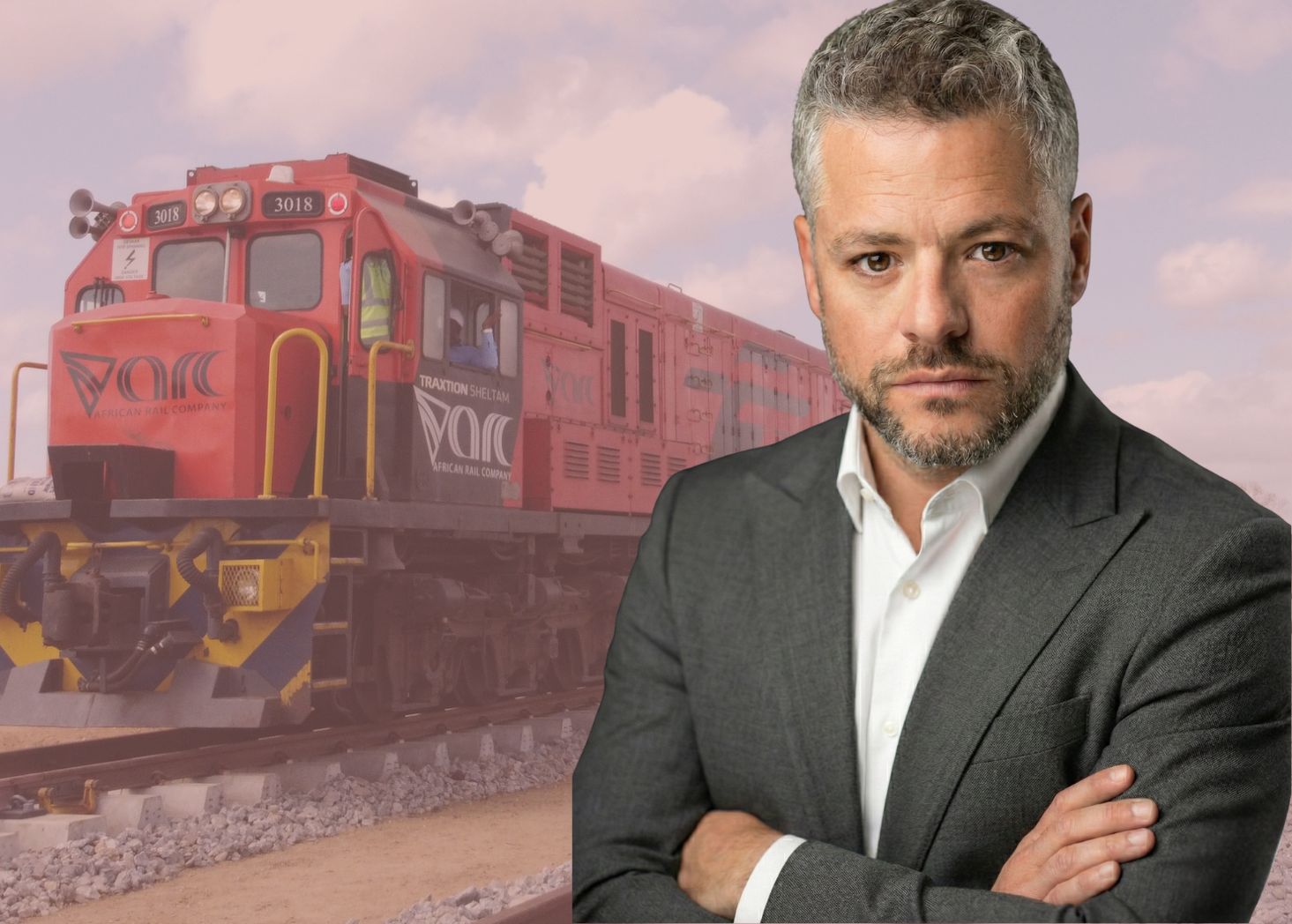
For decades, South Africa’s freight rail network has been tightly controlled by the state. Youssef Elgonaid, CEO of African Rail Company (ARC), describes the recent move to grant private operators wider access to the system as a “once-in-a-generation opportunity”. Founded in 2013, ARC recently secured conditional approval to run its trains on national lines, building on its existing operations in neighbouring countries.

How we made it in Africa editor-in-chief Jaco Maritz spoke to Elgonaid about his journey of building a private rail business on the continent.

Topics discussed during the interview include:

  • Capitalising on South Africa’s private rail opportunity
  • Starting a private rail business from scratch
  • The most lucrative cargo for rail transport in Southern Africa
  • His toughest moments in business
  • The potential for rail in the rest of Africa

Watch the full interview below: (Only accessible to How we made it in Africa subscribers)

Interview summary

“A once-in-a-generation opportunity.”

This is how Youssef Elgonaid, co-founder and CEO of African Rail Company (ARC), describes the recent move by South Africa to open its railways to private operators.

ARC is among 11 successful bidders for slots to privately run trains on South Africa’s rail network.

South Africa’s railways have for decades been state-controlled and largely closed to private participation. At the centre of this system is Transnet, the state-owned transport and logistics company, which has been plagued by years of underinvestment and mismanagement. As a result, chronic delays, poor maintenance, equipment shortages, and rampant cable theft have severely undermined the network’s reliability and performance. Rail freight volumes fell from 226 million tonnes in 2017 to 152 million tonnes in 2024. The decline has pushed more freight onto trucks, which is in many cases costlier than rail. According to ARC, a single litre of fuel can move a tonne of cargo 200 km by rail, compared to just 60 km by road. Rail also clears borders more efficiently and reduces road deaths and congestion.

The economic costs of South Africa’s railway constraints have been severe, with industries not only paying a premium for road transport but also unable to operate at full capacity. Mining, agriculture, and manufacturing are among the hardest-hit sectors. According to some estimates, the poor performance of the country’s freight logistics, including ports, is costing as much as R1 billion (about $61 million) a day in lost output.

Spanning roughly 30,000 km, South Africa’s rail network is among the longest in the world – and one of the few large-scale, state-controlled systems to open up to private participation. Transnet is targeting an increase of about 100 million tonnes in annual freight volumes by 2030.

“It’s a massive, globally significant event that this is taking place,” Elgonaid adds.
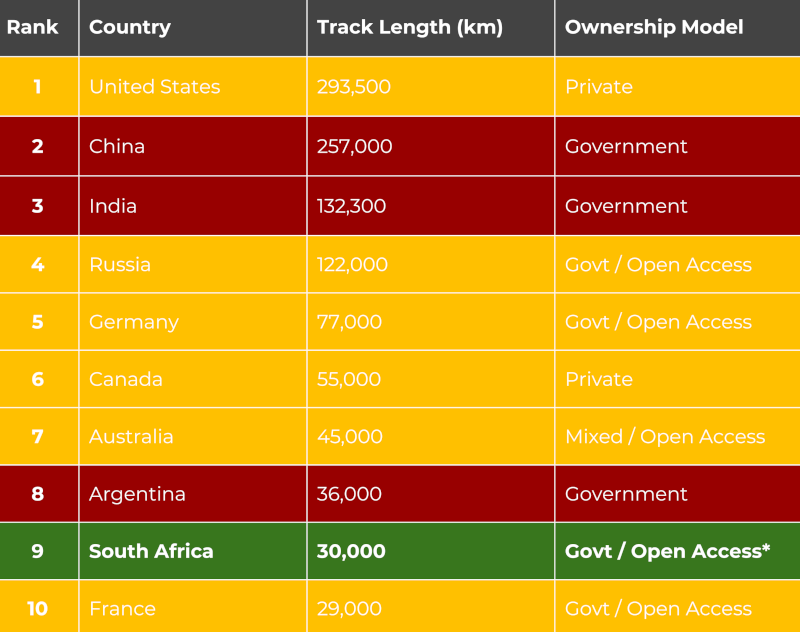
South Africa’s 30,000 km rail network is among the longest in the world. Source: ARC

Spotting the rail logistics gap

Elgonaid was born in Egypt but spent part of his childhood in the UK. Although he studied engineering, he moved into finance after university, landing an investment banking role at Merrill Lynch in London.

But finance was never quite where his passion lay. He wanted something more concrete. “With finance, there’s a lot of moving around numbers on a spreadsheet … you make money, but there’s nothing at the end of it that you can go and … ‘See, okay, I did this, I built this, I built that.’ And I think for me, I needed something a bit more tangible,” he explains.

That pull eventually took him back to Africa, where he and a business partner set up a venture trading mining commodities in Southern Africa.

While running the commodities business, they realised that everyone in the trade was relying on trucks. This was despite rail being one of the most efficient ways to transport bulk commodities like chrome, coal, and iron ore over long distances.

Across the region, rail was barely being used. For instance, Elgonaid notes that Zimbabwe had a rail capacity of 20 million tonnes a year at the time, but was moving less than 2 million tonnes.

The region’s railways had suffered from a lack of investment and operational issues. Moving cargo across borders was especially difficult because coordination between national rail companies was often limited. Faced with this complexity, most traders found it much easier to just load their goods onto trucks.

Elgonaid’s company, however, saw an opportunity in rail. “We were a little bit contrarian,” he says. They started by using the network in Zimbabwe and Mozambique for their own trades. Rather than buying their own rolling stock – locomotives and wagons – the team realised they could get more out of the capacity that was already in place. The company provided operational support to the national rail authorities, helping them run their networks more efficiently.

They soon recognised this service could be sold to other businesses. “We decided, okay, rather than having rail as a cost, let’s have rail as a revenue.”

ARC acted as a coordinator between cargo owners and the rail authorities. Teams on the ground handled tasks like loading and cross-border logistics. For instance, they made sure a locomotive was waiting on the other side of the border when wagons arrived so cargo didn’t sit at the crossing for two weeks. “As a result of that, you’re squeezing a lot more out of the capacity, you’re sweating the assets a lot more on behalf of the rail authorities,” Elgonaid explains.

ARC also helped the rail authorities tackle the specific problems holding up their operations. When a lack of foreign currency made it hard to buy fuel, or when sourcing spare parts and lubricants became an issue, the company stepped in. The team even used its own workshop to refurbish broken-down locomotives and wagons. It made its money back by transporting cargo on the extra capacity this freed up.

Working with state rail authorities meant treading carefully. “Our approach was always to, rather than be seen as a competitor, to be seen as a partner … we’re not stealing business that you already have … we’re bringing new business that would otherwise not come,” Elgonaid notes.

With that approach in place, ARC took the model into Botswana, Malawi and Zambia.

Recurring bookings from traders gave the company the confidence to start leasing its own rolling stock.

ARC’s fleet now stands at seven locomotives and more than 400 wagons. The company claims to be the largest mover of fuel by rail in Botswana, Mozambique and Zimbabwe. Mining commodities, such as chrome and copper concentrate, are also a significant part of the business.
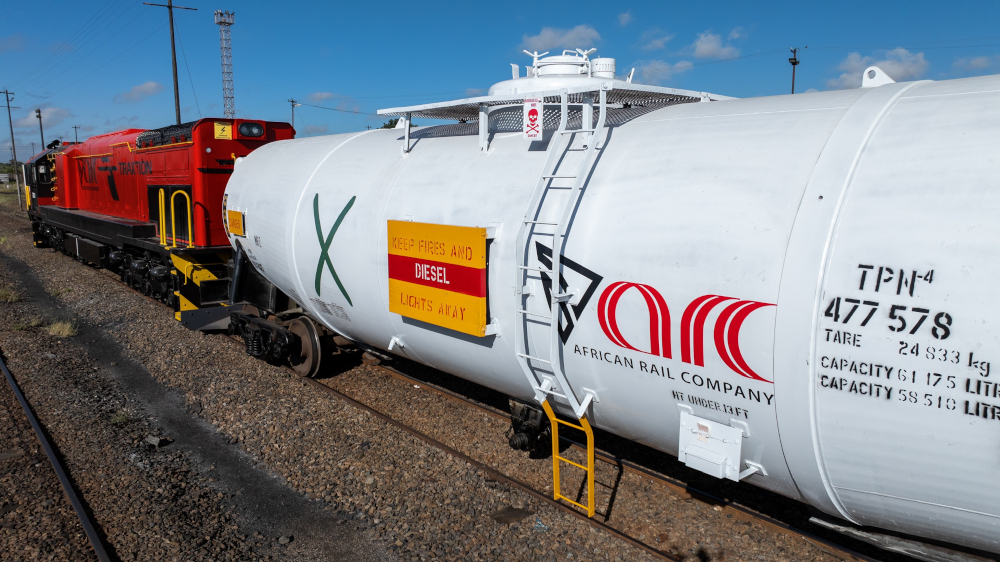
ARC manages a fleet of seven locomotives and more than 400 wagons.

ARC manages a fleet of seven locomotives and more than 400 wagons.

Shifting investor sentiment

“I’ve got a lot of grey hair. I’ve earned my stripes. It is a very challenging business,” Elgonaid notes.

Raising financing was one of the toughest challenges he faced, mainly because private rail wasn’t viewed as a viable logistics option for Southern Africa. “We were swimming against the tide for a long time,” he adds. “We had to be extremely nimble in terms of how we deploy our capital – how we reinvest our earnings and all of that.”

Sentiment towards the sector, however, is shifting. This is partly driven by demand for Southern Africa’s critical minerals like lithium and copper, as well as the inputs needed to mine them, such as sulphur and diesel.

“We’re seeing a massive difference in appetite for discussion around funding our business,” he says. ARC is currently seeking to raise $170 million to buy locomotives and wagons to operate in South Africa.

The Southern African rail opportunity

According to ARC, Southern Africa is ripe for a rail boom. Much of the region’s critical mineral wealth is located far inland, putting pressure on existing overland infrastructure. This is coupled with a growing and increasingly affluent local population that is consuming more products and energy.

Despite this rising demand, most state-owned rail entities have struggled to capture the transport volume.

For a private operator, the region offers a major logistical advantage: almost all Southern African countries use the uniform Cape gauge. This means trains can move easily from one country to the next without the complexity of switching lines.

Elgonaid says the plan is to eventually operate across the continent, including his home country of Egypt, but for now, the focus is on the immediate opportunity in South Africa.

Private rail in South Africa: ‘A once-in-a-generation opportunity’

Private rail in South Africa: ‘A once-in-a-generation opportunity’


Youssef Elgonaid

Interview with Youssef Elgonaid
CO-FOUNDER and CEO, AFRICAN RAIL COMPANY


For decades, South Africa’s freight rail network has been tightly controlled by the state. Youssef Elgonaid, CEO of African Rail Company (ARC), describes the recent move to grant private operators wider access to the system as a “once-in-a-generation opportunity”. Founded in 2013, ARC recently secured conditional approval to run its trains on national lines, building on its existing operations in neighbouring countries.

How we made it in Africa editor-in-chief Jaco Maritz spoke to Elgonaid about his journey of building a private rail business on the continent.

Topics discussed during the interview include:

  • Capitalising on South Africa’s private rail opportunity
  • Starting a private rail business from scratch
  • The most lucrative cargo for rail transport in Southern Africa
  • His toughest moments in business
  • The potential for rail in the rest of Africa

Watch the full interview below: (Only accessible to How we made it in Africa subscribers)

Interview summary

“A once-in-a-generation opportunity.”

This is how Youssef Elgonaid, co-founder and CEO of African Rail Company (ARC), describes the recent move by South Africa to open its railways to private operators.

ARC is among 11 successful bidders for slots to privately run trains on South Africa’s rail network.

South Africa’s railways have for decades been state-controlled and largely closed to private participation. At the centre of this system is Transnet, the state-owned transport and logistics company, which has been plagued by years of underinvestment and mismanagement. As a result, chronic delays, poor maintenance, equipment shortages, and rampant cable theft have severely undermined the network’s reliability and performance. Rail freight volumes fell from 226 million tonnes in 2017 to 152 million tonnes in 2024. The decline has pushed more freight onto trucks, which is in many cases costlier than rail. According to ARC, a single litre of fuel can move a tonne of cargo 200 km by rail, compared to just 60 km by road. Rail also clears borders more efficiently and reduces road deaths and congestion.

The economic costs of South Africa’s railway constraints have been severe, with industries not only paying a premium for road transport but also unable to operate at full capacity. Mining, agriculture, and manufacturing are among the hardest-hit sectors. According to some estimates, the poor performance of the country’s freight logistics, including ports, is costing as much as R1 billion (about $61 million) a day in lost output.

Spanning roughly 30,000 km, South Africa’s rail network is among the longest in the world – and one of the few large-scale, state-controlled systems to open up to private participation. Transnet is targeting an increase of about 100 million tonnes in annual freight volumes by 2030.

“It’s a massive, globally significant event that this is taking place,” Elgonaid adds.

South Africa’s 30,000 km rail network is among the longest in the world. Source: ARC

Spotting the rail logistics gap

Elgonaid was born in Egypt but spent part of his childhood in the UK. Although he studied engineering, he moved into finance after university, landing an investment banking role at Merrill Lynch in London.

But finance was never quite where his passion lay. He wanted something more concrete. “With finance, there’s a lot of moving around numbers on a spreadsheet … you make money, but there’s nothing at the end of it that you can go and … ‘See, okay, I did this, I built this, I built that.’ And I think for me, I needed something a bit more tangible,” he explains.

That pull eventually took him back to Africa, where he and a business partner set up a venture trading mining commodities in Southern Africa.

While running the commodities business, they realised that everyone in the trade was relying on trucks. This was despite rail being one of the most efficient ways to transport bulk commodities like chrome, coal, and iron ore over long distances.

Across the region, rail was barely being used. For instance, Elgonaid notes that Zimbabwe had a rail capacity of 20 million tonnes a year at the time, but was moving less than 2 million tonnes.

The region’s railways had suffered from a lack of investment and operational issues. Moving cargo across borders was especially difficult because coordination between national rail companies was often limited. Faced with this complexity, most traders found it much easier to just load their goods onto trucks.

Elgonaid’s company, however, saw an opportunity in rail. “We were a little bit contrarian,” he says. They started by using the network in Zimbabwe and Mozambique for their own trades. Rather than buying their own rolling stock – locomotives and wagons – the team realised they could get more out of the capacity that was already in place. The company provided operational support to the national rail authorities, helping them run their networks more efficiently.

They soon recognised this service could be sold to other businesses. “We decided, okay, rather than having rail as a cost, let’s have rail as a revenue.”

ARC acted as a coordinator between cargo owners and the rail authorities. Teams on the ground handled tasks like loading and cross-border logistics. For instance, they made sure a locomotive was waiting on the other side of the border when wagons arrived so cargo didn’t sit at the crossing for two weeks. “As a result of that, you’re squeezing a lot more out of the capacity, you’re sweating the assets a lot more on behalf of the rail authorities,” Elgonaid explains.

ARC also helped the rail authorities tackle the specific problems holding up their operations. When a lack of foreign currency made it hard to buy fuel, or when sourcing spare parts and lubricants became an issue, the company stepped in. The team even used its own workshop to refurbish broken-down locomotives and wagons. It made its money back by transporting cargo on the extra capacity this freed up.

Working with state rail authorities meant treading carefully. “Our approach was always to, rather than be seen as a competitor, to be seen as a partner … we’re not stealing business that you already have … we’re bringing new business that would otherwise not come,” Elgonaid notes.

With that approach in place, ARC took the model into Botswana, Malawi and Zambia.

Recurring bookings from traders gave the company the confidence to start leasing its own rolling stock.

ARC’s fleet now stands at seven locomotives and more than 400 wagons. The company claims to be the largest mover of fuel by rail in Botswana, Mozambique and Zimbabwe. Mining commodities, such as chrome and copper concentrate, are also a significant part of the business.

ARC manages a fleet of seven locomotives and more than 400 wagons.

ARC manages a fleet of seven locomotives and more than 400 wagons.

Shifting investor sentiment

“I’ve got a lot of grey hair. I’ve earned my stripes. It is a very challenging business,” Elgonaid notes.

Raising financing was one of the toughest challenges he faced, mainly because private rail wasn’t viewed as a viable logistics option for Southern Africa. “We were swimming against the tide for a long time,” he adds. “We had to be extremely nimble in terms of how we deploy our capital – how we reinvest our earnings and all of that.”

Sentiment towards the sector, however, is shifting. This is partly driven by demand for Southern Africa’s critical minerals like lithium and copper, as well as the inputs needed to mine them, such as sulphur and diesel.

“We’re seeing a massive difference in appetite for discussion around funding our business,” he says. ARC is currently seeking to raise $170 million to buy locomotives and wagons to operate in South Africa.

The Southern African rail opportunity

According to ARC, Southern Africa is ripe for a rail boom. Much of the region’s critical mineral wealth is located far inland, putting pressure on existing overland infrastructure. This is coupled with a growing and increasingly affluent local population that is consuming more products and energy.

Despite this rising demand, most state-owned rail entities have struggled to capture the transport volume.

For a private operator, the region offers a major logistical advantage: almost all Southern African countries use the uniform Cape gauge. This means trains can move easily from one country to the next without the complexity of switching lines.

Elgonaid says the plan is to eventually operate across the continent, including his home country of Egypt, but for now, the focus is on the immediate opportunity in South Africa.